


IEP Accommodation Lists and Tracking for Special Educators
Individualized Education Plans (IEPs) are crucial tools for ensuring that students with disabilities receive the IEP accommodation supports necessary to thrive in the classroom.
As special educators, it is our responsibility to not only create comprehensive IEPs for our students, but also to track and monitor their progress towards meeting their goals.
One key aspect of this process is the use of accommodation lists.
These tools outline the specific accommodations and modifications that a student needs for academic success.
In today’s educational landscape, where inclusive classrooms are becoming the norm, it is more important than ever to have a clear and organized system for managing IEP accommodations.
Let’s check out IEP accommodation lists and practical tips on how to effectively track accommodations for students.
Whether you are a seasoned professional or just starting out in the field of special education, this info will serve as a valuable resource for improving your practice and ensuring the success of your students with disabilities.

What are special education accommodations for IEPs and 504?
Special education accommodations for IEPs and 504 plans are designed to support students with disabilities and ensure they have equal access to education.
These accommodations can vary depending on the individual needs of the student and can include things like extended time for assignments or tests, preferential seating, access to assistive technology, modified assignments, and frequent breaks.
The purpose of these accommodations is to level the playing field and provide students with the necessary tools and support to succeed academically.
It is important for special educators to carefully consider and document these accommodations to ensure they are implemented consistently and effectively for each student.
By doing so, we can create an inclusive learning environment that fosters growth and success for all students.
Need a set of 504 templates to write effective 504s? Click here to see it.

Determine every day accommodation needs
To support the diverse needs of students with IEPs, it is crucial for special educators to determine their daily accommodation needs.
By regularly assessing and understanding the unique requirements of each student, educators can provide tailored support that fosters their academic and personal development.
This involves gathering information from various sources such as student observations, assessments, and collaborative discussions with parents and other professionals.
Common every day classroom accommodations include
- Visual supports
- Check-in, check-out pages
- Behavior charts
- Skills groups
- Reward systems
By consistently determining and reassessing accommodation needs, special educators can ensure that students receive the appropriate supports and modifications to thrive in their educational journey.

Examine appropriate testing IEP accommodation
When it comes to testing accommodations, it is essential to carefully examine the appropriate supports that students may require.
This involves taking into consideration factors such as the student’s individual strengths, challenges, and any specific accommodations documented in their IEP.
Each state has limits and restrictions on what accommodations are allowed during testing.
That’s why these are often different than every day classroom accommodations.
I start with the student’s classroom accommodations and then use the list of allowed accommodations dictated by the state.
By closely examining appropriate testing accommodations, educators can ensure that students have equal opportunities to demonstrate their knowledge and abilities during assessments.
Typical provisions include
- extended time
- small group testing
- read aloud (expect for reading comprehension)
- use of assistive technology
- calculator, hundreds chart, and/or multiplication chart
By tailoring testing accommodations for each student, educators create an environment that allows students to showcase their true potential.

Organize IEP accommodation by caseload
One effective strategy for special educators to efficiently manage and track IEP accommodations is by organizing them according to caseload.
By grouping accommodations based student needs, it’s easier to keep track of supports and modifications for each student.
This approach allows special educators to have a clear overview of the accommodations necessary for each student.
Also, it ensure they are implemented consistently and effectively.
Moreover, organizing IEP accommodations by caseload enables educators to quickly access and update the information as needed.
This promotes a streamlined and personalized approach to support students’ learning and growth.
I encourage you to have a spreadsheet that is easy to share with your administration.
Doing so makes for a smoother standardized testing period.

Determine what documentation works for you
As a special educator, it is important to determine what documentation works best for you when it comes to keeping track of IEP accommodations for your students.
Each educator has their own unique style and preference, so finding a system that suits you is key.
Whether it’s using a digital platform, a spreadsheet, or a physical binder, the goal is to have a reliable and organized way to track and manage accommodations.
Experiment with different approaches to see what works best for you.
Remember, the ultimate objective is to have a system that allows you to easily access and update accommodation information.
Once you do this proving that each student receives the support they need to thrive in the classroom will be easy as pie!

Individual daily accommodations documentation
When it comes to individual daily accommodations documentation, the key is to create a system that is efficient and user-friendly for special educators.
It’s essential to have a clear and organized record of the accommodations provided to each student, ensuring that their specific needs are met effectively.
This documentation serves as a valuable resource for both educators and support staff.
Tracking logs allow them to refer back to the accommodations and make necessary adjustments as needed.
A daily student template allows you to easily input, track, and review the accommodations for each student.
This is done by having one separate log for each student.
The benefit of this system is that quickly review documentation for each individual without distractions.
By prioritizing clear and comprehensive documentation, you can ensure a smooth and supportive learning experience for all students in your care.
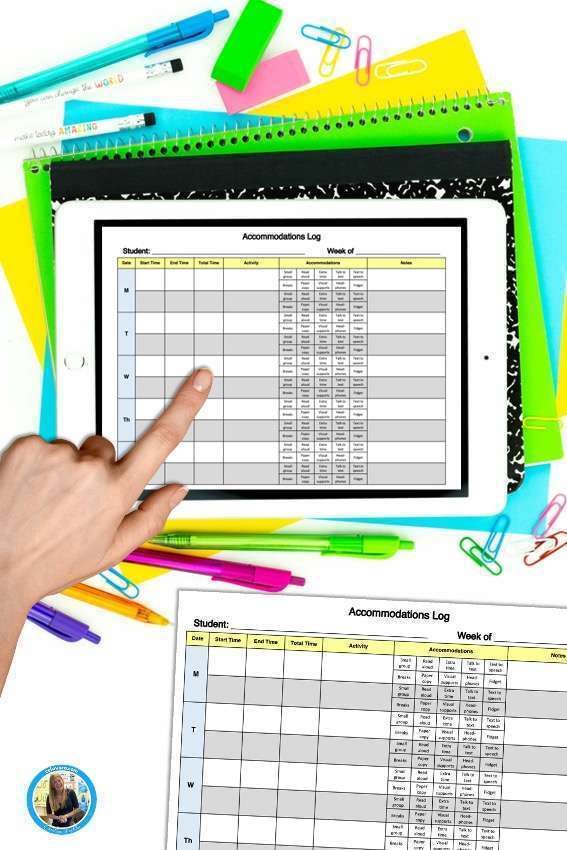
Individual weekly IEP accommodation documentation
An alternate to daily documentation is to maintain a comprehensive record of individual weekly accommodations.
By documenting the accommodations provided on a weekly basis, educators can track the progress and effectiveness of the support provided to each student.
This documentation allows educators to identify patterns, make necessary adjustments, and ensure that students are consistently receiving accommodations.
Also, weekly documentation drastically cuts down the amount of paper you are printing or organizing
This can all be done with a weekly planner with designated sections or a digital system with customizable templates.
Either way, a dedicated space for recording weekly accommodations ensures that you have a clear overview of each student’s needs.
Ultimately, the goal is easy communication and collaboration with other members of the educational team.
By prioritizing individual weekly accommodations documentation, special educators can quickly organize their accommodation logs and save precious time.

IEP accommodations documentation for caseload
When it comes to managing a caseload of students with individualized education plans (IEPs), accommodations documentation system is essential.
It allows special educators to keep track of the specific accommodations provided to each student.
Of course, this in important to ensure that their unique needs are met consistently.
By maintaining detailed records of the accommodations, educators can easily refer back to them and update them as needed.
I recommend having a master log that is easily sharable with other teachers and your administration.
This documentation serves as a valuable tool for communication and collaboration with other members of the educational team.
Master logs ensure everyone is on the same page when it comes to supporting the students.
Once you start streamlining the process, you’ll never look back.

Use spreadsheets for IEP accommodation in each subject area
One effective approach for documenting accommodations in each subject area is through the use of spreadsheets.
Spreadsheets provide a structured and organized way to track the specific accommodations for each student and subject, allowing for easy reference and analysis.
By creating separate tabs or sheets for each subject, educators can input and update accommodations as needed, ensuring they are readily accessible.
Spreadsheets also offer the flexibility to customize columns and rows to fit the unique needs of each student, making it easy to track progress and identify needs.
Additionally, spreadsheets can be easily shared with other members of the educational team, promoting transparency and collaboration.
With the ability to enter, modify, and analyze data efficiently, using spreadsheets for accommodations in each subject area can greatly support the success of students with IEPs.
Google Sheets are great for this as they update in real time for all users who are allowed to edit.
I highly recommend embracing this strategy building wide.

Choose print or type on pdfs for IEP accommodation
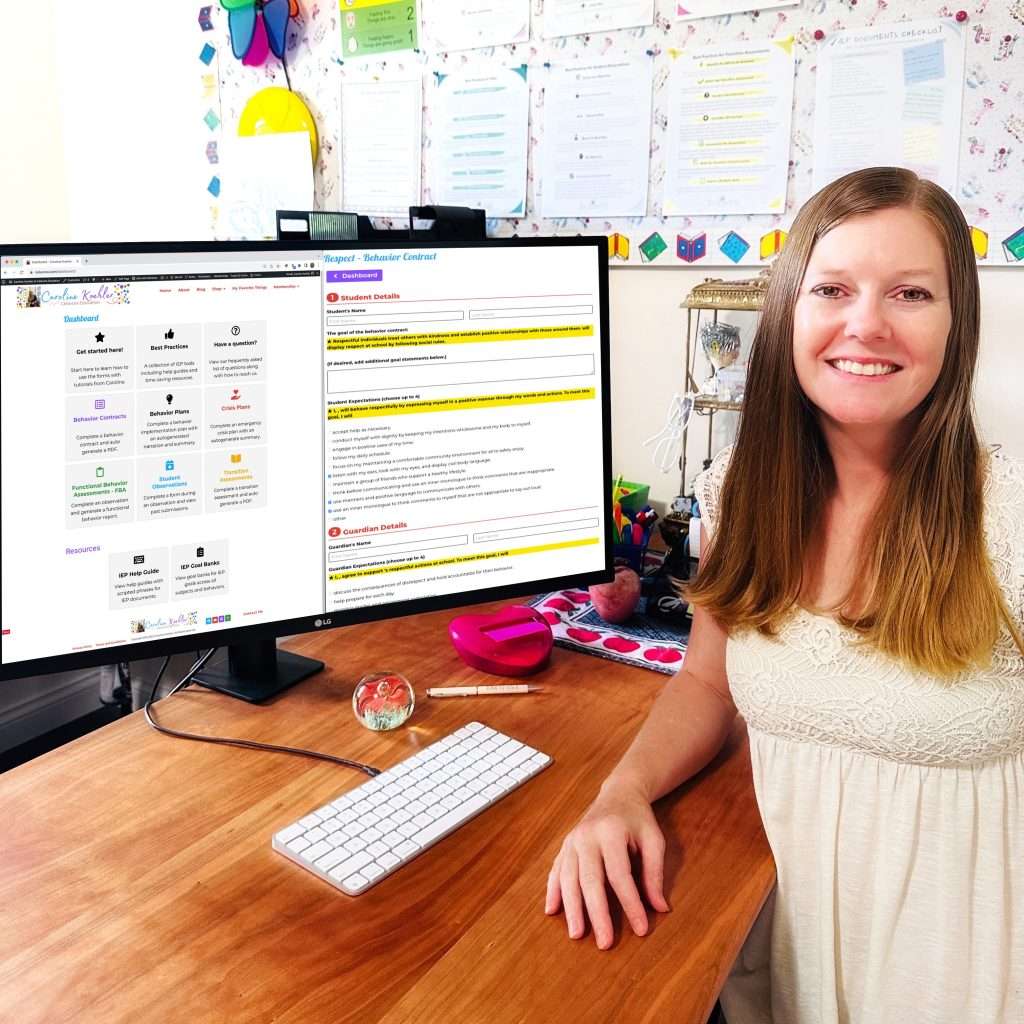
When it comes to documenting IEP accommodations, educators have the option to choose between printing or typing on PDFs.
Both methods have their advantages and it ultimately depends on personal preference and ease of use.
Printing out IEP accommodation lists allows for a tangible, physical document is easy to reference during instruction.
It can be helpful for educators who prefer to have a hard copy readily available.
On the other hand, typing on PDFs provides the convenience of digital accessibility and the ability to easily make changes or updates as needed.
It allows for efficient organization and easy sharing with colleagues or parents electronically.
Ultimately, the choice between printing or typing on PDFs should be based on individual workflow and what works best for the educational team.
As special educators, we are always looking for ways to better support our students and make our jobs a little easier.
By creating comprehensive IEP accommodation lists and using tracking tools, we can ensure that our students’ needs are being met.
From personalized accommodations to standardized tests, having a clear and organized system in place can make a world of difference in our students’ academic success.
So let’s continue to collaborate, share resources, and provide assistance as we support our students with IEP accommodation lists.


