Childhood Anger – 8 Helpful Ways You Can Help Instantly
Children experience a wide range of emotions as they grow and develop, and one of the most common and intense is childhood anger.
Although it is perfectly normal for children to feel angry at times, it can be difficult for adults to cope with their outbursts and feelings of frustration.
In some cases, anger can escalate and become a serious issue that affects a child’s daily life and relationships.
Fortunately, there are many strategies and techniques that can help parents and caregivers support children and manage their anger in healthy ways.
From simple breathing exercises and physical activities to communication techniques and setting boundaries, these tips can help parents and caregivers create a safe and nurturing environment.
Safe environments are where children can learn to express their emotions in a healthy and constructive manner.
By implementing these techniques and strategies, parents and caregivers can help children develop important emotional regulation skills.
This in turn builds self-awareness, and always children to cope with challenging situations.

Recognize the signs of childhood anger
A functional behavior assessment can help you identify when anger and frustration might occur.
Recognizing the signs of anger in children is the first step in helping them manage their emotions effectively.
If your child has an IEP, ask for a functional behavior assessment.
A functional behavior assessment can provide valuable insights into the triggers and antecedents that may lead to anger and frustration in children.
By identifying these triggers, teachers and caregivers can help children develop coping strategies to deal with difficult situations.
Signs of anger may include physical behaviors such as hitting or kicking, verbal outbursts, and emotional withdrawal.
Through a functional behavior assessment, parents and caregivers can gain a better understanding of the underlying causes of their child’s anger and frustration.
With this information, teachers can develop effective strategies to manage and regulate their emotions.
If the student doesn’t have an IEP but anger is affecting their ability to learning and grow, talk to a teacher about starting a special education referral.

Create a behavior plan
One of the most effective ways to help a child dealing with anger issues is to create a behavior plan that has supports in place for them to be successful.
This plan should be tailored to the specific needs of the child and take into account their individual triggers and coping mechanisms.
The plan should be clear and easy to follow, with specific expectations and consequences for behavior.
It is also important to have supportive adults in place, such as teachers, counselors, or parents, who can help the child implement the plan and provide positive reinforcement for progress.
By creating a comprehensive behavior plan with strong supports, the child can learn new skills and strategies to manage their anger and develop positive habits for the future.
Also, remember that every good behavior plan grows and changes with the student.
Documenting successes and challenges allows special education staff to update the behavior as needed.
Make realistic goals for childhood anger
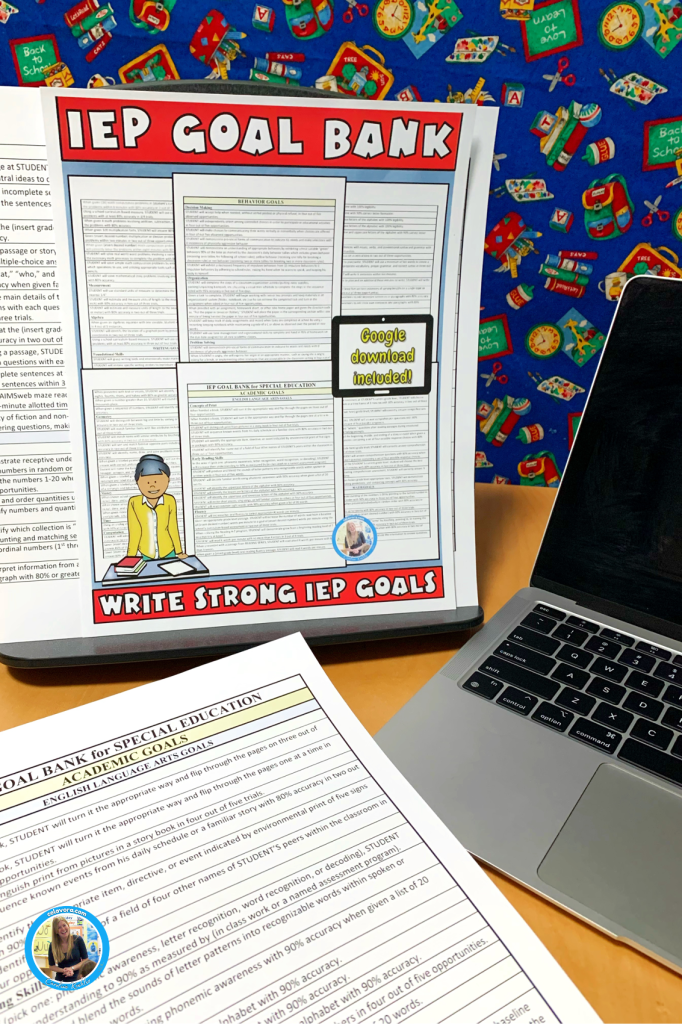
One of the most important steps in helping children manage their anger is to make realistic goals.
This means setting achievable objectives that are tailored to the child’s individual needs and abilities.
It is also important to create a supportive environment that allows the child to feel safe and secure while learning and growing.
Accommodations and modifications such as additional support, extra time, and alternative assignments can help children with anger management issues navigate the challenges they face in the classroom.
By working with educators and caregivers to develop these strategies, we can help children build confidence, develop positive coping skills, and achieve their full potential.
So, let’s look at a scenario.
Your student, Macy, has extreme problems with spelling. She also struggles with fine motor skills including pencil grasp and making letters legible.
Goals for Macy
- Unrealistic goal: When given a story prompt, Macy will write a paragraph with a minimum of 4 sentences with each sentence having at least 8 words.
- Realistic goal: When given a story prompt, Macy will use a device with talk to text to dictate a paragraph with main topic and three supporting details.
So, let’s be realistic and help Macy complete her work.
By supporting the student in a way that sets them up for success, I am automatically decreasing Macy’s frustration and anger with a non-preferred writing assignment.

Teach how to identify and express emotions
As educators, it is important to not only address academic achievement but also the social and emotional development of our students.
One way to do this is by teaching children how to identify and express their emotions.
This skill can be developed in a 1-1 setting, small group learning, or during whole group time.
Always teach a skill when a student is calm and in a state of learning.
Give them multiple opportunities to practice this skill in a controlled set.
Then, when they are ready, try using it during an actual moment of crisis.
It is important to use teachable moments to expand on this skill, such as when a child is upset or frustrated.
By providing a safe and supportive environment for students to express and process their emotions, they can develop better emotional regulation and communication skills.
This can lead to improved relationships with peers and adults, as well as better academic performance.
Teaching students how to identify and express their emotions is a key component in addressing childhood anger and promoting overall well-being.
Use positive reinforcement
Positive reinforcement and behavior management strategies are essential when helping children deal with anger issues.
It is important to tailor these strategies to the individual needs of each student.
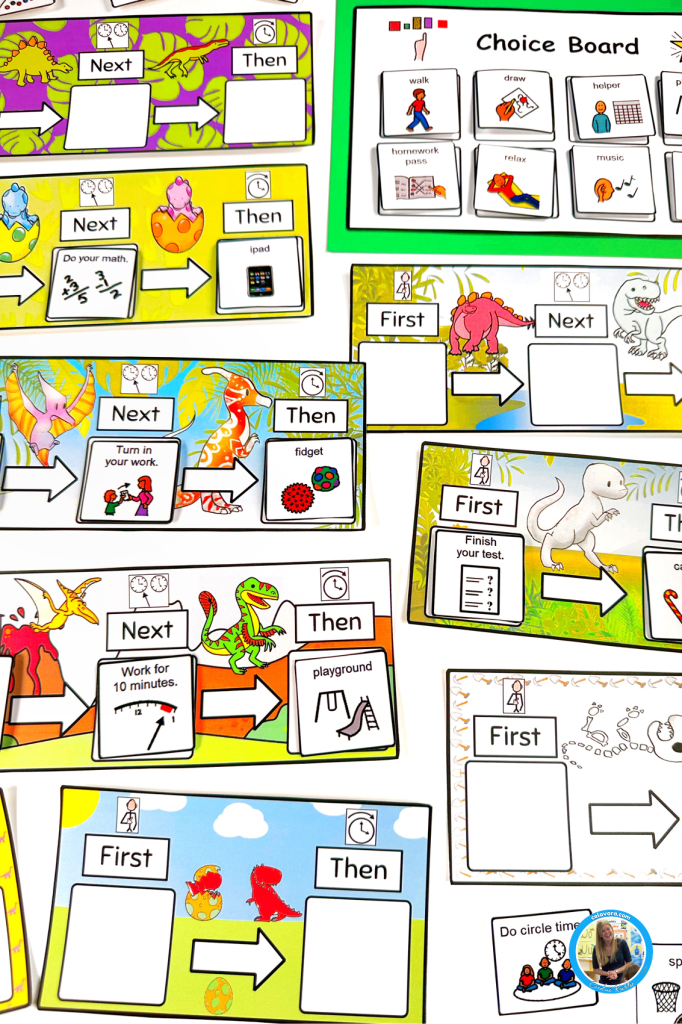
For instance, if a student likes video games, create a behavior chart based off of a video game.
Have a kiddo who is all about dinosaurs? Use First, Then dino themed board.
Positive reinforcement involves rewarding children for appropriate behavior, which increases the likelihood of that behavior being repeated.
This can include verbal praise, tangible rewards, or privileges.
Behavior management strategies involve setting clear expectations and consequences for inappropriate behavior.
It is important to be consistent with these rewards and consequences.
Also, always involve the child in creating a plan for managing their emotions and behavior.
By using positive reinforcement and tailored behavior management strategies, children can learn to manage their anger in a healthy and productive way.

Teach problem-solving skills to ease childhood anger
Another effective way to help children manage their anger is to teach problem-solving skills and utilize anger management visuals.
Problem-solving skills help children learn how to identify and resolve conflicts in a calm and constructive manner.
This can involve teaching them how to communicate effectively, compromise, and brainstorm solutions to problems.
Utilizing anger management visuals can also be a helpful tool in teaching children how to manage their emotions.
These visuals can include things like a chart that shows different levels of anger and corresponding coping strategies, or a list of calming techniques that children can refer to when they feel upset.
I love using the volcano visual for students who have explosive behaviors.
It lets them see a visual representation of their feelings and provides them with a verbal description of how their body is reacting.
By teaching problem-solving skills and utilizing visuals, children can learn to identify and manage their emotions in a healthy way, which can lead to better outcomes both in the short and long term.

Practice coping and relaxation techniques
Anger management is an important skill to learn for children who experience frequent outbursts or have difficulty controlling their emotions.
One effective way to help children manage their anger is to teach them coping and relaxation techniques.
I use a set of calming strategies for the classroom.
Some of my favorite from this group include
- Breathing exercises like circle breathing
- Pressure points like earlobe massaging
- Imagery like watching your problems float away
- Movement rolling a ball under your feet
- Body regulation like tightening all your muscles and then relaxing
- Sensory stimulation like taking a walk outside
These techniques can help them calm down and think more clearly when they feel overwhelmed by their emotions.
Some other examples of coping and relaxation techniques include
- deep breathing exercises
- mindfulness meditation
- progressive muscle relaxation
- visualization techniques
- yoga
Encouraging students to practice these techniques regularly can help them build resilience and develop better emotional self-regulation skills.
Seek professional help when needed
When dealing with a child who struggles with anger issues, it is important to recognize when professional help may be necessary.
In some cases, a child’s anger may be a symptom of an underlying mental health issue that requires specialized treatment.
Additionally, a mental health professional can provide valuable insight and guidance to both the child and their caregivers on how to effectively manage and cope with anger.
Seeking professional help can also help prevent the issue from escalating and potentially causing harm to the child or others.
It is important to remember that there is no shame in seeking professional help, and it can ultimately lead to a happier and healthier life for the child.
In conclusion, it’s important to remember that childhood anger is a normal and healthy emotion.
As parents, caregivers, and educators, our job is to help children learn how to express their anger in constructive and appropriate ways.

By using the tips and strategies in this article, we can help children learn how to manage their anger and develop the skills they need to navigate the complex emotional landscape of childhood and beyond.
With patience, empathy, and a commitment to positive parenting, we can help childhood anger diminish so students grow into emotionally resilient and socially adept adults.