SPED Resources Essentials to Simplify Paperwork
With the right SPED resources and tools in place, educators can streamline their paperwork processes.
These tools let them focus more on what truly matters – providing quality education to students with special needs.
Special educators are faced with a myriad of challenges, from meeting individualized student needs to navigating complex paperwork requirements.
The administrative tasks that come with managing special education programs can often be overwhelming and time-consuming.
But there is hope!
Special ed teachers can utilize SPED resources to simplify paperwork and improve overall efficiency.
With the right resources, educators can spend less time on administrative tasks and more time on teaching and supporting their students.
Let’s check out a variety of tools I use to help streamline the IEP paperwork process.
By investing in these resources, educators can ensure that they are providing the best possible support to their students with special needs.

IEP Cheat Sheet SPED Resources
For educators and parents navigating the complexities of Individualized Education Plans (IEPs), a cheat sheet is a must.
If I had to pick only one of my SPED resources having a cheat sheet would be it.
This game changer ensures that all necessary information is included and understood.
The help guide serves as a quick reference guide, outlining key components of the IEP process.
This includes scripted phrases and writing models for
- present levels of performance
- eligibility
- setting measurable goals
- accommodations and modifications
- provisions
- least restrictive environment placement
- summary of performance
By having all this vital information at hand, teachers can streamline the IEP development process.
This tools gives them the word they need so they can copy, paste, and adjust to fit each student’s needs.
If you’ve ever set staring at an IEP wondering how to word a phrase or write a section, you need a IEP help guide.

PLAAFP – PLOP SPED Resources
One key aspect of the IEP process that can greatly benefit from a structured approach is the development of Present Levels of Academic Achievement and Functional Performance (PLAAFP) statements.
These statements provide a comprehensive overview of a student’s current abilities, strengths, and areas needing improvement.
The PLAAFP serves as the foundation for setting appropriate goals and determining necessary supports.
I recommend utilizing a PLAAFP template that prompts educators and IEP team members to gather specific data points and observations.
An outline of the PLOP process will help teachers accurately assess a student’s needs.
This helps the process become more systematic and efficient.
A structured approach ensures that all relevant information is included in the PLAAFP statement.
Also, it facilitates a more objective evaluation of the student’s progress and areas for growth.
Additionally, linking the PLAAFP statement to the development of Present Levels of Performance (PLOP) goals creates a seamless transition from identifying a student’s current abilities to setting targeted objectives for improvement.
By aligning the PLAAFP statement with measurable goals that directly address the identified areas of need, educators can create a cohesive roadmap for supporting the student’s progress throughout the IEP cycle.
This integrated approach promotes consistency and clarity in goal-setting.
Also, it helps facilitate a more holistic understanding of the student’s educational journey.
I use a template that provides scripts of broad current performance areas such as
- academics
- behavior
- cognitive
- social skills
Then, I pull from student strength statements to identify the impact and need.
If you need help writing strong PLAAFP statements, I highly recommend using a help guide.
Your PLOP’s will come out written stronger in a fraction of the time!

IEP goal bank
When identifying areas of need to setting measurable objectives.
Ultimately, this should have occurred in the PLAAFP statement.
Using the info you gained from that, the heart of the IEP is next: GOALS!
An IEP goal bank can be a valuable resource when writing goals and objectives
It offers a repository of pre-written goals that align with various academic and functional areas.
Educators can use the goal bank to access goals that are specific, measurable, achievable, relevant, and time-bound (SMART).
This saves time and effort in the goal-writing process.
Put an IEP goal bank into your SPED resources to helps= in streamlining the goal-setting process.
Goal banks also ensures that goals are aligned with the student’s individual needs and are designed to support meaningful progress in their educational journey.
By selecting goals from the bank that are tailored to the student’s PLAAFP statements, you can create a cohesive and comprehensive IEP.

FBA template
Another essential resource that can simplify the paperwork process for special education professionals is the Functional Behavior Assessment (FBA) template.
Conducting an FBA is time consuming and detail specific.
So, grab a functional behavior template that helps you turn raw data into meaningful information.
This template provides a structured format for gathering information about a student’s behavior.
Then, you need to analyze the function behind the behavior.
Lastly, your set will help you developing effective behavior intervention strategies.
By using an FBA template, educators can systematically collect data, identify patterns, and determine the triggers that lead to challenging behaviors.
This information is crucial for creating behavior intervention plans.
Remember BIPs should be individualized, evidence-based, and focused on addressing the root cause of the behavior.
The FBA template serves as a valuable tool for guiding the team through the assessment process.
Ultimately, the FBA tools ensure that interventions are tailored to the student’s specific needs.
Then, they can promoting a proactive approach to behavior support within the special education setting.

Behavior Intervention Planning
Behavior Intervention Planning is a crucial component of the special education process that aims to address challenging behaviors exhibited by students.
This should only be written after an FBA has been completed.
This process involves creating a comprehensive plan that outlines specific strategies and supports to help students modify their behaviors and achieve success in various settings.
When developing a behavior intervention plan, it is important to consider the information gathered from the Functional Behavior Assessment (FBA).
Also include input from the student, parents, teachers, and other relevant stakeholders.
Then, use a BIP building template to help you write your plan.
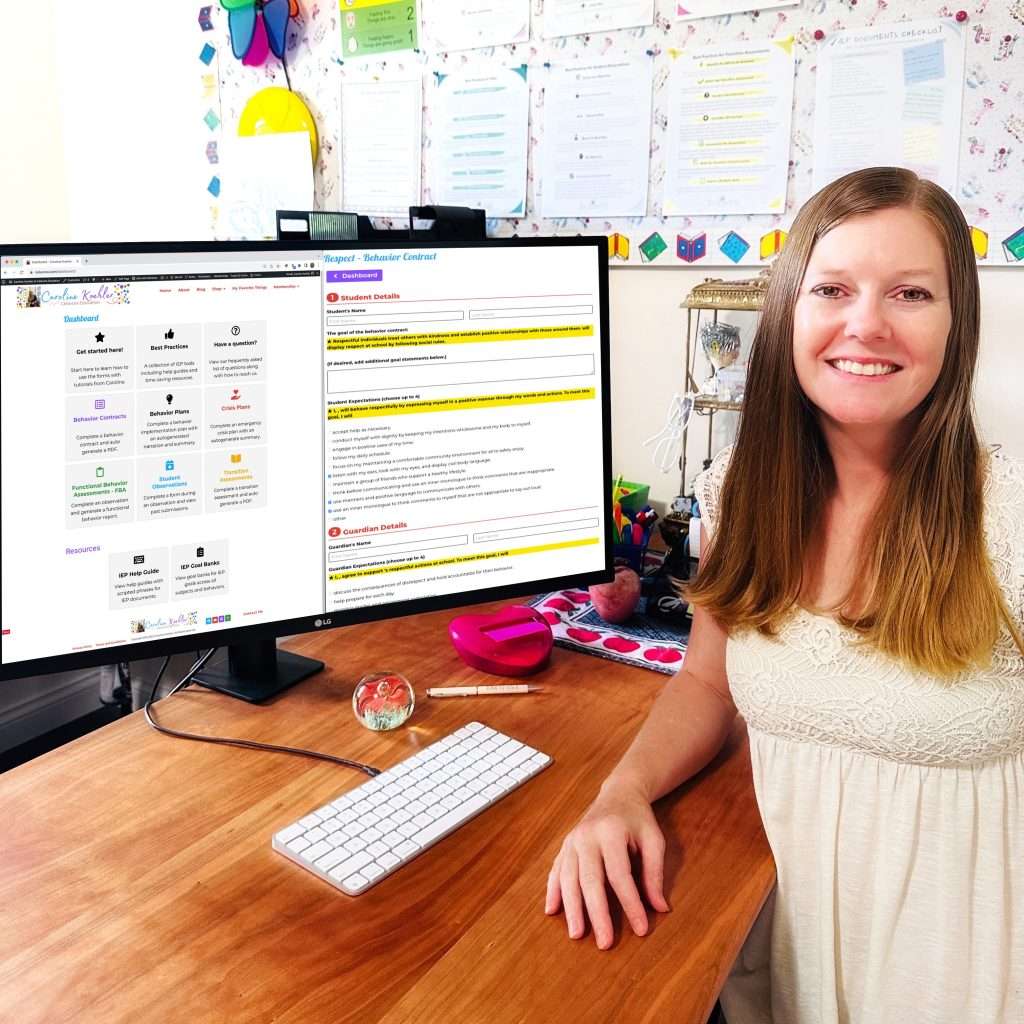
My absolute favorite tool for this lives within the SPED Up Paperwork membership.
Instead of spending 2 hours writing a behavior plan, I can create a more thorough plan in about 30 minutes.
How???
I took my static template and turned it into a series of editable drop down boxes.
It still makes me smile every time I use it!
Regardless of what tool you use, create a customized plan with a guided template.
Make sure that targets the underlying causes of the behavior, sets clear goals for improvement, and outlines proactive strategies to prevent future incidents.
Additionally, add a plan for monitoring and adjusting the behavior intervention plan.
Base this on ongoing data collection and observation to ensure its effectiveness and make necessary modifications as needed.

Behavior Contracts SPED Resources
Another valuable tool in the behavior intervention process is the use of behavior contracts.
Behavior contracts are formal agreements between the student and relevant stakeholders.
They outline specific behaviors, expectations, consequences, and rewards.
So, how do I make this easier?
Yep, editable templates!
Behavior contracts provide a clear structure for all parties involved.
The goal is to help establish accountability and consistency in addressing challenging behaviors.
But, one template for this super SPED resources idea is not enough.
I had to build out a set to make sure I cover the most common topics and could make changes easily
My student behavior contracts topics include
- attendance
- bus
- citizenship
- class communications
- homework
- honesty
- physical self-control
- preparedness
- punctuality
- respect
- respect of property
- truth
- work completion
By outlining the desired behaviors and the consequences for not meeting expectations, behavior contracts can help students understand the importance of making positive choices and taking responsibility for their actions.
Additionally, behavior contracts can be a useful tool for tracking progress.
They provide an amazing written record of the agreed-upon goals and steps towards behavior improvement.
By implementing behavior contracts SPED resources as part of your special ed toolbox, special education professionals can further support students in achieving their full potential and fostering a positive learning environment.

Crisis Plans SPED Resources
Another essential component of SPED resources is the development of crisis plans.
Crisis plans are detailed strategies outlining specific steps to be taken in the event of a behavioral crisis or emergency situation.
These plans are crucial for ensuring the safety and well-being of both students and staff members during high-stress incidents.
When I was first asked to create a crisis plan for a student, I struggled on what to include.
After research, practice, and a lot of editing, I created a crisis plan template to make the process faster and easier.
This includes proactively identifying potential triggers, warning signs, and appropriate responses.
Crisis plans empower special education professionals to respond quickly and effectively in challenging situations.
Moreover, crisis plans can help prevent escalation of behaviors and minimize disruptions in the learning environment.
Also important is adding supplemental supports for crisis plans.
This includes behavior charts and progress monitoring tools.
Make sure you have a solid crisis plan template so you can best support your students.

Student Observation Summaries
Student observation summaries play a vital role in the assessment and monitoring of student progress within special education settings.
These summaries provide a comprehensive overview of a student including
- behavior
- academic performance
- social interactions
Conducting a student observation allows us to identify patterns, trends, and areas for growth.
By systematically documenting observations and collecting data over time, special education professionals can gain valuable insights into the student’s strengths, weaknesses, and individual needs.
This information is instrumental in informing instructional decisions, modifying interventions, and collaborating with other team members to develop personalized learning plans that address the unique challenges and strengths of each student.
Additionally, student observation summaries serve as a valuable communication tool.
Parents and administrators receive important information based off of student observations.
Also, depending on the IEP goal, observation summaries can be used as progress monitoring evidence.
Best practices notes that observation should be conducted on any student who is being evaluated for special education.
While I absolutely agree with this, finding the time to do observations and then write reports is challenging.
If you need help with writing your student observations, you need SPED Up Paperwork.
With my SPED resources membership, once you do the observation, the program writes your report for you!
Yep, SPED Up Paperwork is every special educators best friend.

Transition Assessments SPED Resources
Transition assessments are a critical component of the special education process.
They are required for students who are preparing to transition from school to post-school life.
This typically begins at age 12 but many schools conduct the assessments earlier for the data.
These assessments provide valuable information about a student including
- interests
- preferences
- strengths
- areas of need in relation to their future goals
- further education
- employment paths
- independent living
So, to be clear, I LOVE transition assessments.
They are so, so fun.
With the right assessment, you can really get to know your students in a way not often seen.
But, you need the right tool.
I created a set of assessments that are fun, engaging, and meaningful.
This includes useful tools for students in an inclusion setting and those in a self-contained placement.
By conducting thorough transition assessments, special education professionals can better tailor transition plans that support the student in reaching their desired outcomes.
These assessments also help in identifying potential barriers and obstacles that may impact the student’s transition.
Proactive planning and intervention ensure a smooth and successful transition process.
If you are doing any transitioning or planning for life skills, I recommend finding or creating a set of meaningful assessments.
Ultimately, transition assessments play a key role in empowering students with disabilities to achieve their full potential and lead fulfilling lives beyond the school setting.
SPED Up Paperwork membership
Being part of the SPED Up Paperwork membership can significantly streamline the paperwork process for special education professionals.
It offers access to a wide range of resources and tools designed to simplify documentation requirements, saving time and effort in completing paperwork tasks.
Members benefit from templates, checklists, and guides that are tailored to various aspects of special education paperwork, ensuring that all necessary information is captured accurately and efficiently.
By availing of the SPED Up Paperwork membership, special education professionals can enhance their productivity and focus more on supporting students.
No teacher wants to get bogged down by administrative tasks.
SPED Up Paperwork will help you will with all the SPED resources mentioned above including
- Behavior contracts
- Behavior plans
- Crisis plans
- FBAs
- Student observations
- Transition Assessment
The automated tools write your special education reports for you and cuts your time in half with the click of a button.
If you’re looking for a way to reclaim your time, be efficient, and product quality reports, you’ve found it.
Having access to SPED resources and tools is crucial in simplifying paperwork and ensuring that students receive the support they need.
By utilizing these resources, educators and administrators can streamline processes.
This reduces the administrative burden so we can focus more on providing quality education for students with diverse needs.
Remember, it’s okay to seek help and leverage available resources to make your workload more manageable and impactful for the students you serve.
Together, we can create a more inclusive and supportive learning environment for all by using quality SPED resources.