


Classroom Management Strategies to Slay Chaos
Effective classroom management strategies are a must to create a yearlong plan for your students.
It’s a common theme that teachers revisit at the start of each school year.
Organizing your behavior management plan shows your dedication to creating a positive learning environment.
Having a solid classroom management plan is key to the success of both you and your students.
It helps maintain order, fosters a positive atmosphere for learning, and sets clear expectations for behavior.
Without a plan in place, things can quickly become chaotic and overwhelming for everyone involved. Let’s avoid that, shall we?
I’m here to share with you seven essential keys to an effective classroom management plan.
This includes why each key is important, practical tips for implementation, and highlights the benefits of having a plan that suits your classroom’s unique needs.
Use these veteran teacher tips to create a classroom management plan that works like a charm for you and your students.
Let’s get started!

Visual Rules and Procedures
Creating a set of clear rules and procedures is essential for maintaining a positive classroom environment.
When you establish a consistent routine with straightforward rules and expectations, you set the stage for a respectful and harmonious atmosphere.
Using visual aids helps reinforce these guidelines, making it easier for everyone to remember and adhere to them.
With a solid plan in place, you’re sure to have a fantastic and productive school year ahead!
I suggest displaying cheerful procedure posters and taking the time to thoroughly explain each procedure to your students.
Go over the rules at the start of each school.
Take time to explain and even act out appropriate and inappropriate actions.
Do yourself a huge favor and discuss the rules again after each major break from school.
Also, remember that some students with special needs may need more explicit rules.
This includes desk visuals, social stories, checklists, behavior charts and schedules.

Positive Classroom Management
One of the keys to creating a happy and harmonious classroom environment is to focus on promoting positive behavior.
This means that you continue maintaining fairness and consistency in discipline.
To start things off on the right foot, it’s important to establish a routine and clearly communicate expectations to students.
Remember, actions that you praise are more likely to be repeated.
When a student demonstrates good behavior, be sure to acknowledge and reward them with positive reinforcement.
This could be as simple as giving them a high-five or a shoutout in front of the class.
Or you might give them a behavior bragging bracelet, a sticker, a stamp, or a snack.
In the case of misbehavior, it’s crucial to address the issue promptly and fairly.
Make sure students are aware of the consequence of breaking a behavior.
Do your best to set up natural consequences.
For instance, if a student makes a mess, the consequence is to clean up the mess.
By setting clear boundaries and enforcing consequences consistently, students will learn to respect the rules of the classroom.
A positive and supportive learning environment allows students to grow to their full potential.

Visuals for Classroom Management Strategies
The third key to effective classroom management strategies is to use visual aides.
Visuals are an excellent way to make sure all students understand the positive expectations and rules in your classroom, and to help keep everyone on track.
Monitoring controls for all sorts of behaviors are some of my most used tools.
I use these to motivate students to make positive decisions.
Below are a few of my most used ones.
- Volume Control
- Work Monitor
- Bully Monitor
- Wellness Check
- Safety – Suicide Monitor
- Stress Monitor
- Speed Monitor
- Stealing Monitor
- Truth Monitor
- Respect Monitor
Visuals can also be used to provide positive reinforcement when expectations are met.
Interactive behavior charts should be used to earn rewards.
First, then boards help show students that after they work, they then receive an incentive.
When students see that their hard work and good behavior is being acknowledged, it encourages them to keep up the good work.

Listen to Your Students
A successful classroom management strategy should always include the opportunity for students to have a voice.
When students feel like they are heard and valued in the classroom, they are more likely to engage in their learning and follow the rules willingly.
Let students share their ideas and feedback.
Use visuals to show the impact of not following the rules.
I’ve made many a visual to represent students’ ideas.
Actually that’s where my hugely popular anger volcano came from.
I enjoy giving students choices and empowering them to make decisions that support their development.
Student surveys are a great way to involve students in decision-making.
I like to give out surveys a few times a year to show students that their opinions matter.
Reading their responses is always enlightening!
If you have young students who are emergent writers, try an old fashioned voice recorder.
Often called a “tattle tape” this classroom management strategy has been used by early educators for as long as recorders have existed.
All you need to do to teach students how to use the recording device, model appropriate use, and then press play at your leisure.
Teachers learn lots of interesting student gossip from a tattle tape!

Classroom Management Strategies Plan
The fifth secret of successful classroom management strategies is keeping an eye on student behavior.
You can do this in a cheerful, supportive manner that promotes a feeling of togetherness and camaraderie in your classroom.
There are various approaches to achieving this.
Having a set of behavior charts that actually work can make a huge difference.
Many preschool and kindergarten classes use green, yellow, and red sticks or cards to indicate behavior.
Some elementary classrooms use Class Dojo or a whole class reward system to enjoy a fun activity at the end of the week.
In high school classrooms, sometimes a behavior grade is given to encourage a positive classroom management strategy.
Regardless, have a plan in place that allows you to track and monitor behavior.
This is important to establish patterns and predict possible behavior concerns.
For instance, your data might show that STUDENT A consistently has challenging Mondays twice a month.
After reaching out to the student’s grandma/guardian, you learn that this student visits their father every other weekend in the state penitentiary.
Now that you have this information, you can work to set up a counseling session on each Monday and maybe more.
If you are wondering, yes, this is a real life example.
By keeping track of your students’ behavior in a structured way, you can establish a classroom management strategy that changes lives.

Home to School Communication
Strong classroom management strategies begins with establishing open lines of communication with parents.
By keeping parents informed in a positive manner, we can foster a sense of collaboration and trust within our classroom community.
It is important for parents to be aware of the classroom schedule, rules, and expectations in order to set clear boundaries for students.
This information can be shared through various means such as weekly newsletters, daily reports, or virtual classrooms.
By engaging in proactive and friendly communication with parents, we can work together to create a harmonious environment where everyone is supporting our students’ success.
As a kindergarten teacher, I sent home a weekly newsletter, but as a self-contained teacher I communicated daily.
Using a daily note home template, I was able to give feedback to parents that their students weren’t able to give.
Behavior charts and calendars are great for students who need more support.
I have a friend who has a private Facebook group that she adds parents and guardians to. (signed permission from all students in pics, of course.)
This lets her post pics of her class activities and send out reminders and alerts easily.
Use what works best for you and for your families.
Think of Your Students’ Needs
Building a strong connection with your students is essential for effective classroom management.
One fantastic way to do this is by welcoming each student with a warm greeting at the door every morning.
It’s also important to bring a sense of humor and positivity into the classroom whenever possible.
Do not mistake sarcasm for humor.
In my experience, a large majority of sarcasm is hurtful language disguised as humor.
One school I worked out had a strict rule against staff using sarcasm.
Besides emotional needs and connections, recognize that all students need to move.
Allowing students the freedom to fidget and move around can make a big difference in their focus and engagement.
Whether you’re teaching young children or older teens, remember that movement is a natural part of learning.
For some fun ideas on movement tools and activities, check out my recommendations here.
If you ever get a grant for gross motor activities, I recommend a treadmill desk and an elliptical desk.
When I got one in my middle school classroom, my students were so excited.
I had to create a sign up list and use a timer to rotate students on and off it because it was so popular.
Truthfully that adds a bit of a headache but the benefit is huge.
Both you and your students will benefit greatly from a positive and interactive classroom environment.
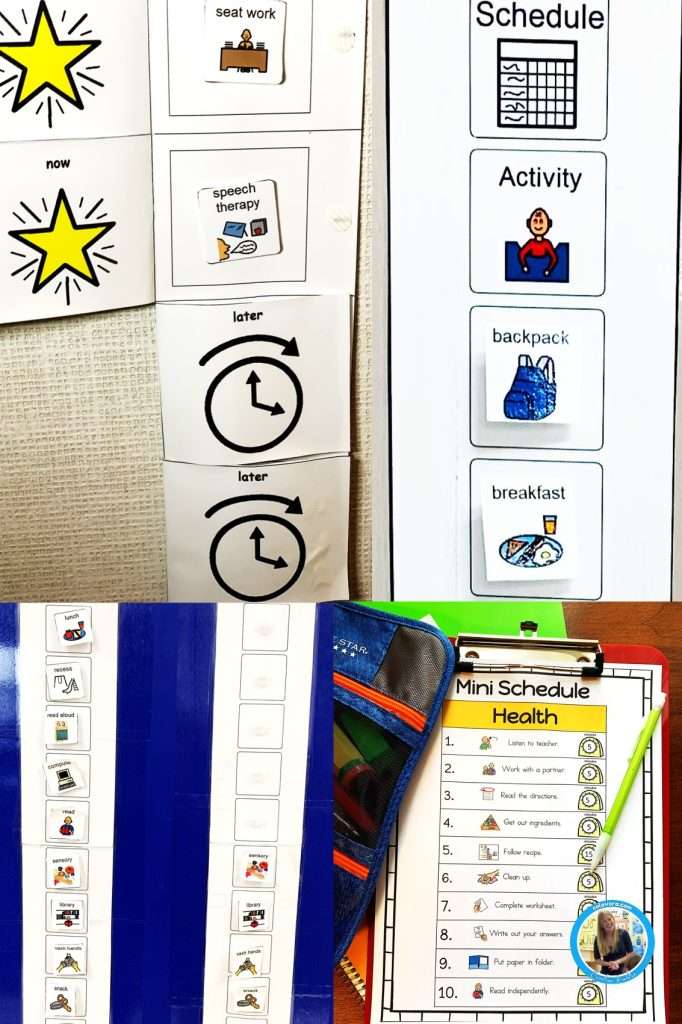
Display Your Daily Schedule
Setting up a predictable daily schedule is key for student success and creating a positive learning atmosphere.
When we establish a daily routine, students can easily follow along and know what to expect each day.
It’s especially comforting for our students, especially those with special needs, to have a predictable schedule.
This sense of structure helps them feel safe and secure in the classroom.
And if there are any changes, giving our students a heads up allows them to adapt and be prepared.
This helps everything run smoothly and keeps our classroom productive.
Never underestimate the power of a schedule for an anxious student.
And never take a schedule away from someone as a punishment or because you think they don’t need it.
Most adults have calendars and reminders to help them keep pace.
Think of your classroom schedule in a similar manner for your students.
By keeping our students in the loop about our daily schedule, we build trust and make them feel at ease in our learning environment.
This open communication helps break down barriers and lets our students thrive in a safe and supportive space.

Personable Classroom Management Strategies
One of the best ways to ensure a positive and engaging classroom atmosphere is to inject some fun into the learning process.
Encouraging and praising your students is crucial for their growth and success in the classroom.
Try using rewards, incentives, and positive reinforcement to show them that their efforts are appreciated.
Base rewards on what your students are interested in.
Keep things exciting by incorporating interactive and hands-on activities that will keep them interested and motivated.
By making learning enjoyable and entertaining, you’ll create a more effective educational environment for everyone involved.
Take the time to listen to your students’ interests and find ways to incorporate them into your lesson plans.
Whether it’s playing their favorite music during breaks or discussing topics they’re passionate about, showing them that you value them goes a long way.
For a bit of extra fun, consider creating lessons based on popular movies or TV shows that your students are into.
The key is to make learning fun and show your students that you truly care about what they enjoy.

Encouraging Growth Opportunities
One of the important aspects to consider when thinking about classroom management is providing opportunities for growth.
Creating a supportive atmosphere where students can see challenges as chances to learn is crucial.
Allowing students to practice and reinforce their knowledge is also key.
By offering chances for growth, students can build confidence in their abilities and enhance their skills.
This not only helps them succeed academically, but also boosts their self-esteem and overall development.
When students make a mistake, help them learn that this is not a time to cry, tantrum, or be ashamed.
Introduce the growth mindset concept to your students.
Teach them that mistakes are an opportunity to learn and grow.
Use your social emotional learning lessons to learn coping strategies and relaxation tips.
Having a strong classroom management strategy is essential for a successful learning environment.
It’s vital to foster a positive atmosphere where students feel valued and secure, while also allowing them to progress at their own pace.
By focusing on these principles, educators can create a nurturing space for students to thrive and excel.
This way, teachers can utilize positive classroom management strategies and focus on the joy of teaching and learning.


