


Anger Control Worksheets to Manage Emotions
Managing emotions, especially anger, can be challenging for students of all ages but anger control worksheets can help.
Educators and parents often seek effective resources to help children understand, express, and control their emotions in healthy ways.
This collection of anger control worksheets and tools supports emotional regulation and behavior management in the classroom and at home.
These resources are perfect for children with autism, ADHD, emotional disabilities, or those simply needing extra support in managing their feelings.
Let’s dive into these powerful tools that make a real difference in students’ lives.

Anger Control Worksheets Volcano Activity
The Anger Volcano Worksheet set was inspired by a student who compared his behavior to a volcano.
After unsuccessfully trying to convince him otherwise, I embraced his metaphor as a way to help him.
He fell in love with it and was able to communicate easier with the visual tool.
This behavior management and emotional regulation resource is perfect for students needing to identify their emotions.
The posters and worksheets allow students to develop coping skills to manage their behaviors.
The visual that I resisted to make has went on to help many, many other students since it’s origination.
What’s Included?
- Volcano Anger Posters with Emotion Levels and Calming Strategies: These posters visually represent different levels of anger and provide calming strategies to help students self-regulate.
- Volcano Countdown Poster: A countdown tool that guides students through calming steps, helping them cool down progressively.
- I Need a Break – Volcano Break Cards: Handy cards that students can use to indicate they need a break, promoting self-awareness and preemptive coping.
- Understanding Emotions Volcano Worksheet: Helps students understand and label their emotions using the volcano metaphor.
- When I’m Angry Volcano Worksheet: Guides students through recognizing what makes them angry and how to handle it.
- When I Feel Like a Volcano Worksheet: Encourages self-reflection and strategy development for managing intense emotions.
- 5 Level Blank Volcano Scale: A customizable tool for tracking and managing emotions.
- How to Use Directions: Step-by-step instructions for implementing these tools effectively.
These resources not only help students identify anger triggers but also provide practical techniques to manage their emotions.
Ultimately this anger control worksheet set makes it easier for students to connect with the material and apply what they learn.

Feeling Chart Visual Monitor
Understanding and monitoring feelings is crucial for emotional development.
The Feeling Chart Visual Monitor provides students with the visuals and words they need to express their thoughts and emotions effectively.
If words aren’t available, pointing to communicate is often helpful.
The feelings chart is my 2nd most utilized visual scale just behind volume control.
I highly recommend utilizing a picture and word based emotions chart for any group of students you are serving.
What’s Included?
- Feelings Monitor with Printable Arrows (3 versions): A tool that students can use to indicate their current emotional state.
- Feelings Choices (1 page): A comprehensive list of emotions for students to choose from.
- Feelings Choices Explanation (1 page): Detailed descriptions of each emotion, helping students understand and articulate their feelings.
- How to Directions: Instructions on how to use the feeling chart effectively.
This tool is highly versatile.
It’s suitable for both general education students and those with learning disabilities, including autism, ADHD, or emotional disorders.
Teach the tool in a calm state, ensuring students are receptive and able to utilize it during more stressful moments.

Anger Control Worksheets Communication Board
Communication is key, especially for students with autism or communication disorders.
The Communication Board Basic Needs Set helps students express their wants and needs through simple, effective visual tools.
This tool was inspired by a young family member who began having meltdowns when no one could understand his needs.
His vocal expression was less than 10% understandable due to articulation errors.
After I created it, he spent hours (to his parents’ angst) laughing and pointing at the emotions and scripted phrases.
Did it help? You bet!
Of course, the SLP who worked on articulation goals did the most heavy lifting by far.
But, this anger control worksheet set is now in hundreds of classroom helping other kids regulate.
What’s Included?
- I’d like you to know (Point to Say Page): A page where students can point to indicate what they want others to know.
- I feel (Point to Say Page): Helps students express their current emotional state.
- Behavior Break Choice Board (2 versions): Options for students to choose from when they need a break.
- Breathing Break Choice Board: Guides students through different breathing techniques to calm down.
- Breathing Break Explanation: Detailed descriptions of each breathing technique.
- Yes, No, Maybe, I don’t know, Ask me later (Point and Say Page, 2 versions): Simplifies decision-making and expression for students.
- Talk, Quiet, I’m not ready, Compromise, Redo (Point and Say Page, 2 versions): Helps students communicate their readiness and preferences effectively.
These boards are ideal for nonverbal students or those who struggle to express themselves verbally, allowing them to point to what they need and reducing frustration.

Social Stories for Hitting
Teaching appropriate social behavior is essential, especially for students with autism.
The Social Stories for Hitting set helps explain the importance of keeping hands to oneself and regulating emotions through structured, visually-based narratives.
If you’ve been hit by an angry child, you know how much it hurts your body and your spirit.
Social narratives are an excellent way to teach safe, appropriate behaviors.
What’s Included?
- Hands to Self (9 pages): Teaches students the importance of personal space and not hitting.
- Hitting Hurts (11 pages): Explains the consequences of hitting and why it’s important to avoid it.
- Saying Sorry (6 pages): Guides students through the process of apologizing and making amends.
- Touching at School (10 pages): Outlines appropriate and inappropriate touching in a school setting.
- Calming List (3 versions): Provides strategies for calming down when feeling upset.
These anger control worksheets and stories use clear, positive language and visuals.
This helps students understand what to do instead of what not to do, making them an invaluable tool for behavior management.

Anger Control Worksheets – Meltdown Support
Dealing with meltdowns can be challenging for both students and educators.
The Social Stories Set for Meltdown Support provides visual narratives to help students learn how to regulate their emotions and behavior.
Some meltdowns can truly not be prevented.
For instance, a student once had a meltdown in front of the school next to the buses due to extreme noise and other sensory overload.
But, students can be taught how to notice when their bodies are starting to go into a meltdown.
Then, they can use strategies and tools to prevent a full scale meltdown especially in a dangerous area.
What’s Included?
- Being Accountable [Social Story for Following Directions] (23 pages): Teaches students the importance of following directions and being accountable for their actions.
- Noises (12 pages): Helps students understand how to manage their reactions to loud or unexpected noises.
- Being Responsible [Frustrated Social Story] (12 pages): Guides students through managing frustration responsibly.
- How to Stay Calm & Avoid a Meltdown [Social Story Calming Down] (18 pages): Provides strategies for staying calm and avoiding meltdowns.
- Voice Tone [Social Story When I Am Angry] (14 pages): Teaches students how to modulate their voice tone when feeling angry.
These social narratives are perfect for teaching replacement behaviors and helping students understand the consequences of their actions in a supportive, positive way.
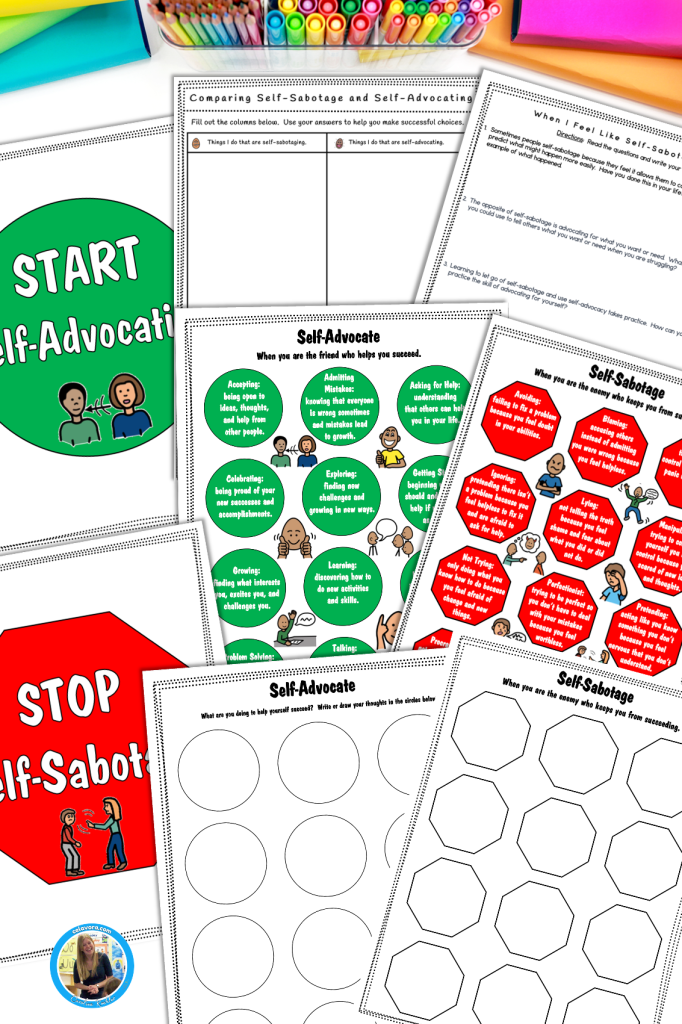
Self Sabotage vs Self Advocacy Worksheet
Teaching students to advocate for themselves is crucial for their personal and academic success.
The Self Sabotage vs Self Advocacy Anger Control Worksheets set provides visual support and activities to help students distinguish between self-sabotaging behaviors and effective self-advocacy.
Watching students sabotage themselves over and over again is frustrating for all involved.
Teaching this topic can be eye-opening and often leads to many important conversations.
I like to discuss times in my own lives that I’ve kept myself from happiness.
If you are comfortable sharing a true story about yourself to your students, I recommend it.
What’s Included?
- Self Sabotage Visual Posters (color and b&w): Helps students identify self-sabotaging behaviors.
- Self Advocacy Visual Posters (color and b&w): Encourages students to engage in self-advocacy.
- Stop Self Sabotage Poster: A visual reminder to avoid negative behaviors.
- Start Self Advocating Poster: Promotes positive self-advocacy actions.
- Self Sabotage Worksheet: Guides students through identifying and understanding their self-sabotaging behaviors.
- Self Advocate Worksheet: Helps students develop self-advocacy skills.
- Comparing Self Sabotage and Self Advocating Worksheet: Encourages reflection on the differences between the two behaviors.
- When I Feel Like Self-Sabotaging Worksheet: Provides strategies for overcoming self-sabotaging tendencies.
- How to Use Directions: Instructions for effectively integrating these tools into the classroom.
This set is designed to help students recognize negative self-talk and develop strategies to combat it, ultimately leading to better self-advocacy and success.

SEL Anger Control Worksheets for Anxiety and Stress Regulation
Incorporating SEL activities into your classroom can significantly reduce anxiety and anger while promoting self-love and self-regulation.
This comprehensive set includes 125 behavior coping strategies designed to help students manage their emotions effectively.
You know those years where everyone is just plain stressed out and angry?
If you taught during COVID, I bet you do.
That’s when this anger control worksheets set was born.
The students and the teachers needed a way to cope and regulate their emotions.
These social emotional supports became a welcome part of every day.
What’s Included?
- Monthly Calendar Guides: Teach one relaxation strategy daily using the provided calendar guides, reinforcing coping strategies consistently.
- Coping Strategies Posters and Skill Cards: Display 125 posters around the classroom and use the skill cards to provide a range of stress management techniques. Students can choose what works best for them.
- Group Rules and Feelings Charts: Establish group rules and use feelings charts to help students identify and express their emotions. Multiple versions are included to fit your classroom’s needs.
- Relaxation and Coping Strategies Info Page: A detailed guide explaining various relaxation techniques, helping both teachers and students implement them effectively.
- Social Emotional Intervention Log: Document daily SEL activities and monitor student progress with the intervention log, ensuring consistent use of strategies.
- Editable Resources: Customize the resources to meet your students’ needs using Google Slides, making them suitable for both in-person and virtual learning.
This SEL activities set is perfect for general and special education settings, small groups, or individual instruction.
By integrating these activities into your daily routine, you’ll help students develop lifelong coping skills, creating a calm and supportive learning environment.
These anger control worksheets and tools are essential for helping students manage their emotions, develop coping skills, and improve their behavior.

Whether you’re an educator, clinician, counselor, or parent, these resources provide structured, engaging, and effective strategies for supporting emotional regulation and behavior management.
By incorporating these tools into your classroom or home routine, you’ll help students build the skills they need to succeed academically and personally.
Explore these anger control worksheets and tools and see the positive impact they can have on your students’ emotional and behavioral development.


