


Cue Cards A Visual Behavior Tool for Autism
Cue cards, a remarkable tool for individuals with autism and their caregivers, truly hold the key to unlocking their potential.
These magical cards are not just a communication and behavior management aid.
Rather, they are an effective means of fostering growth and skill development.
Cue cards offer a wonderful blend visual communication and education.
From honing social skills to mastering daily routines, these cards are the ultimate sidekick in helping individuals with autism navigate their world with confidence and enhance their learning journey.
Whether utilized at home, during therapy sessions, or in educational settings, they are friendly companions, always ready to empower and promote independence in those with autism.

Effective learning tool
A simple but incredibly valuable resource for individuals with autism and their caregivers is a visual behavior tool known as cue cards.
Designed to aid in communication and behavior management, they provide an effective way to support learning and skill development.
With a wide range of visual prompts and interactive activities, cue cards support communication.
These cards offer a supportive and accessible tool for individuals on the autism spectrum to navigate their world and enhance their learning experience.
Portable and easy to use, their ability to assist in a variety of settings adds to their importance.

Cue cards promote communication skills
Individuals with autism often face challenges in developing independence and communication skills.
However, cue cards can greatly support their growth in these areas.
By providing visual prompts and cues, they enable individuals to express their needs, wants, and emotions more effectively.
This fosters greater independence as they become more capable of advocating for themselves and making choices.
Moreover, the interactive nature of cue cards encourages communication and interaction with others.
This helps individuals with autism develop social skills and build relationships.
But, they aren’t just for expressive communication but oh so important for receptive language as well.
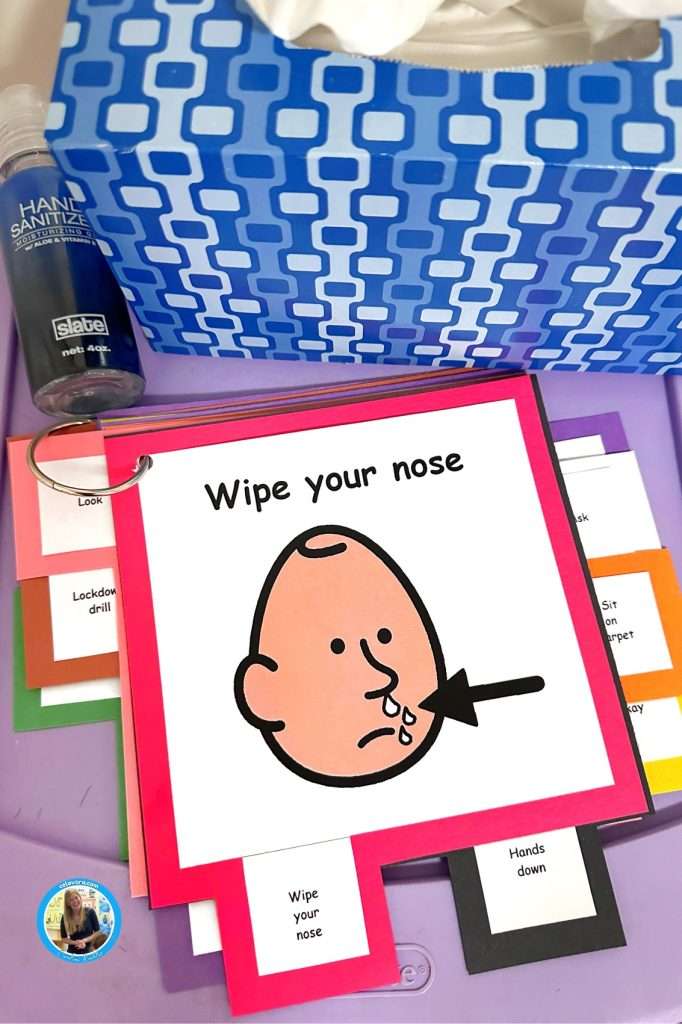
When I want a student to “stop” an activity, I verbalize the word while showing them the “stop” card.
Through the use of cue cards, individuals with autism can gain confidence in their abilities and experience increased levels of independence and improved communication skills.
Helps with self-regulation and focus
Using cue cards as a visual behavior tool for autism can also greatly assist with self-regulation and focus.
The visual cues provided by the cards help individuals with autism to better understand and manage their emotions and behaviors.
This includes visually representing different self-regulation strategies such as deep breathing or taking a break.
Visuals offer a tangible and accessible way for individuals to navigate challenging situations and regulate their own responses.
Additionally, the visual prompts help to improve focus and attention by providing a clear and structured visual schedule or routine.
While I do not use cue cards as schedules, many others have said that they do use them as a daily schedule or mini schedule.
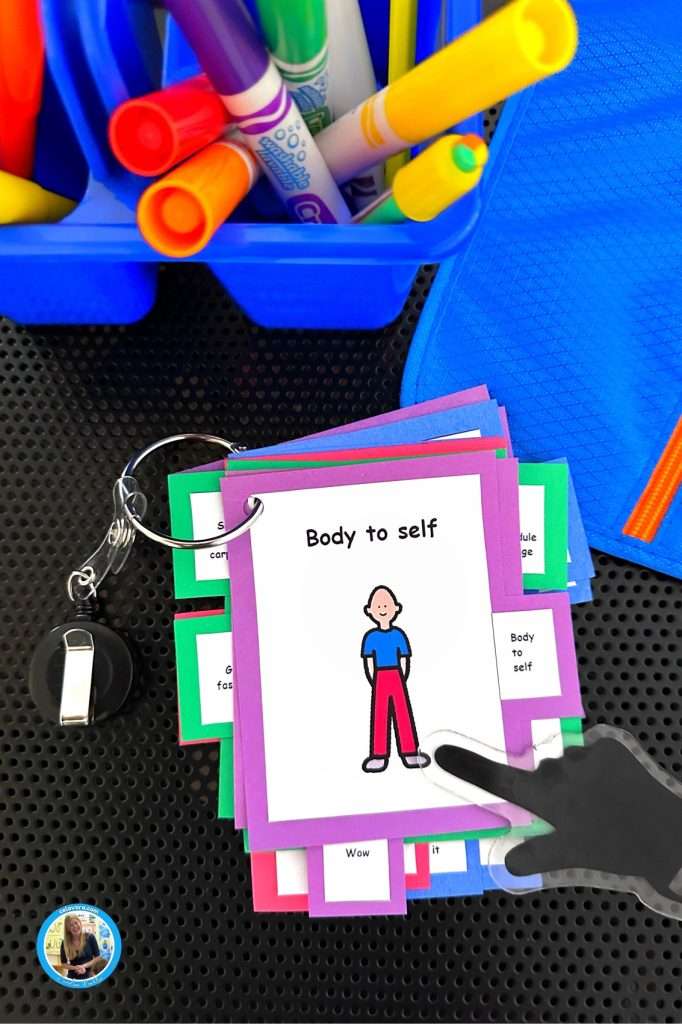
This creates a portable schedule on a keyring for easy flipping and resetting.
Visuals allow individuals to better anticipate and transition between activities, promoting a sense of control and reducing anxiety.
Through the use of cue cards, individuals with autism can gain valuable tools for self-regulation.
Ultimately, this enhances their ability to stay focus and engage in various tasks and activities.
Easy to customize for individuals
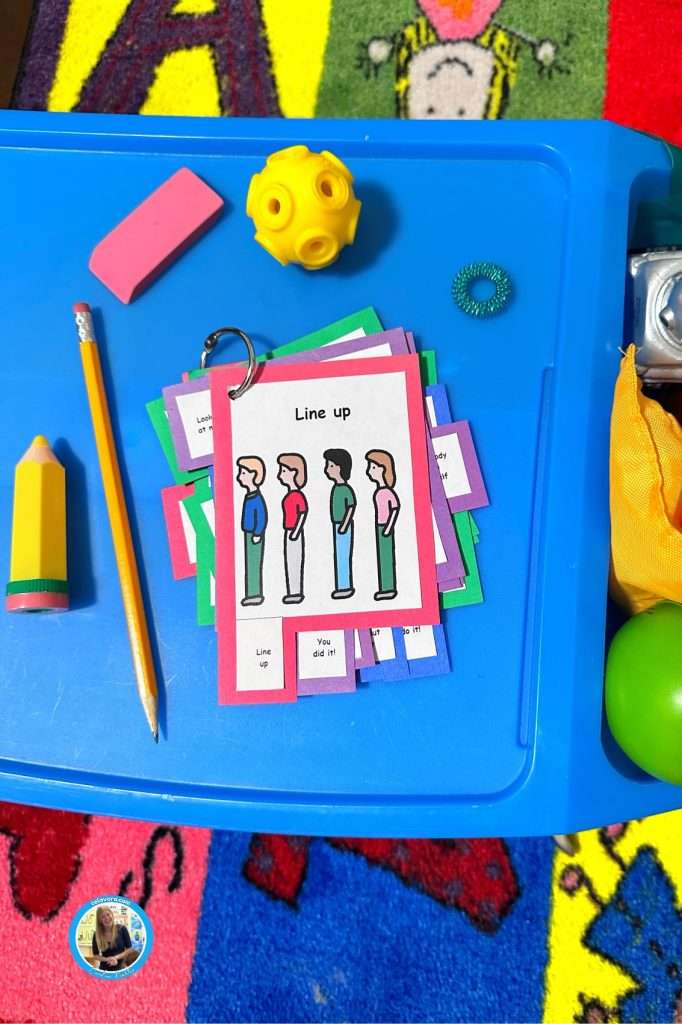
Cue cards offers a unique feature that makes it incredibly easy to customize for individuals.
Caregivers, therapists, and educators can personalize the visuals to meet the specific needs and preferences of each individual with autism.
Whether it’s adding new visuals, modifying existing ones, or creating personalized routines, the customization options are virtually endless.
My favorite way to do this is by adding cards with important individuals faces and text above.
For example, I have a card that reads: Mrs. Koehler, I want.
This card is a prompt for a student to utilize their words and express their wants directly to me.
I recommend creating visuals like this for all important individuals in an individual with autism’s life.
This strategy helps connect faces and names while promoting communication.
By customizing cue cards, they truly become a versatile and empowering visual behavior tool for autism.
Great for home, school and clinical settings
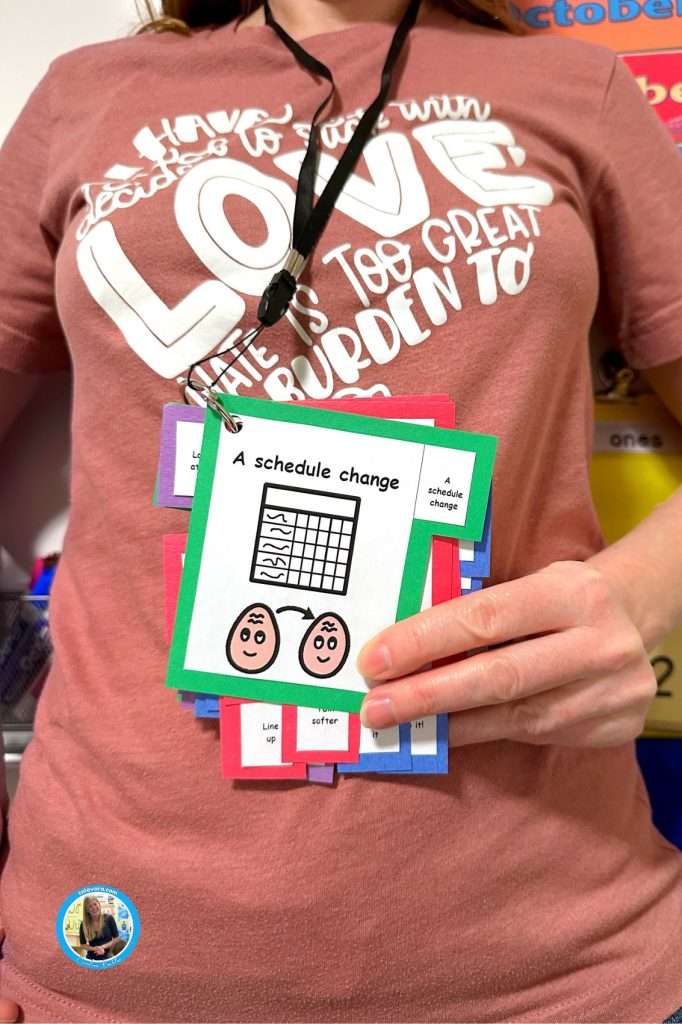
Whether you’re at home, school, or in clinical settings, cue cards provides a visual support system that can enhance communication, promote positive behaviors, and foster independence.
In the comfort of home, caregivers can utilize cue cards to create personalized routines and visual schedules. In school settings, teachers can incorporate cue cards into classroom management strategies.
This allows them to support students in understanding expectations and promoting a positive learning environment.
Additionally, in clinical settings, therapists can utilize cue cards to facilitate communication and reinforce social skills during therapy sessions.
Any time an activity, behavior, skill, or any thing else needs reinforced, use the visuals to help.
Encourages positive behaviors
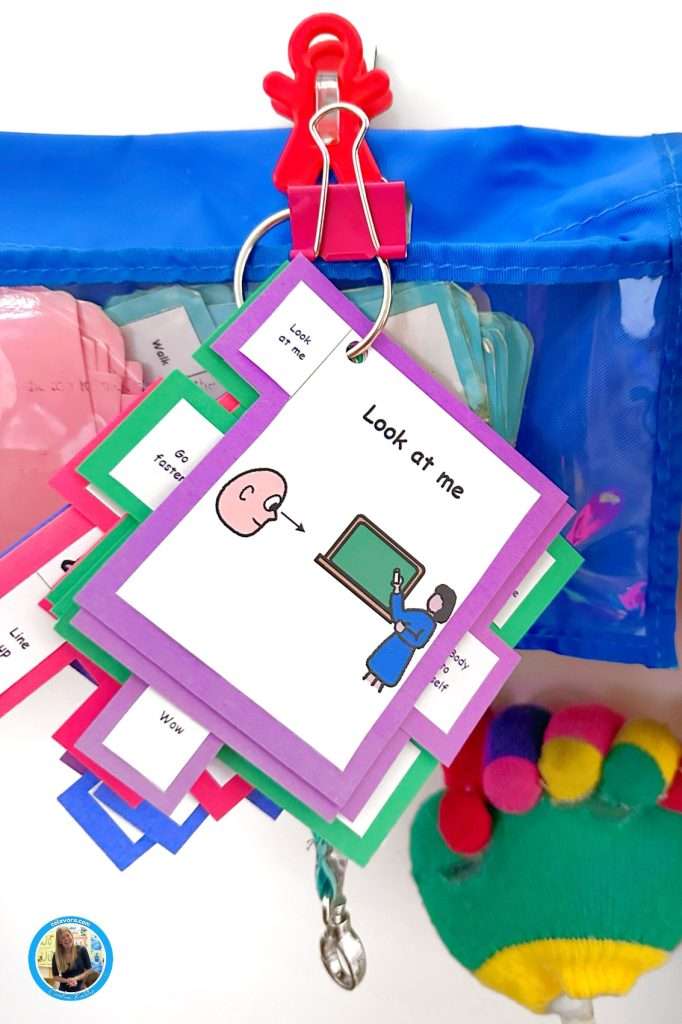
Cue cards support individuals by encouraging positive behaviors in a visual and engaging manner.
Through the use of visual cues and prompts, this versatile tool allows individuals to easily understand and follow desired behaviors.
By providing clear and concrete visual representations, they are an effective behavior management strategy.
Regular use reinforces positive actions and helps individuals with autism develop and maintain important skills.
This includes promoting social interactions, encouraging self-regulation, or fostering independence.
Cue cards is a simple tool that can decrease misunderstanding and provide visual support in the most calm and relaxing manner.

Cue cards are easy to make
The great news is that creating your own c is incredibly easy.
You don’t need any special skills or expensive materials to get started.
All you need is some paper or cardstock, a pen or marker, and a bit of creativity.
Simply think about the specific behaviors or skills you want to address, and then draw or write visual cues that represent those behaviors.
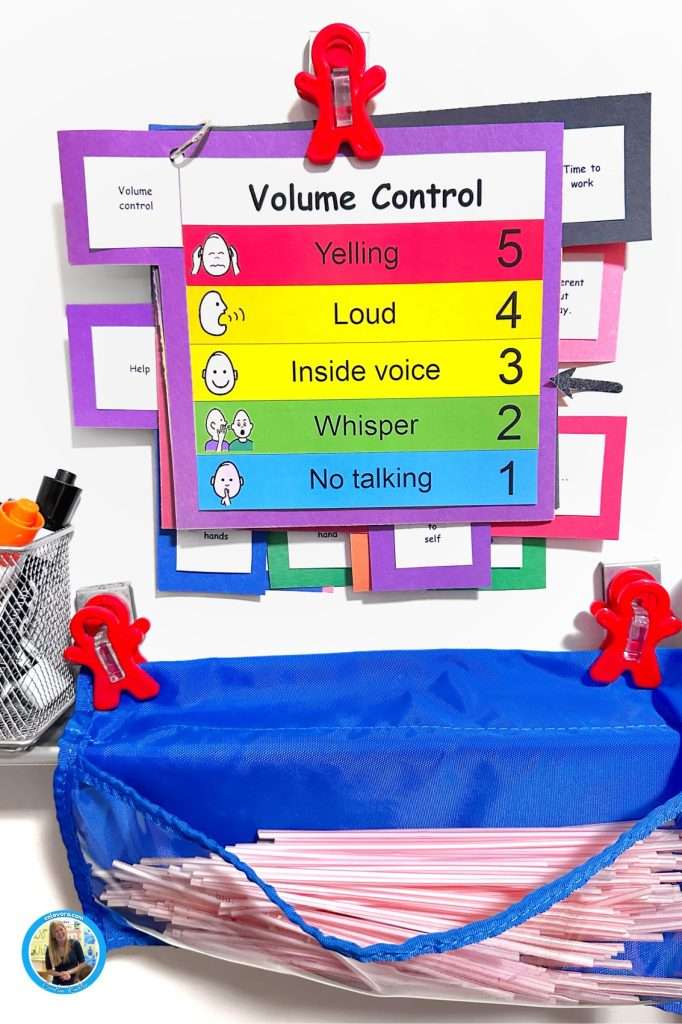
You can use simple icons, pictures, or even photographs to make the cue cards visually appealing and relatable.
I utilize Mayer-Johnson’s Boardmaker for this and highly recommend it.
To make your cards even more functional, add a side tab with the card’s label.
With just a little time and effort, you’ll have your own personalized set of cards ready to use as a visual behavior tool for autism.
Builds confidence and self-esteem
Using cue cards as a visual behavior tool for autism not only helps individuals with autism develop important skills and behaviors, but it also builds confidence and self-esteem.
This is done through clear visual cues and prompts.
When rules and expectations are understood, individuals engage in desired behaviors independently.
As they successfully follow the cues and experience positive outcomes, they gain a sense of accomplishment.
This can lead to an increase in social interaction, communication over all, and belief in their own abilities.
Boosting confidence and self-esteem is always at the top of educator’s list to increased growth and development.
Cue cards help individuals with autism understand and interact with the world around them.
Also, they help decrease frustration and confusion.
I’m always a fan of behavior tools that do that.

Colorful and visually stimulating cue cards
The use of vibrant and visually engaging elements in cue cards creates an immersive and interactive experience for individuals with autism.
The visuals catch their attention while clarifying commands and expectations.
The use of different colors and graphics helps to differentiate between various cues and prompts.
Of course, the ultimate goal is to make it easier for individuals to understand and respond to the cues.
These visuals add a new level of engagement to the learning process, making it more effective for individuals with autism.
I also use the construction paper backing color as a tool as well.
This helps me find cards easily and communicates additional information to my students.
For instance, stop is in red, bathroom is in yellow, go is in green, and so on.
Cue cards help supporters of special needs
Supporting individuals with special needs can be a rewarding yet challenging journey.
That’s why having a valuable resource at your disposal can make all the difference.
Cue cards offers a comprehensive and user-friendly approach to supporting individuals with autism and other special needs.
With a wide range of visual cues and prompts, they provide a practical and effective tool for promoting communication, managing behaviors, and fostering independence.
Whether you’re a parent, caregiver, or educator, visual cue cards equips you with the tools you need to create a supportive and inclusive environment.
From daily routines to social interactions, this valuable resource offers guidance and support every step of the way.
With cue cards, supporting individuals with special needs has never been easier or more accessible.
In conclusion, cue cards are a valuable tool for individuals with autism and their families.
They provide a visual representation of expectations and can help reduce stress and anxiety in social situations.
Start incorporating cue cards into daily routines to benefit those with autism and promote positive behavior.
So, let’s grab some cue cards and start creating a supportive and understanding environment for our loved ones with autism.


