Observations in Classroom Environments: A Window into Learning
Look over the shoulder of any observers during observations in classroom settings, and you will find a clipboard full of valuable data.
Here, young minds come alive, displaying their strengths and weakness at school. 🧠
From the eager hands raised in anticipation of answering a question to the animated discussions that spark intellectual curiosity, every interaction is a testament to the power of education.
In these classrooms, teachers play the role of guides, nurturing and shaping the young minds before them.
They create a safe and engaging space where students feel empowered to explore, question, and challenge their own limits.
By observing students in these classroom environments, we gain valuable insights into the learning process.
This allows teachers to understand the factors that contribute to student engagement, motivation, and success.
Observing a student’s participation within their classroom environments is like peering through a window into the magical realm of learning. 🪟
Join us on a journey of discovery as we delve into the intriguing world of classroom observations, unlocking the secrets of effective teaching and inspiring learning experiences.

The importance of classroom observations
Classroom observations serve as a critical tool for both general educators and special educators.
These observations provide a unique opportunity to witness firsthand the dynamics of the learning environment and the impact of instructional strategies on student outcomes.
By observing students in the classroom, educators can assess the effectiveness of their teaching methods and identify areas for improvement.
Afterwards, they can make informed decisions about instructional interventions. 📝
Classroom observations come in different forms, each serving a specific purpose.
Formal observations are typically conducted by when students are under going a special education evaluation.
However, they are also done if behavior concerns arise and a functional behavior assessment is required.
Informal observations, on the other hand, are more flexible and are often used for progress monitoring.
Both types of observations have their merits, providing valuable information that can inform instructional practices and support student achievement.

Benefits of classroom observations for teachers
Classroom observations offer numerous benefits for teachers, enhancing their professional growth and improving their teaching practices.
By observing their students’ engagement, behavior, and understanding of the material, teachers can gauge the effectiveness of their instructional strategies.
They can identify areas where students may be struggling and adapt their teaching methods accordingly. 💻
Classroom observations also provide an opportunity for self-reflection, allowing teachers to critically evaluate their own teaching practices and make adjustments to better meet the needs of their students.
Furthermore, observations can help teachers build stronger relationships with their students, as they gain a deeper understanding of their unique learning styles and individual needs.

Benefits of classroom observations for students
The benefits of classroom observations extend beyond the teachers themselves; they also have a profound impact on student learning and development.
When teachers observe their students in action, they gain valuable insights into their strengths, weaknesses, and specific learning needs. 🧐
This knowledge allows teachers to tailor their instruction to meet the individual needs of each student, ensuring that they receive the support and guidance necessary for success.
Classroom observations also provide an opportunity for students to receive timely feedback and encouragement, promoting a growth mindset and fostering a positive learning environment.
Additionally, observations can help identify students who may require additional support or intervention, ensuring that no student falls through the cracks.

How to conduct effective classroom observations
Several key considerations should be taken into account to conduct effective classroom observations.
First and foremost, it is essential to establish a purpose for the observation. Whether it is to evaluate student engagement, or gather data for progress monitoring, a clear objective will guide the observation process.
Next, it is important to establish a comfortable and non-threatening environment for both the observer and the observed. 🏫
This may involve building rapport with the teacher and students, ensuring confidentiality, and providing feedback in a constructive and supportive manner.
Additionally, it is crucial to develop a systematic approach to data collection, using observation tools and protocols that align with the objectives of the observation.
Finally, it is important to analyze and interpret the data gathered from the observation, drawing meaningful insights and identifying areas for improvement.

Analyzing and interpreting classroom observation data
Once you collect data from classroom observations, you must analyze and interpret it effectively.
This involves organizing the data in a meaningful way, identifying patterns, and drawing conclusions based on the evidence gathered.
Various data analysis techniques can be employed, such as coding, categorizing, and quantifying observations. 🎯
By analyzing the data, educators can gain a deeper understanding of the learning environment, student behaviors, and instructional strategies that are most effective.
Teachers can use this information to inform decision-making, shape instructional practices, and drive continuous improvement in teaching and learning.

Using classroom observations to inform instructional strategies
Teachers can use the insights gained from classroom observations to inform and enhance their instructional strategies.
By identifying areas where students may be struggling or disengaged, teachers can adjust their teaching methods to better meet the needs of their students.
This may involve incorporating different instructional approaches, providing additional support or resources, or modifying the curriculum to make it more accessible and engaging.
Furthermore, observers identify the strengths and weaknesses of the student through classroom observations.
By using classroom observations as a tool for reflection and growth, educators can continuously improve their teaching practices and provide optimal learning experiences for their students.

Challenges and considerations in conducting classroom observations
While classroom observations offer valuable insights, they also present certain challenges and considerations.
One challenge is the potential for observer bias, where the presence of an observer may influence the behavior of both the teacher and the students. 📋
Additionally, the logistics of conducting classroom observations can be complex, requiring careful planning and coordination.
Ensure that you conduct observations at times that are least disruptive to the learning environment, as it is important.
Of course, only conducted observations if appropriate permissions have been obtained and protocols are followed.
Observers also need to make sure that they are observing students during times that will provide necessary information.
For example, if a student is struggling in math, it would make sense to observe the student during math instruction instead of during social studies.
Finally, it is crucial to maintain confidentiality and ethical standards when collecting and analyzing observation data.
We should always respect the privacy and rights of both teachers and students.
Observation tools and resources
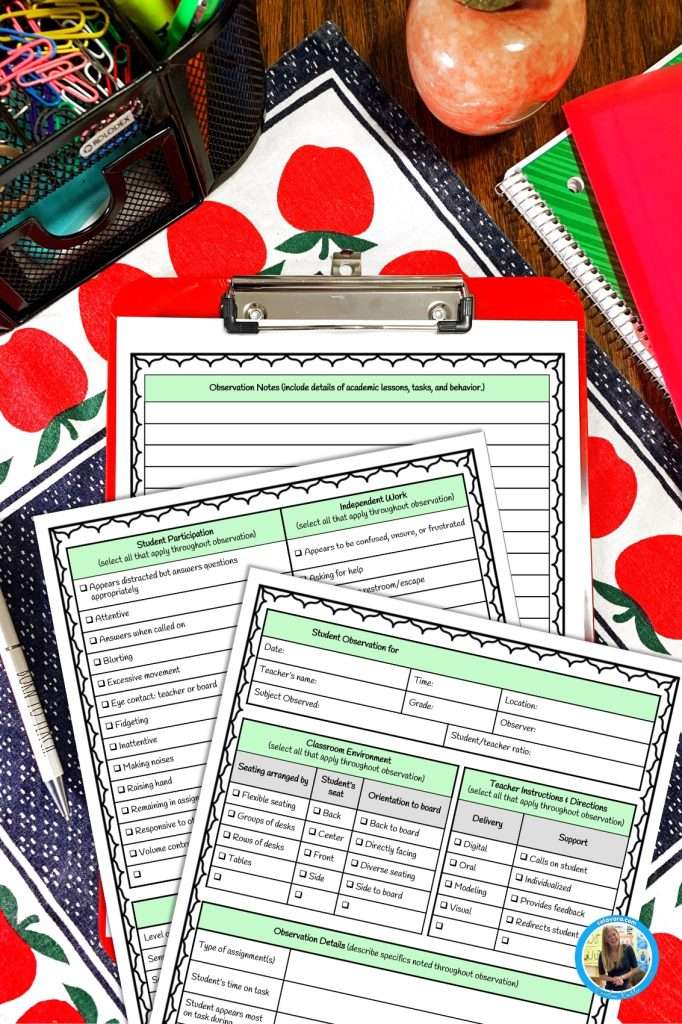
To facilitate effective classroom observations, a variety of tools and resources are available.
These tools can help streamline the observation process, guide data collection, and support analysis and interpretation. 📚
Observation checklists and rubrics provide a structured framework for capturing observations and evaluating teaching practices.
Timed analysis can provide teachers with a time on task analysis and can give important information for progress monitoring.
By utilizing these tools and resources, educators can maximize the benefits of classroom observations and make informed decisions about their instructional practices.

The role of classroom observations in improving education
In conclusion, classroom observations play a crucial role in improving education by providing valuable insights into the learning process.
By observing students in their natural classroom environments, educators gain a deeper understanding of their needs, strengths, and areas for growth.
This knowledge allows teachers to tailor their instruction, provide timely feedback, and create a supportive and engaging learning environment.
Classroom observations also inform instructional strategies, promoting continuous improvement and enhancing student outcomes.
While conducting classroom observations may present challenges, the benefits far outweigh the difficulties.
By embracing classroom observations as a powerful tool for professional growth and student success, educators can unlock the secrets of effective teaching and inspire transformative learning experiences. 🔐
So, step into the classroom, observe the magic in action, and use observations in classroom environments to witness the incredible journey of learning.