Sight Words Kindergarten Solutions for Teachers
Teaching reading and sight words kindergarten lists can be quite a challenge.
This is especially true when you’re working with young students who are still learning the alphabet.
But fear not, there’s a fun and effective way to tackle this task!
I like to use upbeat sight word songs and poems with movement, videos, and singing.
This strategy engages all of my students, whether they’re in general education, have disabilities, or are learning a new language.

Sight Word Fun
By turning popular songs and nursery rhymes into catchy spelling tunes, I grab my students’ attention and make learning enjoyable.
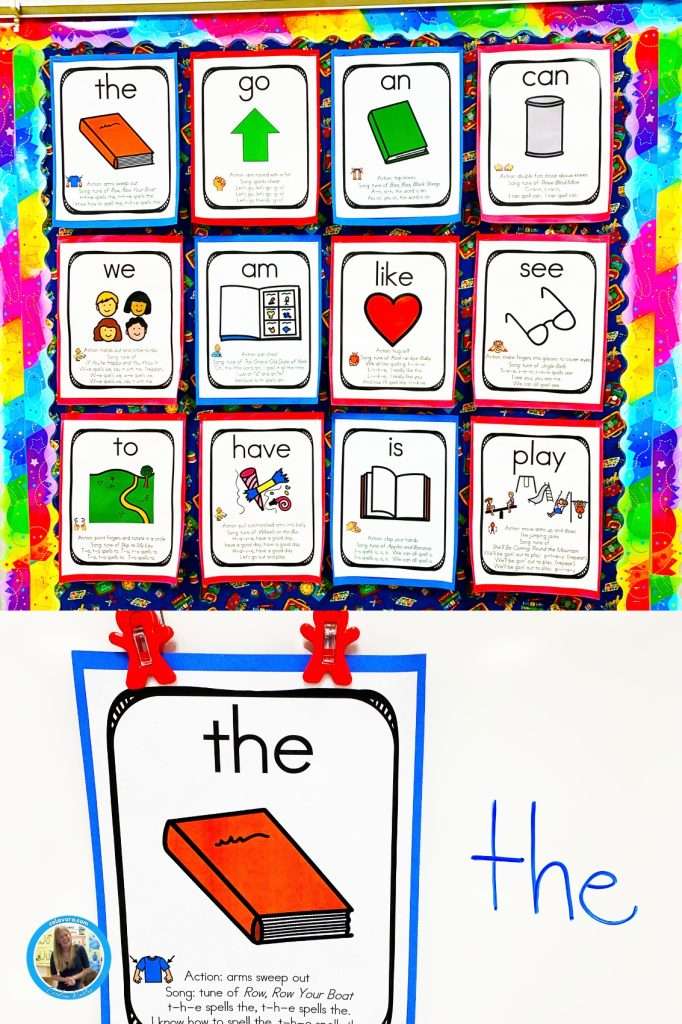
Colorful posters and writing books reinforce these sight words.
Each week, I introduce a new word using the posters, along with audio songs and videos in our group activities.
We practice the song and motions for each word, and once the week is over, the poster goes up on the wall for everyone to see.
These sight word sets also come in handy during journal time, group activities, and review sessions.
It’s a fun and engaging way to help our students become confident readers!
Low Prep Plan for Sight Words Kindergarten
No prep and low prep activities make my teacher heart happy.
Even better is an engaging activity that can be done over and over again with the same materials.
To do this, I use a Sight Word lesson plan that fits in for each word every week.
I like to display my weekly Sight Word Plan in the big group area during carpet time.
Each week, I stick to the same routine but switch up the focus word.
I find it super convenient because I can gather all the materials I need and keep them in one spot for the entire year.
It makes learning fun and keeps my planning to a minimum!
How do I do and what you can do, too?
Let’s check it out day by day.
Monday Sight Words Plan
Kick off the week by introducing the focused sight word and song.
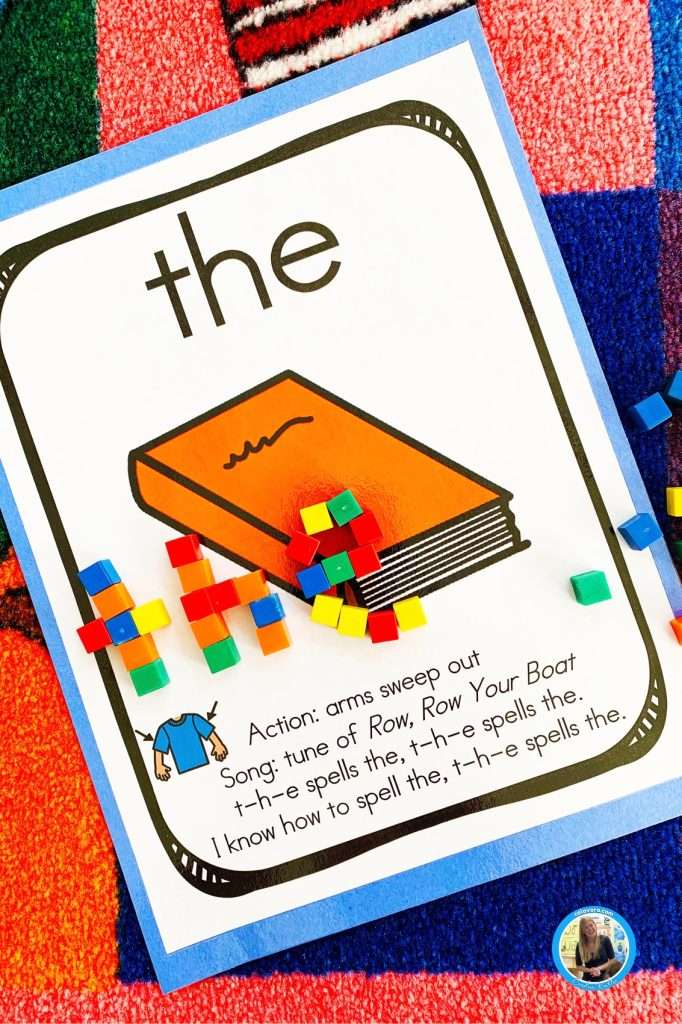
Take a look at the poster and flashcard together.
Talk about tall letters, short letters, and basement letters.
Next, sing sight word song with the group or press play if you aren’t a singer. (But the kids don’t care!)
Afterwards, practice the action that goes with the song
Then, sing the song multiple times and do the fun movement together.
Lastly, have the students read the word with some fun pointers!
Tuesday Sight Words Kindergarten Lesson
As we move on to Tuesday, play the sight word writing video while singing and moving along.
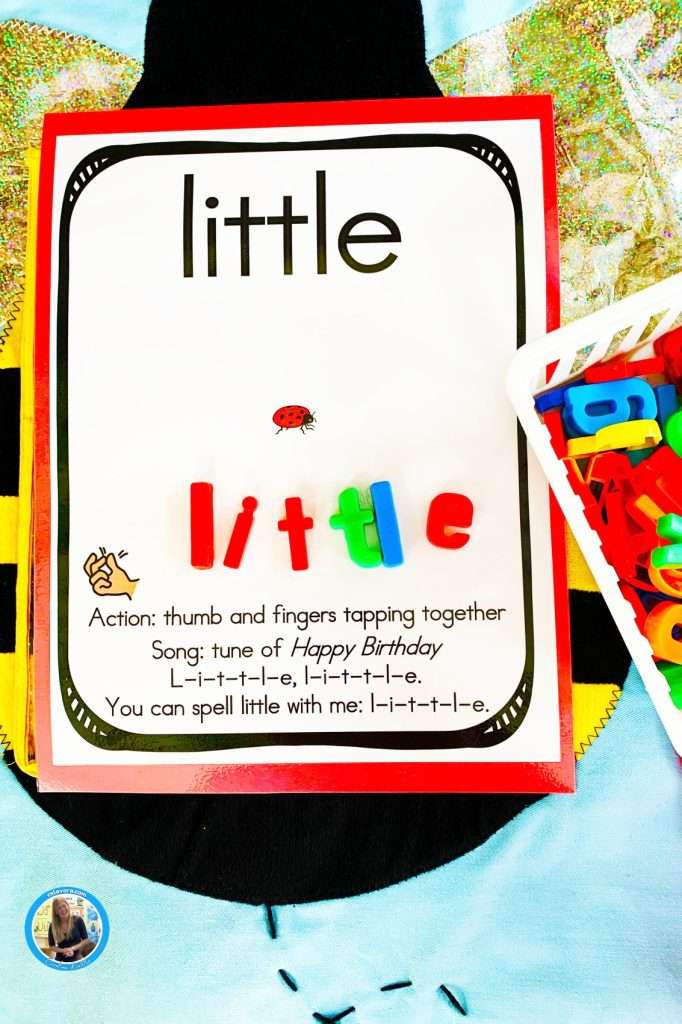
Use magnets or alphabet tiles to build the word on the board.
Give each child a chance to put the letters together correctly, either on the board or at their own work spot.
Wednesday Sight Words Activities
On Wednesday, sing the song and do the actions.
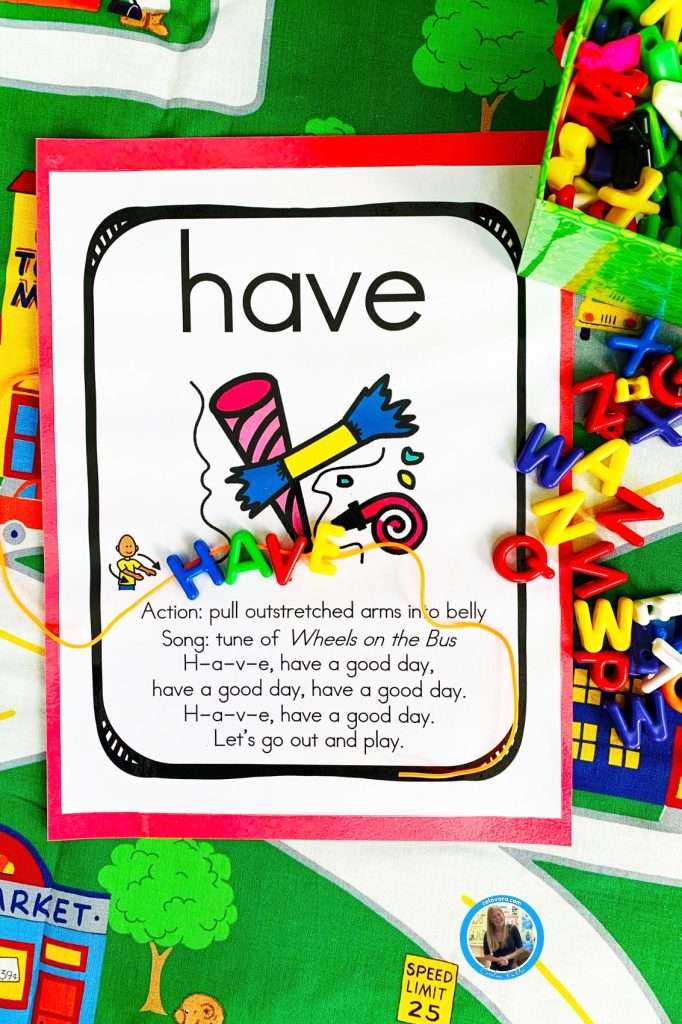
Next, grab your small wipe-off boards, doodle pads, alphabet beads or bendable sticks to write the words.
Demonstrate the correct letter formation on the board.
Then, walk around the group discussing letters and formation.
Thursday Sight Words Kindergarten Fun
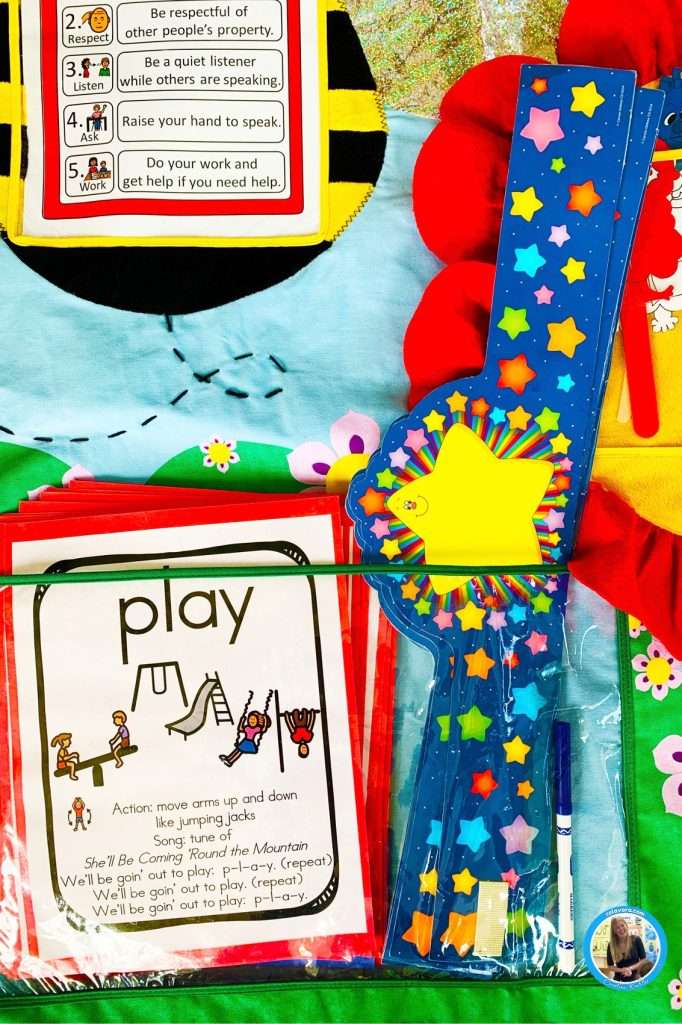
Thursday is all about singing along with the sight word video and getting creative with body spelling.
Have the students spell out words using their bodies.
You can do this a couple of ways.
First, have the students stand up and shape their bodies to make the letter like in the song, YMCA.
Some students do better with this lying down on the class rug.
The other way I do this activity is with back selling.
Each student gets a partner.
Next, one person is the writer and the other the paper.
Using the index finger, the write traces the letters of the word onto the paper student’s back.
Do this several times and switch.
If you have an odd number, make sure you play, too!
Thursday is always a hit with the kids, especially when we do the back spelling activity!
Friday Sight Words Kindergarten Finale
Finally, on Friday, sing the song again for our current sight word.
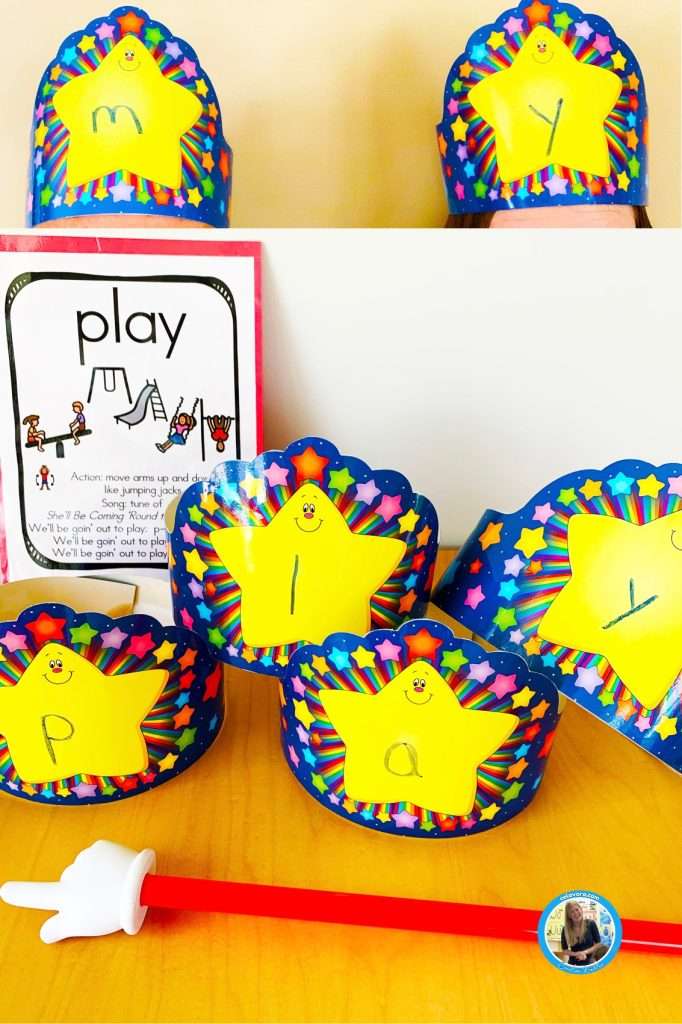
Then I’ll grab my laminated paper crowns with Velcro fasteners.
Using a washable marker, I write one letter of the sight word on each crown.
So, for the sight word, look, I would need four crowns and would write an l, o, o, k each on one crown.
Then, I use my four volunteers and I mix their position up from left to right so they spell out a funny nonsense word.
Look might turn into olok.
Next the students in the audience sound out the nonsense word and then tell the crown wearers how to get into the correct order to spell look.
The students will mix up the letters and then work together to figure out the correct order.
It’s always a fun and exciting way to end the week!
Create a Lasting Connection
Pictures help solidify learning.
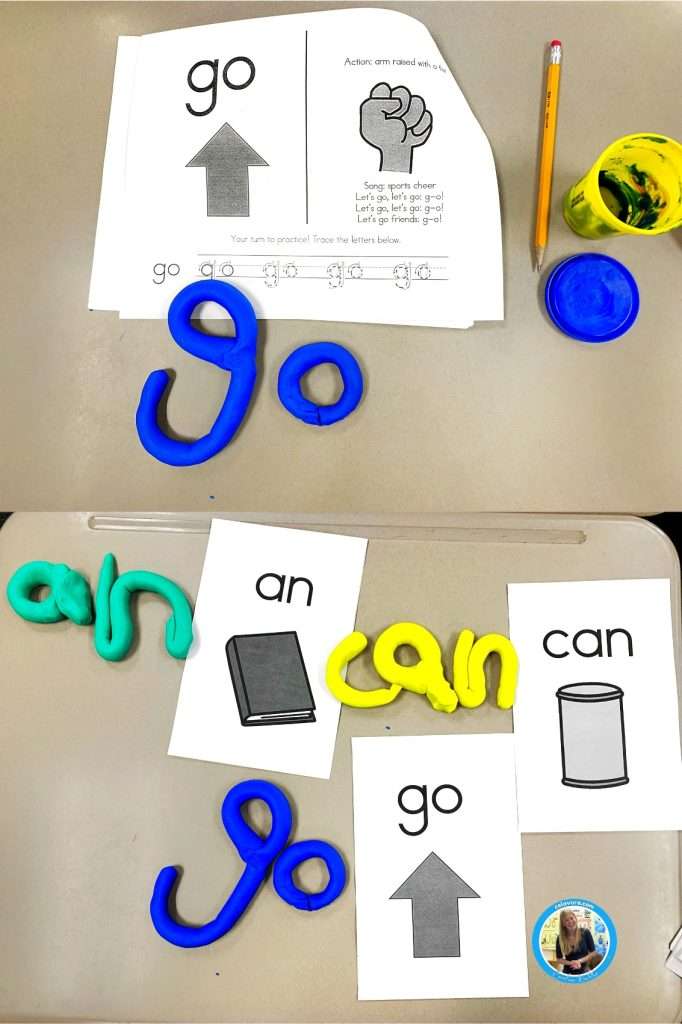
When I introduce new words to my students, I use a drawing that represents the word as a teaching tool.
This fun and engaging method shows a simple pictures that go along with each word.
Some words like the, is, and am are what I like to call book words because they help us read, listen, and understand what others are saying.
You’ll notice these words have a little closed or open book symbol on the poster or flashcard to remind us they’re important book words.
The other sight words have pictures that represent the word to help students make a visual connection.
I love exploring these pictures with my students and encouraging them to think of other objects or images that could represent the words.
Sight Word Writing
Sight words are known to be read but they also need to be written as well.
It’s super easy to pull together reading and writing with sight words.
During our writing time, I like to show my students how I write on the board and in videos.
The videos are especially helpful because my hand isn’t blocking the view, so students can see exactly what’s happening.

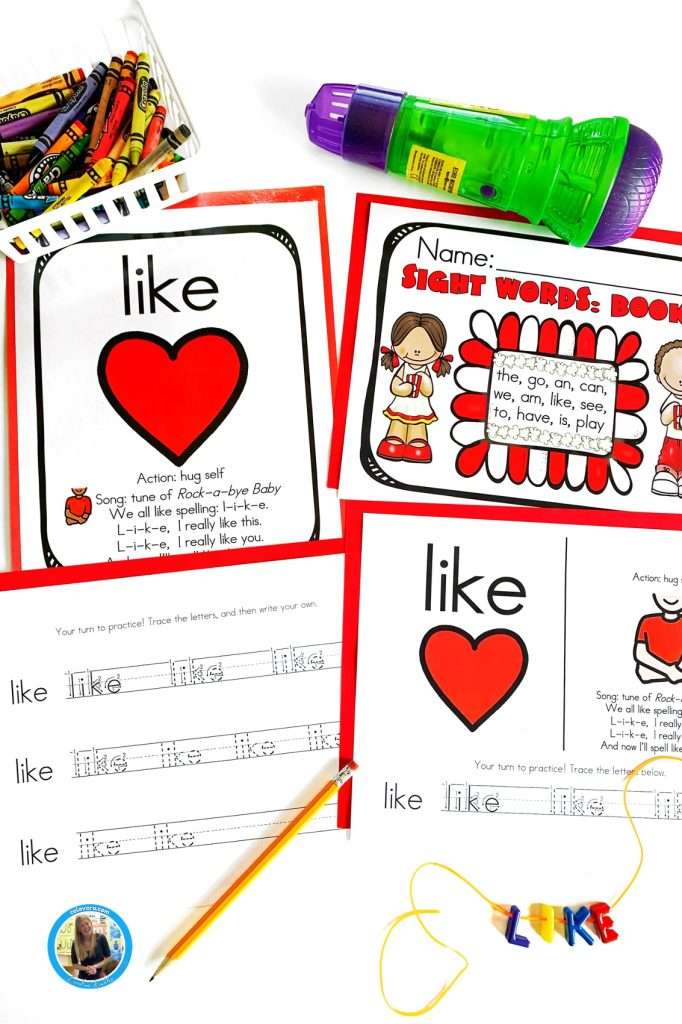
I create little bound books for each student by printing and copying writing pages and stapling them together.
The book includes each sight word with it’s picture, the action, the song, and practice writing page.
Special font with tracing, numbers, and dashed lines helps reinforce proper letter formation.
Also, I take this time to spy on pencil grasp and correct or reinforce as appropriate.
By the end of the school year, each student has three different books to take home and practice with.
These books come in handy for journaling activities on Mondays and in our Language Arts Centers all year long.
It’s a great way to keep learning fun and interactive!