


Behavior Management Strategies to Transform Your Classroom
Behavior management can feel overwhelming, but with the right tools, you can create a structured and positive learning environment.
Behavior management isn’t just about discipline; it’s about setting clear expectations, reinforcing positive behaviors, and fostering a supportive classroom culture.
The right strategies can make all the difference, and with the right resources, you can implement them effortlessly.
A well-managed classroom leads to more instructional time and less frustration for both teachers and students.
By consistently applying behavior management techniques, you can create a learning environment where students feel safe, respected, and motivated.

Why Positive Behavior Management Works
A proactive approach to behavior management helps students understand expectations and feel motivated to meet them.
When students see that good behavior leads to rewards and recognition, they are more likely to repeat those actions.
Tools like behavior charts, token boards, and first-then boards help provide structure and consistency. Instead of reacting to misbehavior, a structured system lets you reinforce good choices.
For example, using the Good Behavior Reward Brag Set gives students positive recognition, boosting their confidence and motivation.
Teachers can use this system to transform a challenging classroom into a place where students work toward their goals with excitement.
By focusing on what students do right, you naturally minimize disruptions.
Teachers who implement positive behavior systems often see increased student engagement and a more cooperative classroom environment.

Implementing Token Boards for Success
Token boards are a game-changer for reinforcing good behavior in the classroom.
Whether you teach general education, special education, or a mixed setting, these boards provide a visual representation of progress.
The I’m Working For Charts is perfect for students who need clear, tangible goals.
One kindergarten teacher used this with a student who struggled with transitions.
By earning tokens for smooth transitions, the student quickly adapted and felt proud of their progress.
Token boards work because they set small, achievable goals that encourage consistent positive behavior.
These boards can be customized to fit various classroom needs, ensuring that students with different learning styles remain engaged.
Additionally, they can be easily integrated into existing behavior plans, making them a flexible and effective tool.

Daily Behavior Management Charts for Classroom Success
Tracking behavior daily helps students and teachers see patterns and progress.
The Daily Behavior Charts Bundle allows teachers to log student behavior and communicate with families.
These behavior charts are excellent to help a student struggling with self-regulation.
By reviewing the chart together at the end of each day, the student becomes more aware of their behavior and improved over time.
With a simple format that allows for tracking and reflection, this tool helps reinforce good habits and provides valuable documentation for progress monitoring.
Behavior charts also help create accountability, as students can see how their choices impact their progress.
By reviewing these charts with students regularly, teachers can encourage self-reflection and goal setting.
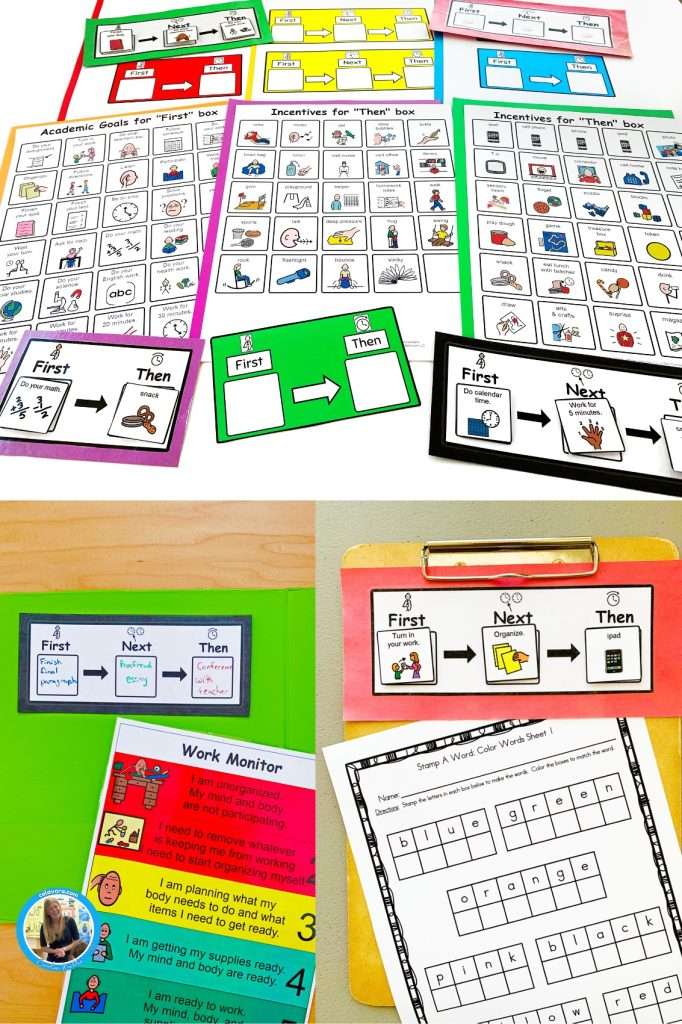
First-Then Boards for Clear Expectations
For students who need structured guidance, first-then boards provide a clear and predictable system.
The First-Then Boards for Positive Behavior Management give students visual cues to understand what comes next.
A special education teacher found these boards helpful for a student with autism who struggled with transitions.
By showing “First clean up, then free play,” the student could visually process the expectation, reducing frustration.
These boards work well for students who need extra structure and support.
They help reduce anxiety by setting clear, immediate expectations that students can understand and follow.
Teachers can use them for various activities, including academic tasks, classroom routines, and social interactions.
Also, they are wonderful to use as mini schedules when introducing students to daily visual schedules.

Individual Behavior Management Charts for Personalized Support
Some students benefit from customized behavior plans.
Check in check out charts lets teachers create individualized plans based on each student’s needs.
One fourth-grade teacher used this with a student who needed frequent check-ins.
By setting small, achievable goals throughout the day, the student stayed on track and felt more confident in their ability to succeed.
Individualized charts allow teachers to target specific behaviors and provide meaningful reinforcement.
These charts also help students take ownership of their behavior by allowing them to track their own progress.
When used consistently, they can contribute to long-term behavioral improvements and increased student motivation.

Choice Boards for Student Motivation
Giving students choices increases their investment in behavior management.
The choice board allows students to pick their own rewards, making reinforcement more meaningful.
For example, try using this system with a student who is reluctant to participate in group activities.
By letting the student choose a preferred reward, participation can improve and engagement starts to increase.
Choice boards empower students by giving them control over their incentives.
This autonomy helps students feel more responsible for their actions, leading to greater intrinsic motivation.
Choice boards also allow teachers to tailor rewards to individual student interests, ensuring that reinforcement remains effective and engaging.

Reward Chart Bundles for Classroom-Wide Success
A structured reward system benefits the entire classroom.
The reward charts provide various templates to fit different classroom needs.
These can even be implemented school-wide to promote positive behaviors in hallways, lunchrooms, and classrooms.
With consistent reinforcement, students took ownership of their behavior and strived to meet expectations.
These charts work well for both individual and group reinforcement.
By using a school-wide system, teachers can create a culture of positivity and accountability that extends beyond the classroom.
Reward charts also provide a visual reminder of progress, helping students stay motivated and focused on their goals.

Behavior Management Implementation Today
Behavior management transforms classroom dynamics, making learning environments more structured and positive.
With tools like token boards, behavior charts, and choice boards, you can create a system that encourages good behavior.
Whether you teach general education, special education, or a mixed classroom, these strategies help set clear expectations and reinforce positive actions.
Start using these behavior management tools today!
These supports help you create a classroom where students thrive.
Consistently applying these strategies will not only reduce disruptions but also foster a learning environment
This leads to every teacher’s dream come true: a classroom where students feel valued and motivated.
Investing in effective behavior management now will lead to long-term success for both teachers and students.


