Behavior Intervention Plan Template: Tools to Make a Difference
A well-structured behavior intervention plan template (BIP) can significantly change a student’s success in school.
Teachers who work in special education know the importance of managing behavior to support both academic and social growth.
But creating and implementing an effective behavior plan can sometimes feel overwhelming.
This is especially true with challenging students who have previously had unsuccessful plans.
With the right tools, however, you can simplify the process and provide tailored support to your students.
There are essential tools and resources that will help you write strong BIPs quickly.
And if you’re looking for a behavior intervention plan template, we have solutions ready to support your needs.

Create Special Education IEP Behavior Plan
Functional behavior assessments (FBAs) and behavior intervention plans (BIPs) are often the foundation of success for students with challenging behaviors.
Functional Behavior Assessments (FBAs) are essential tools used in the analysis of student behavior.
Their goal is to identify the underlying triggers that lead to specific actions.
By understanding these triggers, an effective Behavior Intervention Plan template (BIPs) is then tailored to individual needs.
These plans are proactive measures designed to reduce problem behaviors by implementing targeted strategies and interventions.
Key tips for crafting successful behavior plans include
- setting clear, measurable goals
- establish meaningful rewards and consequences
- involving parents and caregivers in the process
- continuously monitoring progress
Additionally, it is crucial to remain flexible and adjust the plan as necessary, ensuring it remains effective and supportive for the student.
Start with a functional behavior assessment that involves frequency analysis.
Then, analyze the data to make a behavior plan.
Use a behavior intervention plan template that guides you through best practice principles.
Also, I recommend saving old behavior plans so you can reference them in the future as you write new ones.

Behavior Intervention Plan Template for Mental Health
In addition to a behavior plan, some students need a safety crisis plan.
Managing student crises effectively requires a calm and structured response to emergencies.
A solid plan address both immediate and long-term needs.
The first step is to quickly assess the situation, prioritizing the safety and emotional well-being of the student.
Immediate crisis interventions may include providing a safe space for students to express their feelings.
Also common support includes offering one-on-one assistance during a crisis including implementing de-escalation techniques to help regulate emotions.
Long-term plans should incorporate regular check-ins with students.
Additionally, note access to mental health resources, and how the student will develop personalize coping strategies.
Again, I recommend a step by step template that helps educators address all concerns.
By focusing on emotional regulation and safety, educators can create a supportive environment that fosters resilience and healing in students facing crises.

Tools to Support Behavior Intervention Plan Template
One effective component of behavior plans is the implementation of behavior contracts.
These contracts serve to set clear expectations, encouraging students to take ownership of their actions and decisions.
I use these with all grades but find this especially useful with older, secondary students.
To ensure these contracts meet individual needs, have a variety of template options are available for teachers to customize.
This flexibility allows for a more personalized approach, reinforcing positive behavior while also establishing clear rewards and consequences.
Additionally, behavior contracts can empower students by enabling them to track their own progress.
Plus, special educators are always looking for concrete data for behavior plans!
Also, behavior contracts can be motivating to help students to work toward their personalized goals.
Ultimately, the goal is to foster a sense of accountability in the student’s behavior.

Behavior Interventions for BIPs
Supporting self-regulation and teaching coping strategies are essential components of behavior intervention plans.
Students who are given behavior plans face behavioral challenges.
A plan will not fix that but the tools placed in the plan and then implemented might.
Practical tools designed to enhance these strategies can be seamlessly integrated into a student’s behavior intevention plan.
Resources such as deep breathing exercises and problem-solving techniques empower students.
These coping strategies can be employed in various settings, including small groups, whole group sessions, or one-on-one interactions.
This goal is to allow for tailored instruction that meets individual needs.
The importance of this piece of a behavior intervention plan template cannot be understated.
This cornerstone has the task of enabling students to manage their emotions and behaviors more effectively.

Check-In Check-Out Intervention
The Check-In Check-Out (CICO) system is an effective tool that supports behavior intervention plans by providing daily feedback to students while monitoring their progress.
This approach is particularly beneficial for students who thrive on regular, consistent feedback regarding their behavioral goals.
By utilizing editable sheets, educators can easily track and document student behavior, ensuring that support remains uniform and tailored to individual needs.
Check In Check Out is great for both daily and weekly data documentation.
It allows for a clear overview of student progress over time.
Its simplicity and effectiveness make it an invaluable resource for fostering positive behavioral changes in students.
If you have a student who requires a lot of contact and the parents want constant feedback, this is a great solution.

Behavior Charts for Documentation
Behavior intervention plans can be significantly enhanced through the use of various supportive tools, particularly behavior charts.
These charts serve as simple yet effective means of tracking student progress, encouraging positive behaviors, and fostering a sense of accountability.
With editable templates available, educators can easily log behavior data on a daily or weekly basis.
By visually representing improvements and areas for growth, behavior charts not only motivate students but also promote engagement in their own development.
This approach emphasizes positive support and growth rather than punitive measures, making it a straightforward and constructive tool for educators.
If your student isn’t responding to a behavior chart there are two things to consider: the incentive and the chart.
I’ve created dozens of charts because each student has a different need and different desire.
Also, I’ve given dozens of different rewards and incentives because each person has a different motivation.
I recommend always looking at the incentive first as the biggest reason a behavior charts succeeds or fails.
But, don’t give up!
Keep exploring different charts to support your behavior intervention plan template.

SEL Activities: Anxiety Support and Self-Regulation
Tools that support behavior intervention plans are essential for fostering positive behaviors in the classroom.
Similar to behavior interventions is social-emotional learning (SEL).
Social emotional supports play a vital role in managing student behavior.
By teaching SEL activities that focus on anxiety support and self-regulation, educators can effectively address the emotional needs of their students.
These activities can be delivered in various formats, such as whole group, small group, or one-on-one sessions.
By explicitly teaching these strategies and consistently revisiting them, teachers help students develop emotional awareness and effective coping mechanisms.
What I love about SEL strategies is that all students (and teachers!) benefit.
This takes the “differentness” out of the equation and normalizes the activity.
SPED Up Paperwork Membership
Special educators often face the challenge of managing extensive paperwork while providing the best support for their students.
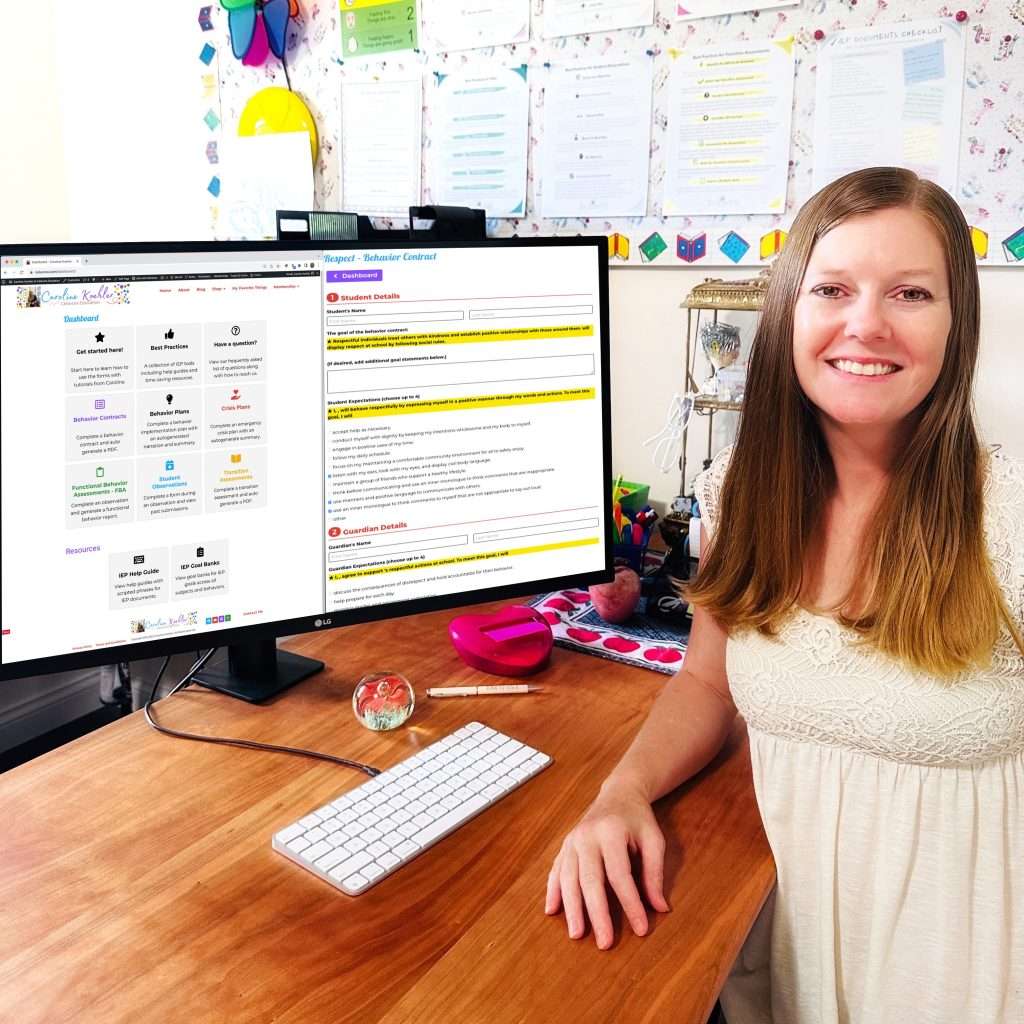
To alleviate this burden, the SPED Up Paperwork membership program offers an array of easy-to-use tools designed specifically for special education professionals.
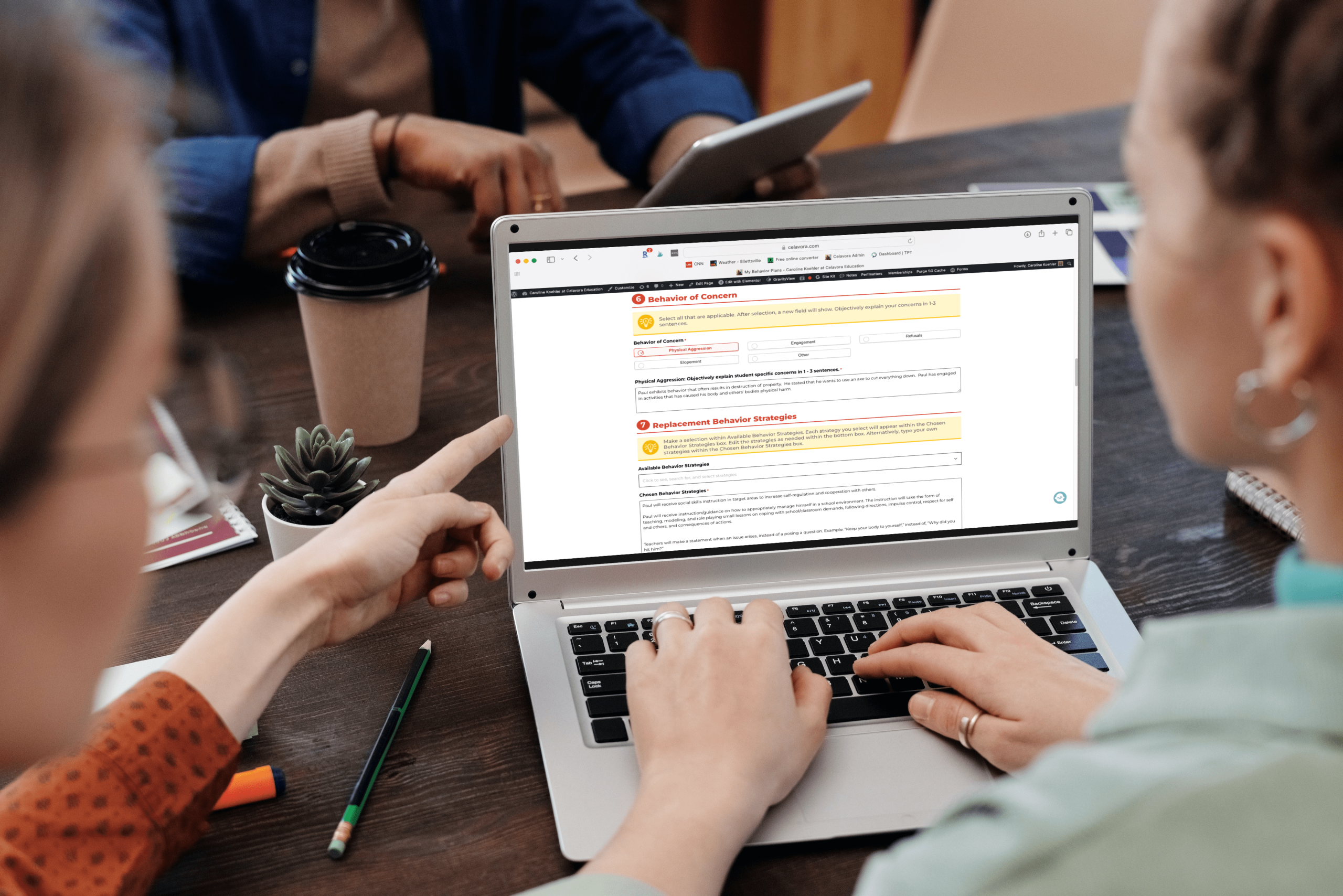
One of its standout features is the template for creating personalized behavior plans.
The program walks a user through all components of a behavior plan.
Also, it provides editable behavior goals (over 50!) for you to personalize for your students.
Then, with the click of a button, the system processes a plan specifically for your student.
Additionally, the program includes resources for conducting Functional Behavioral Assessments (FBAs) and writing safety crisis plans.
The platform efficiently summarizes the data entered, producing ready-to-use reports or detailed PDFs.
This streamlines the documentation process and enhancing overall productivity.
Click here to learn more about SPED Up Paperwork.

The Perfect Behavior Intervention Plan Template
Sorry to mislead you but there isn’t one!
The only thing that makes a behavior plan perfect is the ability to edit is as needed.
But, behavior intervention plans don’t have to be overwhelming.
With the right resources, you can create effective, individualized plans that truly support your students.
Whether you need help developing FBAs, managing crises, or teaching self-regulation strategies, these tools can make the process smoother and more effective.
Explore the products above and start making a difference in your students’ lives today.
Start with an easy to use behavior intervention plan template and incorporate best practices into your plan!