If Then Behavior Chart Classroom Strategies for Teachers
Teachers often look for practical tools like an if then behavior chart to support positive behavior and make expectations clear.
An if then behavior chart can be one of the most effective strategies to motivate students, especially in inclusive classrooms where learners may need extra support.
These tools can be extremely helpful when used in a way that benefits students and teachers alike.
Let’s explore this game changing support!
What is an If Then Behavior Chart?
An if then behavior chart is a visual tool that helps students connect actions with consequences.
It gives students a clear and concrete way to understand what will happen if they meet or do not meet expectations.
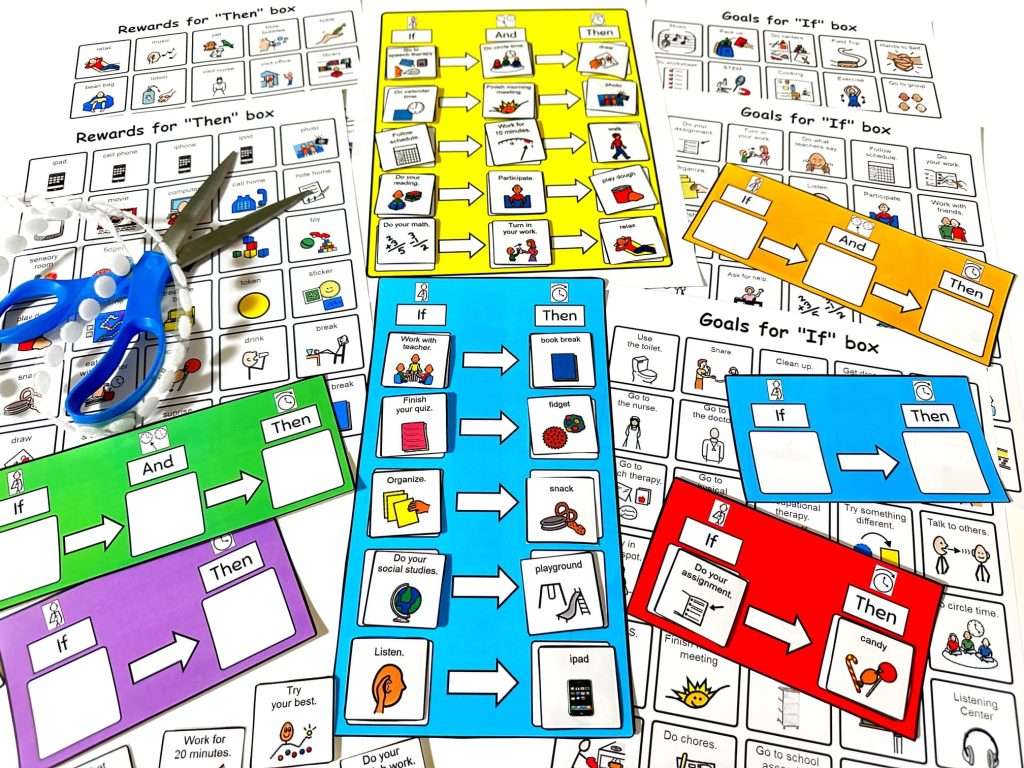
The chart included in the If Then Chart Visual Behavior Incentive Board provides spaces for both the desired behavior and the positive outcome.
Teachers can use this tool across grade levels and in special education settings.
The benefit is that it simplifies communication, which is especially helpful for students with autism or ADHD.
When students know exactly what is expected, they are more likely to stay motivated.
A teacher might use the chart to state, “If you finish your writing assignment, then you can choose a free-time activity.”
This structure keeps things clear and avoids misunderstandings.
The visual support also helps students who struggle with processing verbal directions.
Because the tool is adaptable, it can work in small groups, one-on-one instruction, or whole-class settings.
This flexibility makes it an essential piece for any behavior management toolkit.

How to Set Clear Expectations with an If Then Behavior Chart
Students thrive when they know exactly what is expected of them.
An if then behavior chart makes expectations visual and concrete.
Teachers can write specific goals like “If you raise your hand before speaking, then you earn a sticker.”
By framing the expectation in a positive way, students see a clear path to success.
The chart from the If Then Chart Visual Behavior Incentive Board includes colorful visuals that make expectations stand out.
Teachers can laminate the chart and use dry-erase markers to change goals as needed.
This simple routine keeps things consistent without adding more paperwork.
One tip is to start with only one or two behaviors at a time so students can focus on success.
Over time, teachers can adjust the chart to match student growth.
Students who know exactly what “if” means are more motivated to work toward the “then.”
Setting expectations this way reduces arguments and helps the classroom run smoothly.

Who Benefits from an If Then Behavior Chart?
An if then behavior chart works well for many types of learners. Students with autism, ADHD, or other special education needs often respond strongly to visual systems.
The chart helps these students make connections they may not grasp through spoken directions alone.
General education students in inclusion settings also benefit because everyone sees the same clear structure.
The If Then Chart Visual Behavior Incentive Board offers a way for teachers to support different learners without singling anyone out.
A whole class can use the system together, or teachers can use individual charts for specific students.
For example, one student might use it for transitions, while another uses it for staying on task during reading.
Families also appreciate this kind of chart because it can be sent home to maintain consistency.
When everyone works together, students make quicker progress.
The chart gives all students, regardless of background, a chance to succeed with clear expectations and positive reinforcement.

How to Use the Behavior Chart Daily
Daily use of an if then behavior chart helps create a consistent routine.
Teachers can start the morning by setting goals with the class or individual students.
For example, “If we line up quietly, then we earn extra recess minutes.”
This routine helps students know what to expect each day.
The chart from the If Then Chart Visual Behavior Incentive Board is durable and reusable, making it simple to include in morning meetings or small-group sessions.
Teachers can also keep the chart in a central spot where students see it throughout the day.
This visibility helps reinforce the message and provides a reminder before behaviors occur.
One tip is to keep the “then” reward small and frequent to encourage ongoing motivation.
A sticker, a quick break, or five minutes of computer time can go a long way.
By using the chart daily, students build habits and start to internalize positive behaviors.
Consistency is the real key to success with this tool.

Why Visuals AWLAYS Strengthen
Visuals are a critical component of an effective if then behavior chart.
Many students, especially those in special education, process images more quickly than words.
The If Then Chart Visual Behavior Incentive Board includes colorful visuals that make expectations clear.
Teachers can use the included icons or add custom images based on student interests.
For instance, if a student loves building, the “then” visual could be a block symbol.
Matching visuals to student interests increases motivation and buy-in. Laminating the pieces ensures they last throughout the school year.
Teachers can store visuals in a small container or binder for quick access.
Visual supports help prevent misunderstandings, which reduces frustration and challenging behavior.
By pairing words with visuals, teachers provide multiple ways for students to understand expectations.
This strategy works across grade levels and makes classroom management more inclusive.
Students often begin to use the visuals independently, which is another step toward self-regulation.

How an If Then Behavior Chart Promotes Independence
One of the biggest benefits of an if then behavior chart is how it promotes independence.
Instead of relying on constant verbal reminders, students can check the chart themselves.
The If Then Chart Visual Behavior Incentive Board encourages students to take ownership of their choices.
Teachers can encourage students to place the visuals themselves on the board as part of their routine.
For example, a student might place the “if” visual for completing math work, and the “then” visual for earning computer time.
This hands-on step builds responsibility.
Over time, students begin to recognize patterns between behavior and outcomes.
Independence grows when students learn to monitor themselves with the chart as a guide.
Teachers can step back and give students more control, which builds confidence.
This shift benefits both general education and special education students who need to build self-regulation skills.
Promoting independence is one of the most valuable outcomes of using this type of chart.

Tips for Long-Term Success
Long-term success with an if then behavior chart depends on consistency and adaptability.
Teachers should refresh the “then” rewards regularly to keep motivation high.
For example, adding seasonal visuals like pumpkins in October or snowflakes in January makes the chart engaging.
The If Then Chart Visual Behavior Incentive Board allows teachers to rotate visuals easily without recreating the whole system.
Another tip is to celebrate small wins with students.
Even a quick “You earned it!” reinforces the power of the chart.
Teachers can also pair the chart with other supports like behavior visuals lanyards for consistency across school settings.
Over time, teachers may reduce reliance on the chart as students internalize skills.
The goal is not just compliance, but growth toward independence and positive habits.
By sticking with the chart and making small adjustments, teachers see steady progress.
Long-term use transforms it from a tool into a lasting part of classroom culture.
Using an if then behavior chart gives teachers a reliable way to set expectations, motivate students, and support independence.
The strategy is simple but powerful, especially when paired with visuals and consistent practice.
Teachers who use the If Then Chart Visual Behavior Incentive Board find it helps both general education and special education students succeed.
Students learn to connect choices with outcomes in a way that feels clear and fair.
Over time, this tool builds positive habits that last well beyond the classroom.
Download the chart today and see how it can transform your teaching.
Teachers who start with an if then behavior chart often wonder how they managed without it.