The Benefits of Incorporating a Learning Center in Your Classroom
As educators, it is our responsibility to provide the 🥳 best possible learning environment for our students and incorporating a learning center in your classroom is a great place to start.
A learning center is a designated area where students can engage in independent learning activities that reinforce classroom lessons.
Learning centers offer a multitude of 🏆 benefits for both teachers and students.
They provide differentiation opportunities, offer a chance for cooperation and collaboration, and foster independent learning.
As a kindergarten teacher, managing literacy centers was trying.
I developed this system after many years of experimenting.
Whether you’re a new teacher looking to enhance your classroom or a seasoned educator seeking fresh ideas, this article is for you.
With a well-planned learning center, you can create an engaging and motivating 🏫 environment.
This makes learning not only effective but also fun for your students.
So, let’s get 🚦 started and discover the many benefits of incorporating a learning center in your classroom!

Get started with a learning center
The Literacy Station Posters can be used to label the independent student activity areas in your classroom regardless of how you run your rotational activities.
To start print two copies of the labels for all of the stations in color if possible. 🟥 🟥
Then cut out the labels and back them onto colored construction paper matching the outside border of each label.
Match a blank 8 ½” by 11” piece of matching construction paper to each label.
Next laminate, and cut out. ✂️
You will also need 🤳 pictures printed on cardstock of each student in your classroom.
I don’t usually laminate these as I have found that sticky tack or tape holds nicely to the back of the paper.

Promotes collaboration and team-building
Stations are paired in groups of two with one station at the top and one at the bottom.
In the middle of the two station posters are the laminated blank matching construction paper.
Also, in the middle of the two pieces of construction paper, add the pictures of 2-3 students. 👬
Students are placed in pairs or groups of no more than three to cut down on personality conflicts, goofing, and general mischief.
The groups can change after an entire round of stations is completed.
Then, students complete only two stations each ☀️ day which would be the station at the top and the bottom of their pictures.
Have students begin at the station at the top.
Then, half way through your designated station time students move to the station below when the teacher announces it’s time to move.
I allot 45 minutes total with 20 for each station and the additional 5 for rotating and organizing.
Each group does 2 stations a day.
The pair or trio is moved to the ⬅️ left except the group at the far ➡️ right who move to the first box on the left.
The extra set of signs is used to identify each station around the classroom.
I worked on procedures and rules for this heavily.
All items in stations should be activities that that students can do independently without teacher help or interaction except the Teacher Trail.

So what goes in a learning center in the classroom?
Because time is tight and planning is essential, I created all of the learning centers with activities that can rotate in or out easily. ⏰
So, here’s a list of the center rotations I use.
- Alphabet Avenue – Any alphabet activities
- Big Book Boulevard – Big books from read aloud along with fun pointers
- Book Nook – classroom library
- Computer Court – computer/laptops
- Drama Depot – puppet station
- Drawing Department – language arts based drawing tools
- Game Garage – board games and educational games
- Listening Lane – books on tape
- Magnet Mission – use magnet letters for sight words and sentences
- Overhead Drive – use the overhead to project traceable and magnets onto the wipe off board
- Pocket Chart Path – sentence strips for stories
- Poetry Place – poetry books from group time poems
- Puzzle Project – puzzles and put together piece projects
- Read and Roam – pointers to walk the room and read the words
- Spelling Spot – wipe off boards, wiki sticks, AquaDoodles and more to practice spelling
- Stamping Station – ready to use pages with sight words and word families
- Story Station – writing word to make student books
- Teacher Trail – small group station for academics with teacher
- Word Family Track – word family activities like word building
- Word Work Station – working with words through letter tiles, bead, themed sets
- Write and Roam – Clipboard with writing materials to walk the room and write words
- Write Way – writing area for book responses, crafts, rainbow words, or any fine motor activity.
This group of centers let’s me provide the students with reinforcing work that is easy for me to fill.
I change the activities out once the students have completed the full journey through them.
This is typically about every 📆 two weeks.
Why all this effort for learning center time?
One of the most compelling benefits of incorporating a learning center in your classroom is that it provides learning environment with less discipline issues.
When students are given the autonomy to explore and work on meaningful tasks in a self-directed manner, they are more ✍️ engaged and motivated.
This, in turn, leads to a reduction in disruptive behavior and discipline issues.
Fortunately, this creates a more harmonious and productive classroom environment.
Additionally, since students have the ability to work at their own pace and level, they are less likely to feel frustrated or overwhelmed.
And that, my teacher friend is called every teacher’s 🛌 dream come true.
But, be warned that too many students at one station can turn into a mob!
The less students you have at an activity, I do 2-3, the easier and more engaged they seem to be.
Ultimately, this creates a classroom atmosphere that fosters creativity, collaboration, and critical thinking skills.

Improves time management and organizational skills
One of the major benefits of incorporating a learning center in your classroom is improved time management and organizational skills among your students.
And you!
When your students are engaging in learning centers, you can work on 👩🏫 small groups or 1-1 learning activities.
By providing a designated space and resources for independent learning and practice, students can better manage their time and resources to achieve their academic goals.
Additionally, a learning center can help students develop important organizational skills by encouraging them to keep track of their progress and materials.
Of course, teachers provide them with 🧰 tools to do so.
Also, these skills are essential for success not only in the classroom, but also in future academic and professional endeavors.
If you are a kindergarten or special education teacher, make sure you have a set of ⏳ sand timers in your life.
They are so helpful when carrying out center time.
By having learning centers, you can foster these essential life skills in your students and help them reach their full potential.
Reading Learning Center Examples
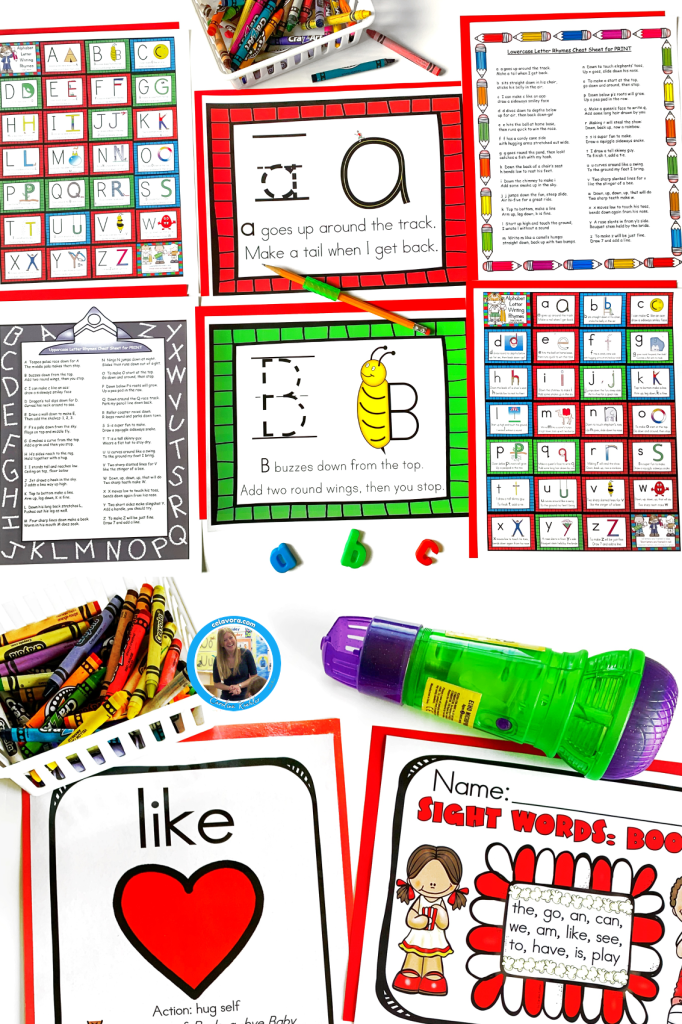
Let’s check out a few examples of a learning center in the classroom example for reading.
Big Book Boulevard is one of my favorites because there is almost 🚫 no additional planning for me and my students love it.
Students are given the opportunity to read the Big Books that have been read aloud in whole group.
The use of pointers and props are perfect for this activity.
I try to have about 10 Big Books available that we have read together and no more so the students can focus and keep things tidy.
But here’s a super helpful hint for you and the life of your big books.
Store big books that aren’t on the easel in a tall 🧺 laundry hamper for easy access and as a great way to prevent book damage.
Followed closely to the ease of the Big Book Boulevard is the Book Nook.
The Book Nook is your classroom library. 📚
The one displayed in the picture has books sorted by category.
You can do this or simply display the books randomly.
Next, add books that support your current classroom theme, holidays, students’ special interests, or the class Big Book.
Adding bean bags and small rocking chairs to this area makes it even more fun.

Enhances problem-solving and critical thinking
One of the most crucial skills students should develop during their academic journey is the ability to solve problems and 🤔 think critically.
Integrating a learning center into your classroom can significantly enhance these skills.
Through interactive activities and challenging exercises, students are exposed to different problem-solving techniques and various perspectives.
The learning center provides a hands-on approach that encourages students to think for themselves while fostering their creativity and curiosity.
By implementing a learning center, students can apply their 📝 knowledge and skills to real-world scenarios.
This allows them to develop a deeper understanding of the material and build 😁confidence in their ability to overcome challenges.
This can lead to improved academic performance and better prepare them for success in their future careers.

Writing Learning Center Examples
Writing is another important part of a learning center in a classroom. ✍️
Any easy way to do this in a kindergarten or special education classroom is Write and Roam.
Students are provided with clipboards and are “roaming” or walking around the classroom or area that you designate looking for words to write.
Premade scavenger hunts are nice such as looking for words that start with a certain letter, words that end with a certain letter, words that have three letter words (or any number of letters), words that have a capital letter, words that have two vowels (or any number of vowels), etc.
Changing out the writing tool for this activity also keeps it fresh an interesting: 🖋️ pencils, markers, gel pens, red pens.
The next low maintenance learning center I recommend is the Write Way.
This station can be leveled very easily for diverse learners but includes any writing or fine motor building activity.
Stencils, story starters, rainbow words, tracing pages, pyramid spelling pages, book responses, holiday crafts, etc.
Sky’s the limit with this crowd pleaser that takes me very little time to set up. 😉
Encourages independent learning
One of the key advantages of incorporating a learning center into your classroom is that it encourages independent learning.
By providing students with the opportunity to take control of their own learning, a learning center can help to foster a sense of autonomy and self-reliance.
When students are able to 💻 work on activities and assignments that interest them, they become more engaged in the learning process.
Those who are more engaged are more likely to retain what they have learned.
Moreover, a learning center can help to cultivate problem-solving and decision-making skills.
As students work through the various activities, they are required to make choices and solve problems on their own.
Also, this helps build confidence and independence.
A learning center can help students to become more self-motivated and effective learners, paving the way for their success. 🥇
Promotes a positive learning atmosphere
One of the key benefits of incorporating a learning center in your classroom is the promotion of a positive learning atmosphere.
Learning centers foster a more student-centered classroom, where students are 😊 encouraged to take ownership of their learning and explore topics that interest them.
This type of environment can help to increase motivation and engagement in the learning process, leading to a more positive attitude toward school and education in general.
Additionally, learning centers can help to create a sense of 🤗 community within the classroom by providing students with opportunities to work collaboratively and share their knowledge and experiences with each other.
By promoting a positive learning atmosphere through the use of learning centers, educators can help to create an environment that is conducive to academic growth and success.

Differentiated learning experiences
One major benefit of incorporating a learning center in your classroom is the ability to provide personalized instruction and differentiated learning experiences.
Learning centers allow teachers to cater to the individual needs of each student and can provide opportunities for learners to work at their own pace. 🚶♀️
By offering a variety of activities and resources, students can engage in self-directed learning and can choose activities that are best suited to their learning style and interests.
In addition, learning centers make it easier for teachers to work with small groups or individual students.
Small group is wonderful because teachers can provide 🎯 targeted instruction and support.
This approach can help students feel more invested in their learning and can result in improved outcomes and achievement.
Furthermore, personalized instruction and differentiated learning experiences can help students develop a love of learning and can set the foundation for lifelong learning.
In conclusion, the incorporation of a learning center in classrooms provides ✨ numerous benefits for both teachers and students.
It helps in promoting independent learning, collaboration, and a differentiated method of teaching.
With the availability of various resources and activities within the learning center, students can cater to their unique learning styles and pace.
As a teacher, it allows more opportunities to tailor and differentiate instruction, leading to better academic outcomes for all students.
Overall, the introduction of a learning center in a classroom creates a personalized learning environment that is crucial for student success.