


Crucial Activities on Life Skills for Students in Special Education
As students in special education progress through their academic journey, it is important to provide them with the crucial activities on life skills that they need to succeed.
These life skills play a vital role in equipping these students with the ability to navigate the challenges of adult life.
In order to support their growth, educators and parents must work together to provide a comprehensive instructional approach that focuses on developing these skills.
The importance of developing life skills for students in special education cannot be overstated, as these skills enable them to become more independent.
Also, activities on life skills allow them to better equipped to handle the complexities of the world around them.
To start with, one of the most important life skills that students in special education must acquire is communication. This includes basic communication skills like listening, speaking, and writing.
Communicating effectively is essential, as it allows individuals to express their needs, understand others, and engage in meaningful interactions with the world around them.

Understanding Social Norms with Social Stories
Understanding social norms are crucial activities on life skill for students in special education to develop.
Many students with disabilities struggle with social interactions and understanding social cues.
One effective approach to teach social norms is by using social stories.
Social stories are short narratives that depict a social situation to help individuals understand what is expected of them in a particular context.
Social stories can be customized to meet the specific needs of individual students.
Also, they can include visuals and descriptions to target specific social scenarios.
By using social stories, students can learn how to navigate various social situations, and can better understand how to communicate appropriately and effectively in different contexts.
Additionally, social stories can help students develop empathy and perspective-taking skills, which are important components of social cognition.
By incorporating social stories into their education, students in special education can gain valuable tools to successfully navigate social experiences and build meaningful relationships.

Time Management with Visual Monitors
Time management is a crucial life skill that can greatly benefit students in special education.
One effective approach to managing time is through the use of visual monitors.
Visual monitors can take various forms, such as calendars and schedules that students can easily see and understand.
These monitors can help students stay on track and complete tasks within specified timeframes, as well as provide a sense of structure and organization.
They can also enhance communication between the student and teacher, allowing for clearer expectations and goals.
Other visual monitors are leveled scales that help the student understand their work speed and adapt as necessary.
By utilizing visual monitors as a time management tool, students in special education can develop important skills like prioritization, goal-setting, and accountability.
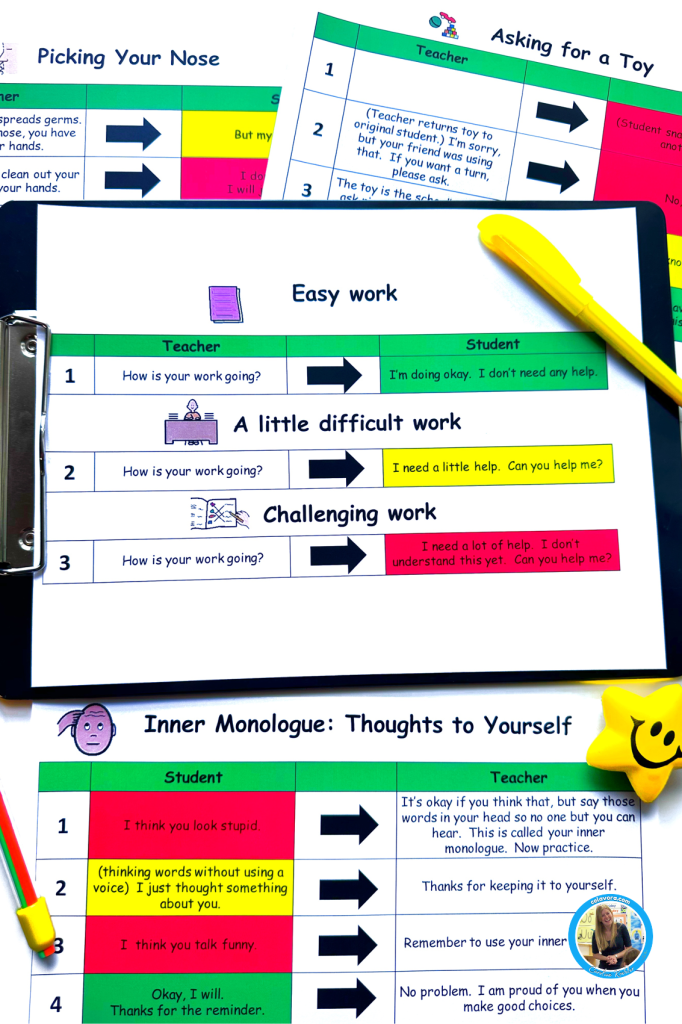
Social Interaction with Social Scripting
One of the crucial life skills for students in special education is social interaction, specifically with social scripting.
Social scripting is a story that describe social situations and help individuals understand and navigate appropriate social behavior.
Using social narratives as a teaching tool can improve social skills, reduce anxiety, and increase understanding of social cues.
For example, a social narrative can describe how to greet someone, how to engage in a group conversation, or how to handle peer conflict.
You can create these scripts using written or visual formats.
I distinguish social scripting from social stories based on how I deliver them.
With a social script, there is a column for the student’s language and a column for the adult’s language.
Then, students see the different reactions and responses they could receive based on what they said.
Social scripts can be personalized to fit the experiences and needs of individual learners.
By incorporating social scripts into daily lessons, educators can strengthen their students’ social and emotional learning.
Ultimately, this method promotes positive social interactions and increasing overall well-being.

Financial Literacy Activities on Life Skills
The financial literacy of students in special education is often overlooked, yet are important activities on life skills that warrants attention.
Financial literacy is an important aspect of preparing students with disabilities for life after graduation.
Using state required transition assessments to teach finances equips students with the skills necessary to manage their finances and make informed decisions about their money.
Students are taught fundamental concepts such as budgeting, saving, debt management, investing, and basic financial planning.
Then, educators can use a transition assessment specifically related to money to determine their students’ life skills proficiency levels.
By incorporating transition assessments of financial literacy into the special education curriculum, educators can help students acquire key skills for life and work.
Also, this includes understanding personal strengths, weaknesses, preferences, and interests in relation to money.
With a firm grasp of these subjects, students can gain independence and the confidence to handle their finances responsibly, ultimately leading to successful outcomes for their future.
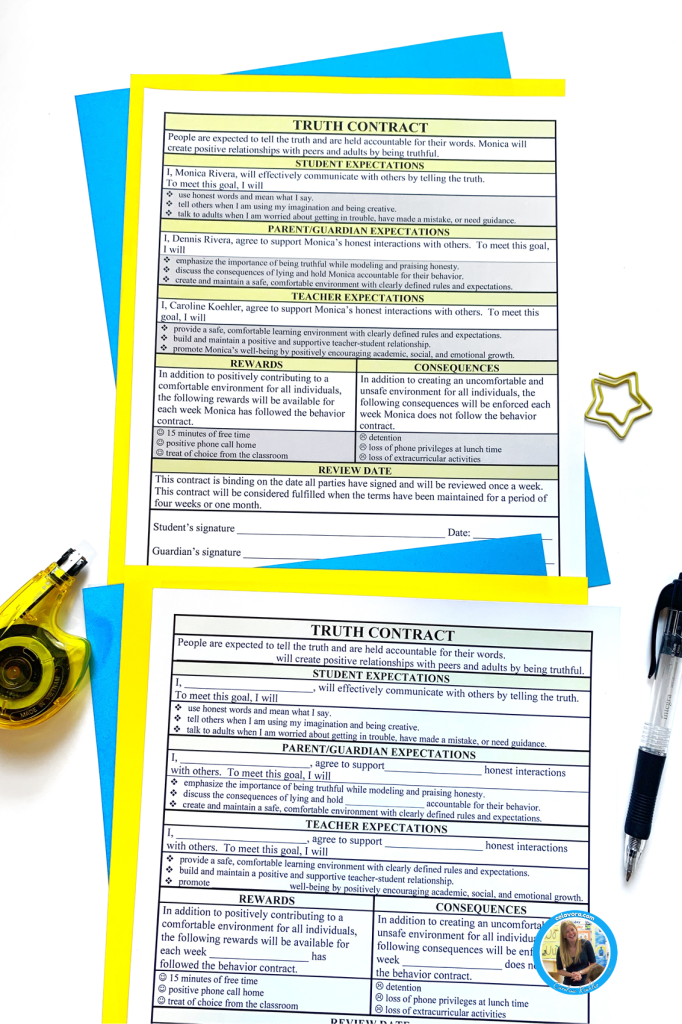
Conflict Resolution
Essential activities on life skills that students in special education must possess is conflict resolution.
Conflict resolution is a vital social skill that ensures students can express their concerns and resolve disagreements in a peaceful and respectful manner.
In special education, students may have unique challenges that can exacerbate conflict situations.
Therefore, it is important to have crisis plans or behavior contracts in place to guide students on how to manage disagreements.
These plans outline specific steps that students can take when they find themselves in a crisis situation to help them de-escalate the situation.
Additionally, behavior contracts outline expected behaviors and consequences for students who do not adhere to them.
Both crisis plans and behavior contracts are essential tools for students who have difficulty resolving conflicts independently.
By mastering conflict resolution, students in special education can build positive relationships with their peers, teachers, and their wider community, leading to a more positive school experience and better outcomes in adulthood.
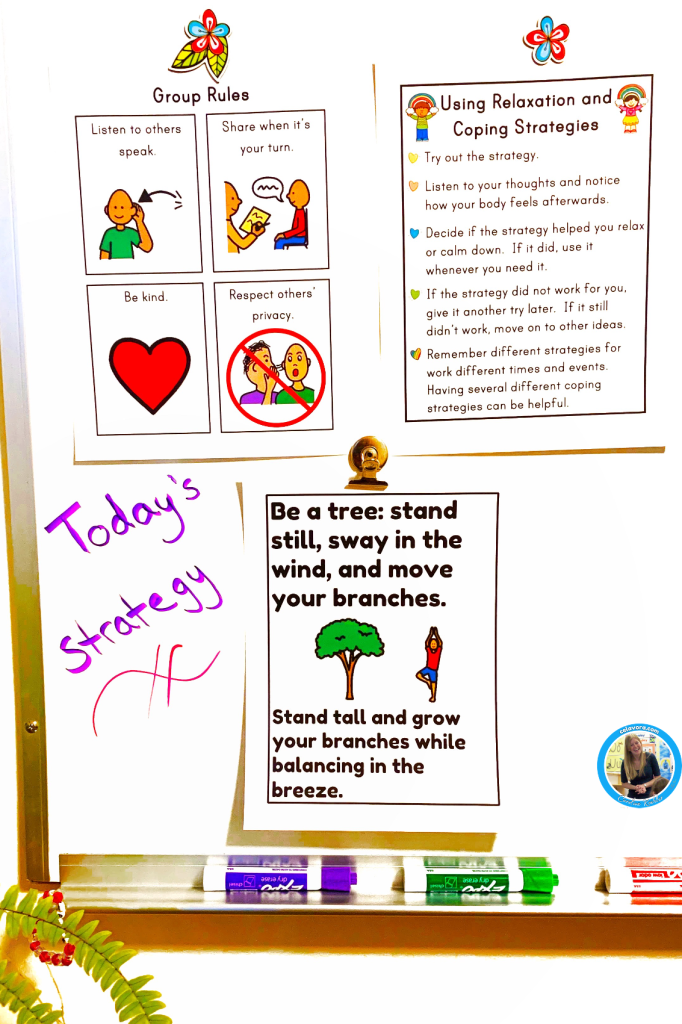
Mental Health Awareness with Coping Skills
In this day and age, mental health awareness is becoming increasingly important, especially for students in special education.
Coping skills are essential tools for students to manage their emotions, reduce stress levels, and maintain their overall mental health.
Students with disabilities may face additional challenges that make it even more critical to develop coping skills.
Educators can help students in special education develop these skills through regular check-ins, stress reduction techniques, and self-care practices.
So, by teaching students how to identify and cope with their emotions, they can better navigate their daily lives and improve their academic performance.
Providing resources and tools for both students and their families can further support their mental health and wellness.
It is crucial for educators to prioritize mental health awareness and coping skills in special education to foster a healthy and successful learning experience for all students.
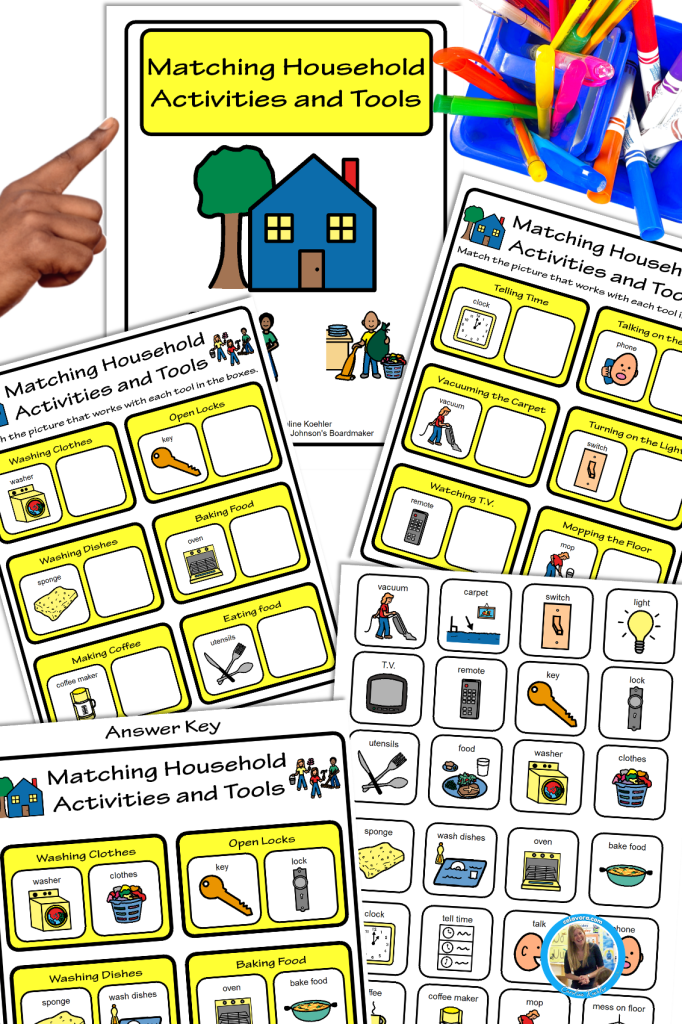
Basic Activities on Life Skills
Developing basic skills with file folders is a crucial life skill for students in special education.
File folders provide an effective tool for special educators to teach a variety of skills.
File folders are an effective tool for special educators to teach a variety of skills to their students.
The use of file folders enables educators to organize and present information in a clear and concise manner.
We use these folders to teach essential skills such as pattern recognition, sorting, matching, and sequencing.
They are also useful for teaching language and math skills, as well as social and emotional skills.
File folders are easy to customize to meet the individual needs of each student, making them an excellent tool for differentiation.
The use of file folders allows educators to provide students with hands-on learning experiences that are engaging and interactive.
Overall, file folders are an essential tool for special educators looking to create effective and meaningful learning experiences for their students.
These skills equip students with the necessary tools for success, particularly in managing their personal and academic records.
Teachers and parents can work together to reinforce the importance of these skills and provide ample opportunities for practice to ensure their mastery.

Practical Job Application
Practical job application with helper jobs in the classroom is an important aspect of developing crucial life skills for students in special education.
This approach allows for hands-on learning experiences that help students develop vital skills such as following directions, time-management, and teamwork.
When students engage in helper jobs, they learn how to work independently and as part of a team.
Then they gain effective communication, and how to apply the knowledge they have gained in a practical setting.
In addition, it provides students with a sense of responsibility, self-confidence, and a feeling of accomplishment as they make meaningful contributions to the classroom community.
Overall, offering helper jobs in the classroom is an effective way to promote the development of crucial life skills for students in special education, preparing them for success in school and beyond.
Math Applications Activities on Life Skills
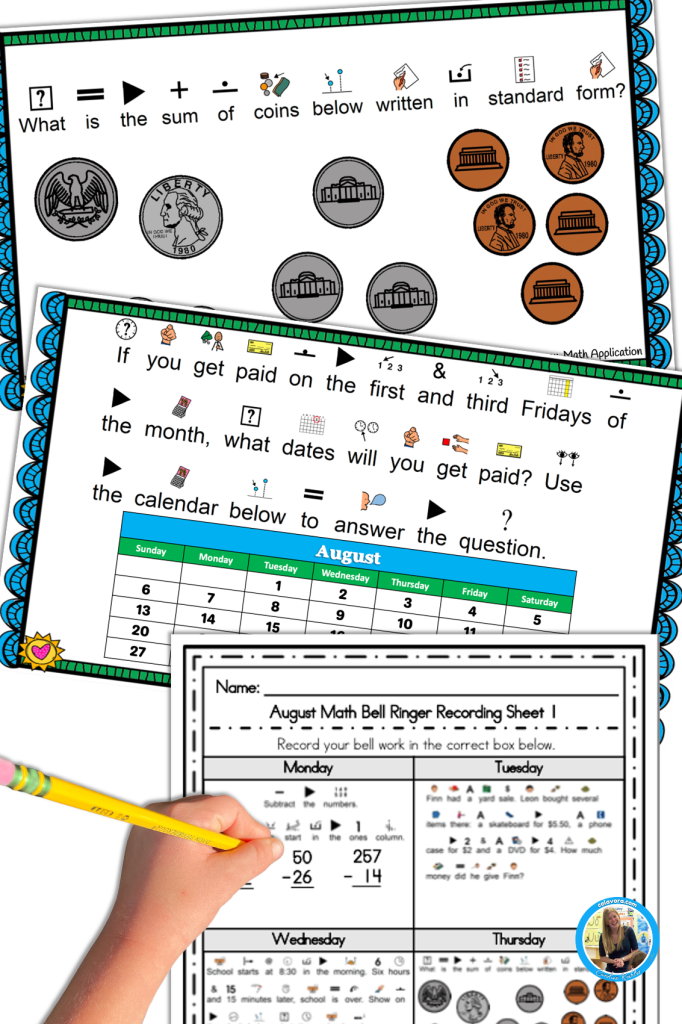
Math applications with daily word problems are wonderful activities on life skills for students in special education.
Word problems incorporate math concepts into everyday situations, providing context and relevancy to mathematical concepts.
This approach helps students grasp problem-solving techniques and critical thinking processes, which are invaluable skills for real-world situations.
Daily word problem exercises can also assist with developing numeracy skills and mathematical vocabulary.
Implementing daily word problems into special education classes can promote active, engaged learning, and progress in math studies.
Also, these problem-solving exercises can also enhance students’ abilities to read, reason, and make logical conclusions.
Therefore, the integration of math applications with daily word problems can be a fundamental component of a comprehensive special education program.
Use a daily math problem to as a way of teaching students’ life skills and lifelong practical abilities.
Communication Skills for Activities on Life Skills
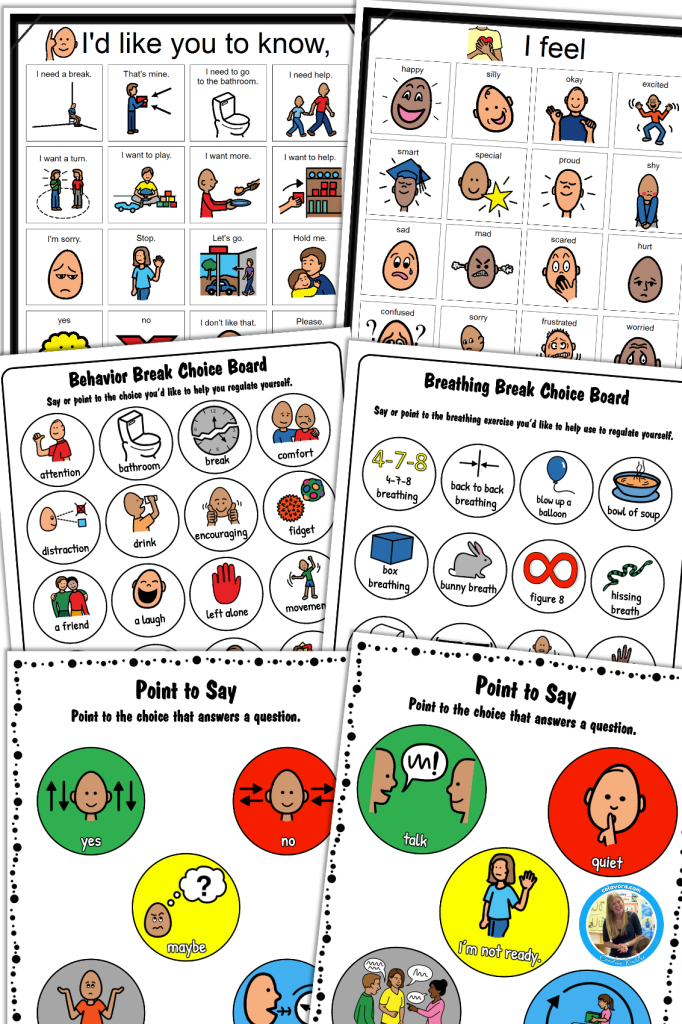
Having effective communication skills are a crucial aspect of life for students in special education, and communication boards are an effective tool for improving those skills.
Communication boards are visual aids that allow individuals to express their needs, wants, and feelings in a clear and concise manner.
By using symbols, pictures, and written text, communication boards can help students who struggle with verbal communication to effectively convey their thoughts and ideas.
Additionally, communication boards are tailored to individual needs and preferences, which increases the chances of successful communication.
Teaching communication skills with communication boards can improve students’ ability to participate in social interactions.
Also, students get to express their needs and wants, and increase their overall quality of life.
Overall, communication skills with communication boards are a crucial life skill that can greatly benefit students in special education.

Life Skills are Important
In conclusion, students with special needs require unique attention, personalized care, and tailored lesson plans specific to their individual needs.
When providing education for students with special needs, focusing implementing activities on life skills that can mold them into self-reliant and responsible adults is crucial.
Understanding their needs empowers instructors and caregivers to create a safe, nurturing, and interactive learning environment, which is conducive to their growth and development.
So, when we invest time and energy into teaching these life skills, we are helping students with special needs live a life of dignity, independence and success.


