


The Ultimate Guide to Understanding 504 Plans in Schools
As a parent or caregiver of a child with a disability, navigating 504 plans in schools can be overwhelming and confusing.
One tool that can help ensure your child receives the appropriate accommodations and supports in school is an Education 504 Plan.
But what exactly is a 504 Plan? 🧐
How does it differ from an Individualized Education Plan (IEP)?
And how can you best advocate for your child’s needs?
In this ultimate guide, we’ll break down everything you need to know about Education 504 Plans, from the basics to the nitty-gritty details.
Whether you’re just starting to explore options for your child or have already begun the process, this guide will equip you with knowledge.
Then, you’ll have the resources to make informed decisions and ensure your child’s success in school.
So sit back, grab a cup of coffee, and let’s dive in! 🤿

What is a 504 Plan in Schools?
A 504 Plan is a document that outlines the accommodations and modifications that a student with a disability will receive in school.
It is named after Section 504 of the Rehabilitation Act of 1973, which prohibits discrimination based on disability in any program or activity that receives federal funding.
This means that all public schools, as well as private schools that receive federal funding, must provide accommodations and modifications to students with disabilities.
A 504 Plan in schools is different from an Individualized Education Plan (IEP) in that it does 🚫 not provide specialized instruction.
Instead, it focuses on providing accommodations and modifications that will allow the student to access the general education curriculum.
Examples of accommodations and modifications that may be included in a 504 Plan include extended time for tests, preferential seating, access to assistive technology, and modified assignments.
One of the key benefits of a 504 Plan is that it allows students with disabilities to receive the accommodations and modifications they need without true special education label.
This can be particularly important for students who do not require specialized instruction but still need support in order to succeed in school.

Legal basis for 504 Plans in Schools
As mentioned earlier, 504 Plans in schools are based on Section 504 of the Rehabilitation Act of 1973. 📝
This law prohibits discrimination based on disability in any program or activity that receives federal funding.
In addition to schools, this law applies to a wide range of other entities, including hospitals, nursing homes, and government agencies.
Section 504 requires that schools provide students with disabilities with a “free and appropriate public education” (FAPE).
This means that schools must provide accommodations and modifications that allow students with disabilities to access the same curriculum as their non-disabled peers.
If a student requires specialized instruction in order to access the curriculum, they may be eligible for an IEP instead of a 504 Plan.
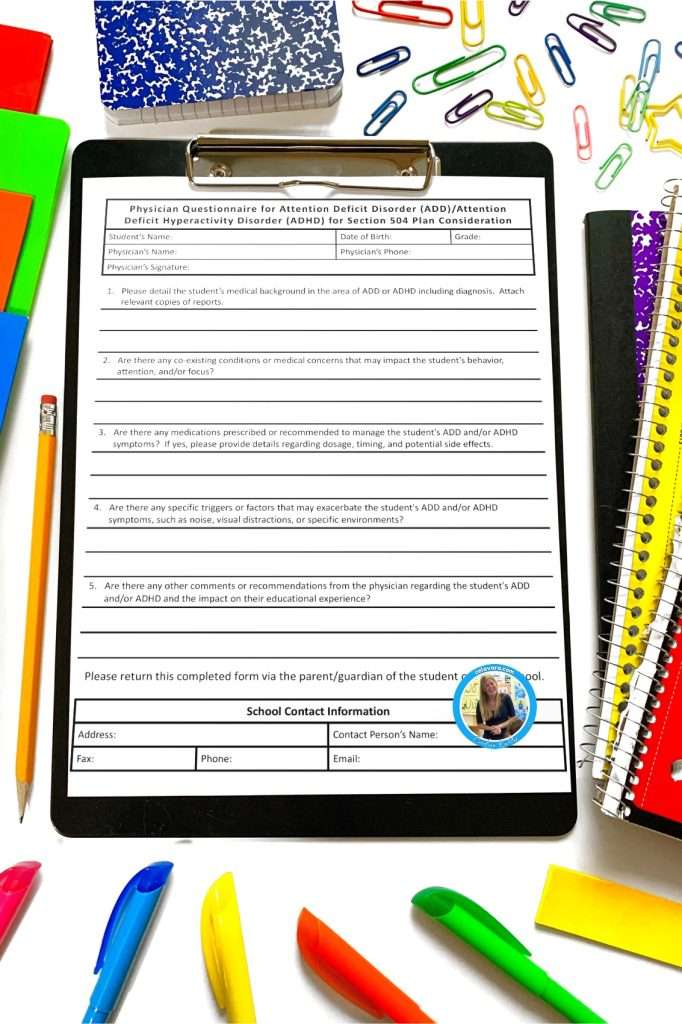
Who qualifies for a 504 Plan?
To qualify for a 504 Plan, a student must have a disability that “substantially limits one or more major life activities.”
This can include physical, mental, or emotional disabilities. 🌈
Examples of disabilities that may qualify for a 504 Plan in schools include ADHD, diabetes, and anxiety.
It is important to note that not all students with disabilities will qualify for a 504 Plan.
In order to be eligible, the disability must have a significant impact on the student’s ability to access the general education curriculum.
If a student requires specialized instruction in order to access the curriculum, they may be eligible for an IEP instead of a 504 Plan.

The process of obtaining a 504 Plan
The process of obtaining a 504 Plan typically begins with a referral from a teacher, parent, or other school staff member.
Once a referral has been made, the school will conduct an evaluation to determine whether the student is eligible for a 504 plan in school. 💻
This evaluation may include a review of the student’s academic and medical records, as well as input from the student’s teachers and parents.
If the evaluation determines that the student is eligible for a 504 Plan, a meeting will be held to develop the plan.
This meeting will typically include the student’s parents, teachers, and other school staff members who are involved in the student’s education.
The purpose of the meeting is to determine the accommodations and modifications that the student will receive.
Goals and objectives for the student are also discussed and included in a 504 plan.
Once the 504 Plan has been developed, it must be reviewed and updated annually. 📆
This ensures that the plan remains appropriate for the student’s needs as they progress through school.

Components of 504 Plans in Schools
A 504 Plan typically includes several components, including:
1. Statement of the student’s disability
The plan should include a clear statement of the student’s disability and how it impacts their ability to access the general education curriculum.
2. Accommodations and modifications
The plan should outline the accommodations and modifications that the student will receive.
These may include things like extended time for tests, preferential seating, access to assistive technology, and modified assignments.
3. Staff responsible for implementing the plan
The plan should identify the school personnel who are responsible for implementing the plan, as well as any training they may need in order to do so effectively.
4. Evaluation procedures
The plan should include a description of how the student’s progress will be monitored and evaluated, as well as how often this will occur.
5. Transition plan
If the student will be transitioning to a new school or program, the plan should include a transition plan.
Transition plans outline the accommodations and modifications that will be provided in the new setting.

Accommodations and modifications under a 504 Plan
The accommodations and modifications provided under a 504 Plan in schools will vary depending on the student’s individual needs. 🖥️
Some common accommodations and modifications include:
1. Extended time for tests
This allows the student to take tests and complete assignments at a pace that is appropriate for their individual needs.
2. Preferential seating
This allows the student to sit in a location that is best suited to their needs.
For example, a student with ADHD may benefit from sitting at the front of the classroom.
3. Access to assistive technology
This may include things like speech-to-text software, screen readers, or other tools that can help the student access the curriculum.
4. Modified assignments
This may include things like simplified instructions, reduced workload, or alternative assignments that are better suited to the student’s abilities.

Differences between 504 Plans and Individualized Education Programs (IEPs)
While 504 Plans and IEPs both provide accommodations and modifications for students with disabilities, there are some key differences between the two:
1. Eligibility criteria
To be eligible for a 504 Plan, a student must have a disability that “substantially limits one or more major life activities.”
To be eligible for an IEP, a student must have a disability that requires specialized instruction.
2. Scope of services
A 504 Plan provides accommodations and modifications that allow the student to access the general education curriculum.
Alternatively, an IEP provides specialized instruction that is tailored to the student’s individual needs.
3. Development process
The process of developing a 504 Plan is typically less formal than the process of developing an IEP.
While both plans require input from parents and school staff, an IEP is a more comprehensive document that includes specific goals and objectives for the student.
Looking for other special education resources? Check out Caroline’s Teachers Pay Teachers store or send her an email by clicking here.
Common misconceptions about 504 Plans
There are several common misconceptions about 504 plans in schools that are important to address: 💡
1. Only students with severe disabilities need a 504 Plan
In reality, a 504 Plan may be appropriate for any student with a disability that impacts their ability to access the general education curriculum.
2. A 504 Plan is the same as special education
While both 504 Plans and special education provide accommodations and modifications for students with disabilities, they are not the same thing.
A 504 Plan focuses on providing accommodations and modifications that allow the student to access the general education curriculum.
Special education provides specialized instruction.
3. A 504 Plan is a guarantee of success
While a 504 Plan can provide important support for students with disabilities, it is not a guarantee of success.
Students with disabilities may still face challenges in school, and it is important to provide ongoing support and advocacy to help them succeed.

Resources for parents and educators
If you are a parent or educator who is interested in learning more about 504 Plans, there are many resources available to you. 📚
Some helpful resources include:
1. The U.S. Department of Education
The U.S. Department of Education provides a variety of resources on 504 Plans, including information on the legal requirements and the development process.
2. Parent training and information centers
Parent training and information centers are organizations that provide information and support to parents of children with disabilities.
They can help parents navigate the process of obtaining a 504 Plan, as well as provide information on other resources and services.
3. Disability advocacy organizations
There are many disability advocacy organizations that provide information and support to individuals with disabilities and their families.
These organizations can provide information on 504 Plans in schools, as well as other resources and services.

Education 504 Plans
In conclusion, a 504 Plan can be an important tool for ensuring that students with disabilities receive the accommodations and modifications they need to succeed in school. 🏫
Parents and educators can better advocate for the needs of students with disabilities by understanding the basics of 504 Plans and the process for obtaining them.
So, if you’re a parent or educator interested in learning more about 504 Plans, you can access many available resources.
With the right support and advocacy found in education 504 plans, students with disabilities can thrive in school and beyond.


