A Guide for Teaching SPED While Staying Organized and Calm
Teaching SPED is an admirable profession, but it is also one of the most challenging jobs out there.
Educators who are dedicated to helping students with special needs face multiple obstacles on a daily basis.
It can be overwhelming trying to manage students with various learning and behavioral disabilities.
On top of that, teaching sped also requires keeping up with lesson planning, grading, and getting paperwork done on time.
This challenging work can often lead to burnout, frustration, and a myriad of other stress-related issues that can potentially affect teacher performance and quality.
So, what can special education teachers do to remain organized and calm while tending to the needs of their students?
The answer lies in adopting effective strategies and tools that can help with time management, stress reduction, and efficient work productivity.
This blog post covers some helpful tips and tricks to help special education teachers stay on top of their game with as low amount of stress as possible.

Create a Classroom Structure with Clear Expectations
One of the most essential steps for a successful teaching experience in teaching sped is to create a classroom structure with clear expectations upfront.
It is essential to have a well-organized classroom that reduces confusion and chaos and helps students to understand what is expected of them.
Start by setting specific rules and consequences together with your students. It’s important to ensure that these rules are reasonable, easy to understand, and consistent.
A visual representation of these rules, such as posting them on the bulletin board or using anchor charts, can help reinforce the expectations.
Finally, make sure to review these rules and expectations regularly and celebrate the students who are following them.
I start the school year off with rules and expectations and then “reteach” them after all major school breaks and holidays.
Creating a positive classroom culture is essential for both the teacher and the students to feel organized and calm.

Develop a Teaching SPED Lesson Plan Template
As an SPED teacher, it’s super beneficial to develop a lesson plan template that allows you to tailor to students’ individual learning needs.
This will help you stay organized and focused while ensuring that your students receive the education that they need.
When creating your lesson plan template, consider multiple factors such as the student’s learning style, their strengths and weaknesses, and any accommodations they may need.
You can then use this information to create a customized lesson plan that meets the needs of each student in your class.
If you have small groups, add your students’ names to the lesson plans and use this as an attendance measure.
Add your days of the week, the lesson components, and any strategies and notes you want to be aware of.
Having a personalized approach to your lessons can help build trust and rapport with your students, which is essential in creating a positive and productive learning environment.
By using a tailored lesson plan template, you can help ensure that all your students are given the opportunity to learn and thrive in your class.
Be an Expert Communicator with Parents
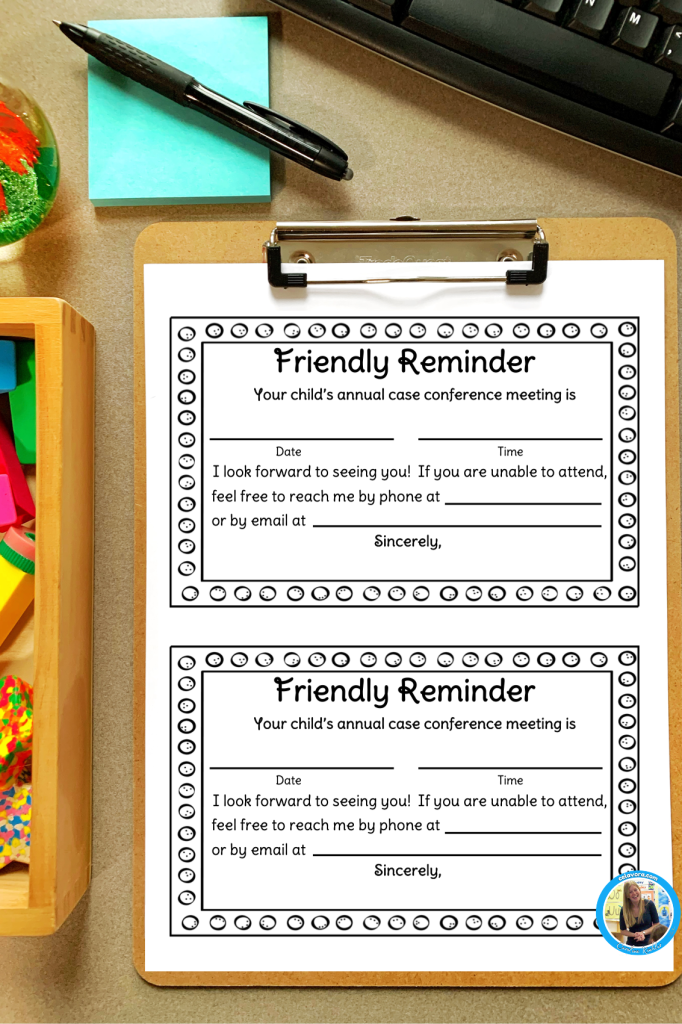
As someone teaching SPED, it is important to maintain positive and effective communication with parents of your students.
Being an expert in communication with parents, also known as a parent whisperer, helps you to build a collaborative relationship with parents, which ultimately improves student outcomes.
To become a parent whisperer, it is important to establish an open and transparent communication channel that promotes trust and mutual respect.
Keep in mind that every parent is different, and it is essential to approach each conversation with empathy and understanding.
Consistent communication, whether it be through emails, phone calls, or parent-teacher conferences, can help in building a healthy and positive relationship with parents that can support student success.
All of these strategies will lead to a smoother and more meaningful IEP meeting.
By mastering the art of communication with parents, you can effectively advocate for your students while also maintaining your own sense of organization and calm.

Have a Goal Bank
Having a clear and organized plan can make the challenges of teaching special education much more manageable.
One way to stay focused and calm in the face of adversity is to utilize a goal bank. A goal bank is a collection of carefully crafted goals that can help guide teaching and support the learning of students with disabilities.
I organize mine goal banks by subject and then categories within each subject.
By having a variety of goal options readily available, teachers can better address the diverse needs of their students and tailor goals to each individual student’s needs.
Maintaining a comprehensive goal bank also helps organize your instructional focus and provides a tool for tracking progress over time.
Nothing seems to be more wasteful of time then staring blankly at the computer screen wondering what goal to write for a student.
A goal bank can provide a valuable foundation for structuring your teaching, enabling you to help your students grow and achieve their potential.
If you don’t have a goal bank, start a collection of strong goals that worked for your students.
Keep a copy of your state’s academic standards.
Use the standards and turn them into an IEP goal for any student.
Use an IEP Help Guide
When it comes to teaching sped, staying on top of your paperwork can be a challenge, but it makes life so much more pleasant.
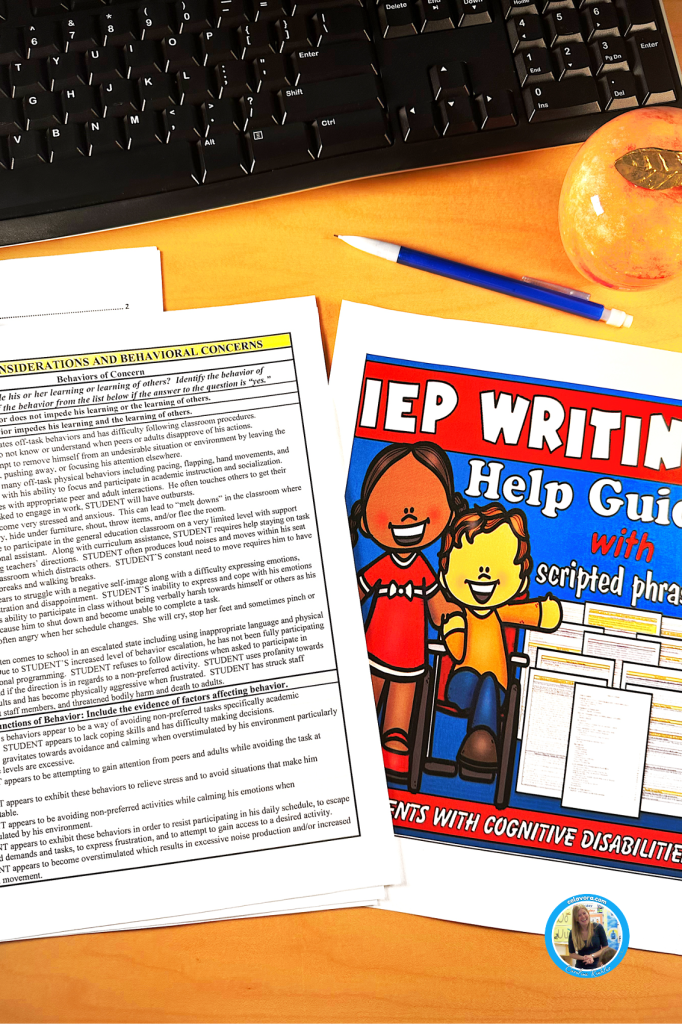
One tool that can aid in this process is an IEP help guide.
An Individualized Education Program (IEP) is a legal document designed to ensure that students with disabilities receive a free, appropriate public education that meets their unique needs.
A comprehensive IEP help guide can help educators navigate the often complex and detailed nature of these programs.
With such a guide, teachers can better understand the key elements of creating an effective IEP, including the goals, accommodations, modifications, and progress monitoring.
Instead of getting stuck on a wording for a section of the IEP, use your help guide to formulate the perfect sentence.
Utilizing a helpful IEP guide can save time and reduce stress, enabling teachers to focus on providing the best possible education for their students.

Utilize Positive Reinforcement
Positive reinforcement is a powerful tool in shaping the behavior of students with special needs.
Utilizing this technique in the classroom can be an effective way to promote desired behaviors and discourage unwanted ones.
There are many behavior tools available to support positive reinforcement practices.
Some of these tools include token economies, visual aids, self-monitoring checklists, and behavior contracts.
By providing students with praise, recognition, and rewards for displaying desirable behaviors, teachers can create a positive learning environment and build strong student-teacher relationships.
I recommend having a set of effective behavior management tools in your computer files.
Also, have tools like I’m working for boards, printed, cut out, glue, laminated, and Velcro so you can get students the tools they need quickly.
Reach out to other teachers who are pros at behavior management and get their support to grow your materials.
By utilizing these tools, sped teachers can quickly manage behaviors while ensuring that they are providing their students with the best possible learning experience.

Create a Schedule and Adjust As Needed
When teaching sped for a self-contained classroom for students with autism, my assistants and I used to say, “Live by the schedule. Die by the schedule.”
It’s a movie adapted phrase that means this: Follow the schedule and the day flows nicely. Divert from the schedule and everything starts to fall apart.
First, every person teaching sped needs a schedule.
I recommend creating a schedule and adjusting it as needed.
Start by creating a master schedule for your week, including scheduled activities, instruction time, and independent work periods.
Once you have a general schedule in place, take note of any changes that may arise, such as special events, individual education plan (IEP) meetings, or unexpected absences.
Make sure to include your prep time, arrival and dismissal, any special classes, when your students have speech/language, OT, PT, or other therapies.
Don’t be afraid to adjust your schedule as needed to accommodate these changes while still prioritizing the needs of your students.
By having a structured schedule in place and being flexible when adjustments are necessary, you will ensure that your students receive your support.
When Teaching SPED Document Everything
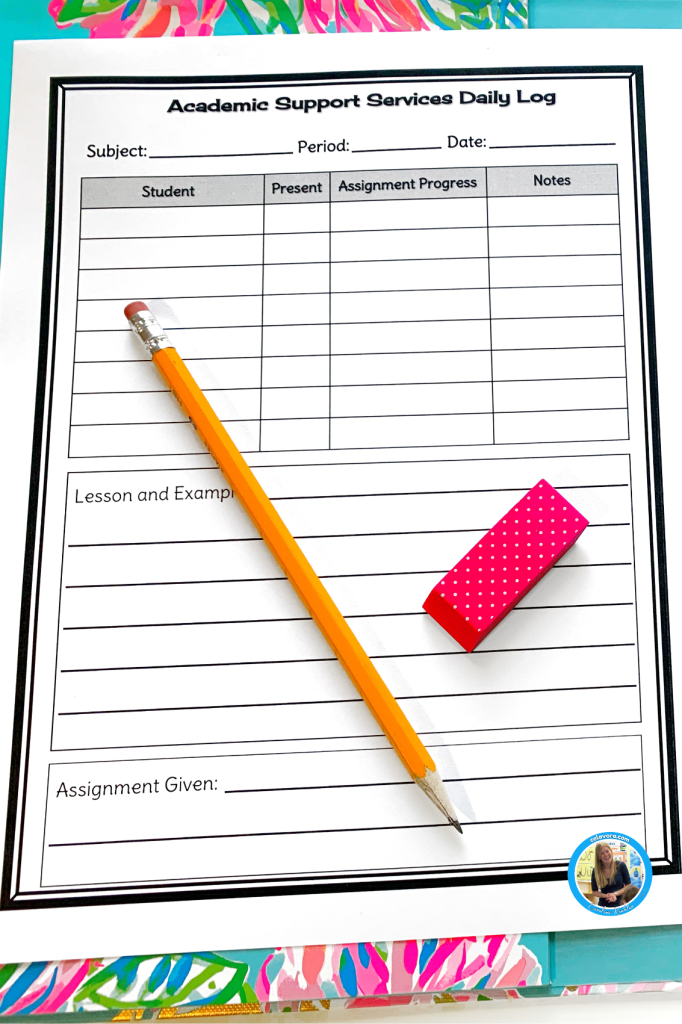
One essential organizational strategy for teaching students with disabilities is to document everything.
When teaching SPED, keeping detailed records and notes will significantly contribute to the effectiveness of the IEP goals.
Also, documentation provides critical evidence in case of any disputes or evaluations.
Documenting the progress of each student, such as their strengths and weaknesses, goals, and objectives, will help you make informed decisions and create individualized education plans.
Additionally, it is crucial to take accurate notes during meetings with parents, colleagues, and other professionals to track the discussions, agreements, and other relevant information.
By documenting everything meticulously, you can have a clear overview of each student’s progress, communicate more efficiently with the team, and even prevent burnout and stress.
Remember that keeping records does not necessarily mean paperwork. You can use digital tools, such as spreadsheets, apps, and cloud-based technology, to organize and manage the data effectively.

Edit a Teaching SPED Template for Every Report
As a special education teacher, one of the most important responsibilities is to continually monitor student progress and communicate that progress to other team members and stakeholders.
To stay organized and on top of this task, it can be helpful to create a template that you can easily adapt and use for every report you write.
This includes progress monitoring reports.
By starting with a basic structure, you’ll be able to streamline the report writing process and ensure consistency across all reports.
Take the time to create a template that works for you and your specific needs – it will save you time and stress in the long run.
Remember to customize the template as needed to meet the unique needs of each student you’re working with.
My favorite tip is to put the word STUDENT in the template whenever you would type a student’s name.
This keeps the accidental sharing of other students’ names at bay.
Take Grades with Rubrics
In order to effectively measure student progress when teaching sped, it is important to utilize performance and participation rubrics.
This allows for a more comprehensive evaluation of student learning and participation in the classroom.
Performance rubrics set clear expectations for students, outlining the specific skills they need to master in order to achieve a particular grade.
Participation rubrics assess the degree to which students engage in class discussions and activities, providing feedback on their contribution to the learning environment.
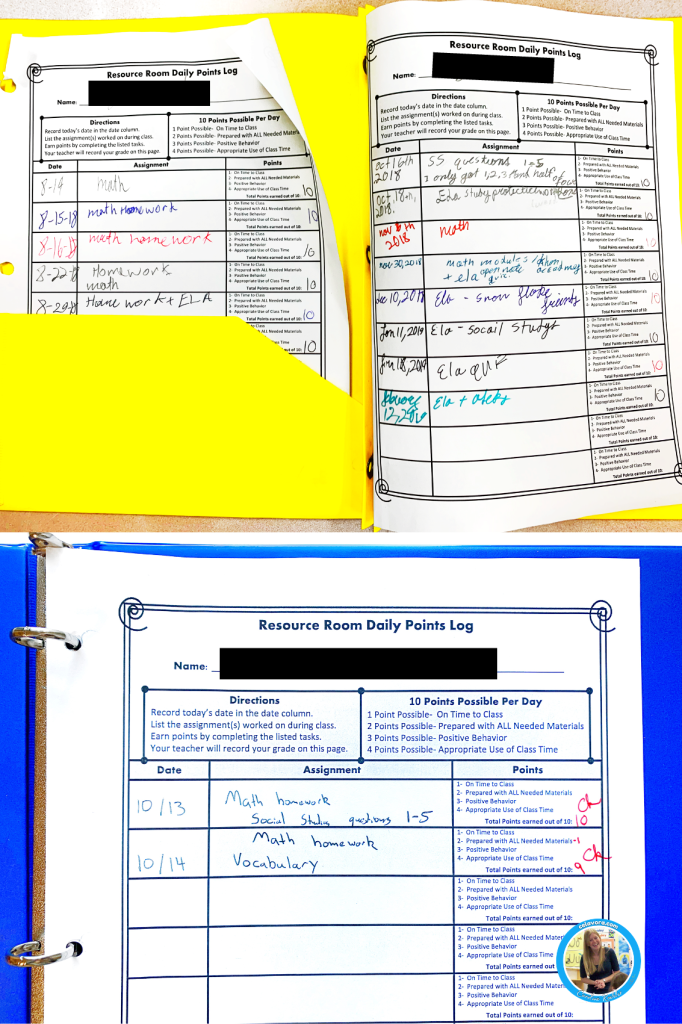
When I was teaching middle school students with special education needs, I was told I had to assign a grade to students who were with me for one period.
This was a bit tricky because I was working on reteaching concepts of the core subjects they were given that day.
So, I created a rubric that documented the students’ successes included
- On time to class
- Prepared with materials
- Positive behavior
- Appropriate use of time
Then I assign a total of 10 points for the categories.
Most of my students received 10/10 each day giving them an A in my class and a self-esteem boost.
By incorporating these rubrics into grading practices, educators are better able to track student progress and communicate this information to parents and guardians in a clear and organized manner.
It is important for teachers to stay organized and calm in order to create a positive learning experience for students and to maintain a healthy balance in their own work-life balance.
Teaching SPED with Confidence
In conclusion, staying organized and calm while teaching special education is possible.
By following the tips discussed in this guide, such as creating a detailed schedule, planning engaging and differentiated activities, collaborating with colleagues and parents, and maintaining a supportive classroom environment, educators can effectively meet the needs of their students and themselves.
Remembering to prioritize empathy, patience, and self-care can also go a long way in creating a positive and successful teaching SPED experience for all involved.