Reward Charts for Kids: A Positive Reinforcement System

All behavior is reinforced in someway. Sometimes negative behavior is unintentionally reinforced. This happens something like this: a child is shouting or screaming to get their way, and the adult finally has enough and tells the child if they stop the can do whatever they want. This teaches the child that if they want something and they can scream long enough, their adult will give in and eventually give them what they want.

Making Positive Behavior Management Work For YOU
You can do positive behavior management! Positive behavior management is a way to reward others for good behavior. Keeping track of good behavior can be a bit overwhelming when you’re not organized. However, if you have all the right tools, it’s fast, it’s simple, and it’s easy for children to understand. Using reward charts is one of the simplest ways I use positive discipline. It allows me to highlight the great things that kids do all day long. Positive behavior management is also great for adults because it’s a mood lifter. Instead of saying no or harping at students all day long, I acknowledge the positives. When I use reward charts, I get to point out all the great things kids are doing. I can still correct them and show them what would be the right thing to do, but my main mission is to highlight any time they did something right.

Reward Charts for Potty Training
A lot of parents use reward charts when they’re potty training but don’t realize how valuable they can be for everything else. When potty training, maybe the goal is dry pants for a whole day, and a prize is given when the child reaches that goal. Each time the child sits on the potty and has dry pants, they’re giving a sticker or stamp to put on their chart. Usually, the chart is put in the bathroom in an easy to see location. The stickers or stamps make organization fast and simple. And here’s the great news! If the child is ready to potty train, the sticker chart really will help reinforce the dry pants. And here’s even better part: the reward chart shouldn’t end in the bathroom. They are useful for many areas of life along with many ages.
So what kind of things in daily life can reward charts be used for?

Goals for Reward Charts in School
- Asking for help.
- Doing what teachers say.
- Following directions.
- Getting good grades.
- Keeping hands to self.
- Listening.
- Organizing.
- Participating.
- Raising your hand.
- Trying your best.
- Turning work in.
- Using kind words.
- Using manners.
- Waiting your turn.

Goals for Reward Charts at Home
- Bathing or showering
- Being caring.
- Brushing teeth.
- Caring for pets.
- Cleaning.
- Doing chores.
- Doing homework.
- Eating vegetables.
- Exercising.
- Following directions.
- Getting good grades.
- Getting the mail.
- Listening.
- Putting away laundry.
- Sharing with your siblings.
- Taking out the trash.
- Trying your best.
- Waiting your turn.
So, what’s a reward chart without rewards? See below for a list of rewards great for both school and home that I’ve found to be motivating for kids.

Rewards to Use for School
- A photo of success
- Arts and crafts
- Blow bubbles
- Book break
- Call home
- Candy
- Class pet
- Class helper
- Eat lunch with teacher
- Games
- Get a homework pass
- Go for a walk
- Gym time
- Music
- Note home
- Play dough
- Playground
- Puzzles
- Relax
- Snack
- Sticker
- Technology
- Toys
- Treasure box

Rewards to Use at Home
- A call or FaceTime to a favorite relative
- Arts and crafts
- Blow bubbles
- Candy
- Dance party
- Device time
- Favorite meal
- Games
- Gaming time
- Go to the park
- Ice cream
- Library trip
- Money
- Movie time
- Night out with parent
- Play date with a friend
- Play dough
- Puzzles
- Shopping trip
- Stickers
- Take a walk
- Toy
- Visit a museum
So how do I use them?
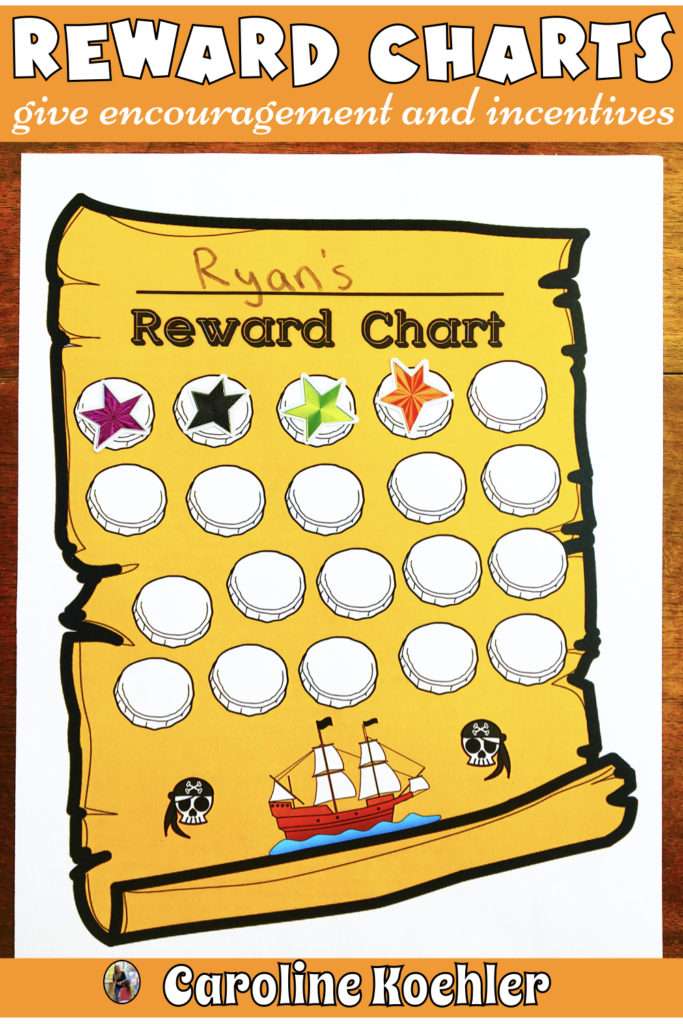
First, I either print off the reward charts or use a digital version. Next up I pick a goal. I make sure that the child knows and understands the goal. Next we pick out a reward together. I have the ultimate say on the reward and so do you. Of course, I want the incentive to be motivating but it has to be realistic and affordable for me also. Then, I post the chart in a location that the student and I have agreed to. Finally, I start looking for any time they are successful with the goal. When they are, they are given their sticker or stamp. If they are using the digital reward, a picture is tapped to make it colored. Once they’ve filled out the chart completely, the reward is given immediately or as soon as possible. The process is repeated until the student no longer needs an additional incentive to complete the task.
Have you had success with charts? If so, have you used them in other ways than I have described? Please share below!