


Innovative Aids of Teaching for Creative Learning

Creative learning allows individuals to explore, create, and develop new ideas and solutions with a some help from aids of teaching. 👩🎨
Educators are always on the look out for innovative teaching aids to stay ahead of the curve and to ensure that each student is getting the best experience possible.
This can include the use of new technologies, digital resources, and creative teaching styles.
Innovative aids of teaching can help to keep students engaged, motivated, and inspired to learn. 📈
This can help to foster creativity and promote a deeper understanding of the material.
Also, there are some rocking teaching aids out there that make learning fun.
And, most of use want to be the fun teacher everyone loves!
Let’s check out different innovative aids of teaching for creative learning and how they can be used to provide a more meaningful experience for students. 🙌
Please note that Amazon affliate links appear throughout this post which means I earn a small commission at no cost to you when you purchase.

Incorporate Aids of Teaching Tools to Enhance Learning
Incorporating learning tools into the classroom can have a tremendous impact on students’ educational experience.
Through the use of motivating tools like ⏳ sand timers, fun pointers, and highlighting strips can make lessons more fun with little work.
Interactive activities, and engaging audio and video materials can bring lessons to life and make learning more fun and memorable.
By stimulating students’ minds in different ways, these tools can help them not only to understand the material better, but to also develop their creative thinking skills and spark their imaginations. 🔥
Moreover, when integrated into the lesson plans thoughtfully, these tools can open up an exciting world of learning opportunities for students.

Incorporate Hands-on Activities
Incorporating hands-on activities into the learning process is an innovative and creative way to teach!
Students learn best by doing, and ✋ hands-on activities stimulate their creativity and pique their interest.
When students get to physically interact with their lessons, they are more likely to engage with the material and develop a deeper level of understanding.
Not only that, hands-on activities can also help build students’ confidence and enhance their problem-solving skills.
So, what are easy ways to turn any activity into a hands-on opportunity? 👇
- Use a toy microphone
- Give manipulatives for counting
- Act out the problem or story
- Draw it out
- Use real tools like rulers, newspapers, scissors
- Clipboards help everything feel “real”
Another easy way to make lessons hands-on and real world like is to invoke the senses. 👀👂👃
Change the lighting, diffuse a peppermint smell when reading Christmas stories, wear sunglasses when learning about climate, take off shoes and socks when counting by tens, and so much more.
So don’t be afraid to get creative and incorporate some fun and interactive activities into your lessons!

Offer Group-Based Learning Aids of Teaching
Group-based learning can be a powerful 🪛 tool for creative learning.
Not only does it allow students to learn from one another, but it can also be an opportunity for them to build relationships and form meaningful connections.
It also encourages collaboration and encourages students to think outside the box and think creatively when problem-solving.
Organizing whole group and small group time is a bit like being a ring leader in a circus. 🎪
Find tools that help you organize this time like carpet spot markers (reusable for years!), dry erase table spots, and dry erase pockets.
Always model rules and appropriate behavior during this time to minimize distractions and problems.
Nothing ruins group time like students who don’t follow the rules! 🚫
Group-based learning can be fun and engaging for students, and it has the potential to create an environment of mutual support and growth.
With the right guidance and facilitation, group-based learning can help students become more creative and innovative thinkers.

Promote Experiential Learning
Experiential learning is an invaluable tool for teaching. 🧪
It helps students engage more deeply with the material, and it allows them to apply their own knowledge and experiences to their learning.
This has always seemed easiest for me with science based activities.
Here are my favorite science turned language arts turned math lessons. 👩🔬
- Making tornadoes
- Hatching chicks
- Hatching butterflies
- Brushing teeth using an eye stained with a dark soda
- Mixing colors
- Popping popcorn
Do not underestimate these activities based on a child’s age.
Young ones want to learn and older students are anxious to do anything that doesn’t solely involve a textbook.
By encouraging students to 🙇♀️ think critically and ask questions about the material presented to them, experiential learning helps to cultivate creativity and self-expression in the classroom.
Promoting experiential learning can help to create an environment of creative exploration and discovery, allowing students to gain a deeper understanding of themselves and the world around them.

Utilize Interactive Aids of Teaching Technologies
As teachers, we should strive to make education come alive, and one of the best ways to do that is to utilize interactive technologies. 💻
Incorporated in most school across the U.S. are interactive technologies like interactive whiteboards and digital tablets.
Teachers create or buy dynamic, engaging lessons in Google Slides, Microsoft PowerPoint, Boom, TPT Easel, and so much more.
Check out my interactive game show PowerPoint activities for a fun example.
These aids of teaching encourage creativity and make the students 🕺 active participants in the learning process.
But it doesn’t all have to be focused on explicit learning.
There are amazing tools out there for classroom management as well.
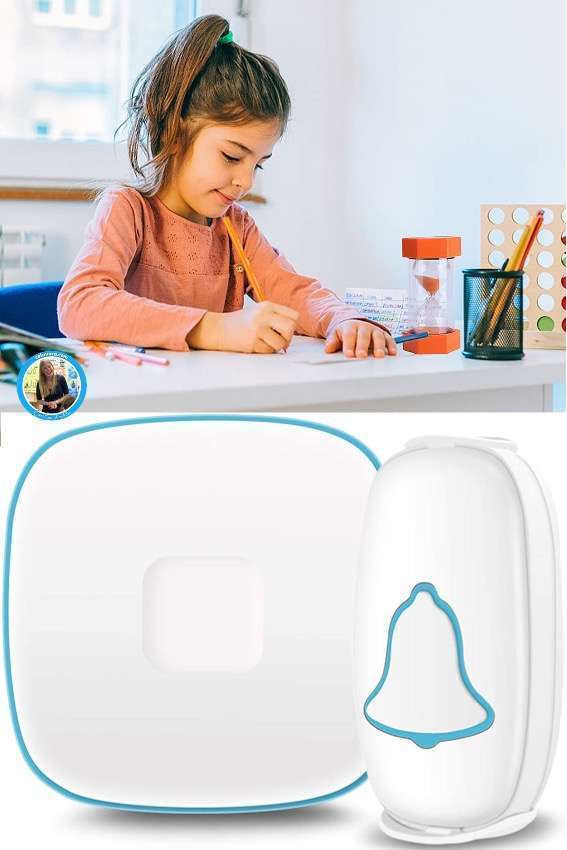
A wireless 🔔 doorbell can change your class dynamics and save you from hurting your throat – again.
These doorbells are super cheap (thanks, Amazon!) and install by plugging them into an outlet.
I love, love, love behavior management tools that are fun, long lasting, and good for everyone (me included) involved!
Also, interactive technologies can be used to bring a variety of educational tools into the classroom.
Videos, games, and simulations can help to create a truly immersive and engaging learning experience.
With new technology emerging, the 🌠 sky is the limit! (Seriously, you could take a virtual field trip to the sky.)

Foster Collaborative Learning Environment
In order to cultivate creative learning, it’s essential to foster a collaborative learning environment in the classroom.
Such an atmosphere encourages 👬 students to learn from and with each other, allowing for a deeper understanding of the material.
By allowing for the exchange of ideas, students can become more engaged in their learning and can develop their own ideas and concepts.
I am a true believer in using our 💪 strengths and 😓 weaknesses to grow.
Inclusion classrooms that have a wide range of learners from gifted to those with special education needs are essential for optimal growth.
Being in an environment that helps everyone learn to the best of their ability gives students a different view on life.
Read social stories 📚 discussing disabilities.
Incorporate learning tools that discuss 🧘♀️ stress management and help kids understand that everyone faces challenges.
This allows for the examination of different perspectives and points of view, which can enable critical thinking to take place.
With a collaborative learning environment, teachers can foster 🧑🎨 creative thinking, leading to a more creative and engaged classroom.
Regardless, make your classroom one who accepts people as works in progress and promotes love and respect.
Use Visual Aids of Teaching Supports
Visual supports are a powerful tool in teaching, as they provide learners with a concrete way to understand complex concepts.
Visuals can be used to illustrate concepts, represent data, or facilitate communication. 🚦
Examples of visual supports include pictures, videos, graphs, and diagrams, but can also include physical objects or visual reminders.
These can be fun and cute tools like the > greater than or < less than 🐊 alligator for math.
They can be cue cards that a teacher flips through and find the “Shh, quiet” card to reinforce silent reading time.
Also, visual classroom procedures and daily schedules are visual supports that keep everyone on track. 📆
Using visual supports in the classroom provides the opportunity to create a visually stimulating learning environment.
It also encourages creativity and critical thinking in learners, as they are able to engage with the materials in a different way.
Visual supports are a great way to ensure that all learners can access the content and engage in the learning process.
Provide Students with Real-World Scenarios
Providing students with 🌏 real-world scenarios is one of the most innovative aids of teaching for creative learning.
It helps to explain why certain topics are important in the real world and what the implications are when students don’t understand the material.
I vividly remember learning a higher level math concept in high school and the “smartest” math student in class complained. ✋
He wasn’t upset about learning new material.
But, he was upset that there were no word problems to go along with the concept.
I remember he told the teacher, “This is made up math if there is no genuine application for this in the real world.”
And he’s right. He’s so right, I decided to marry him. 💒 (Side note: My high school sweetheart is my hubby of over 20 years. I think he’s brilliant!)
So, how can we do this in the classroom? Let’s make another list!
- Write letters and mail them (extra points for a walk to the post office!)
- Draft emails and send them
- Calculate expense reports
- Design a layout for a spot in the classroom
- Grow plants
- Vote on a problem at school and then create a solution
- Make a menu
- Follow a recipe
- Clean
- Recycle
- Proof read others’ work
- Illustrate a text
Real-world scenarios also help to make the learning process more engaging for students and give them the opportunity to apply their knowledge in different contexts. 🗺️
It’s a great way to inspire students to think about the implications of their learning, and it also helps to foster a more creative approach to problem solving.

Offer Multiple Assessment Formats
When teaching for creative learning, consider offering multiple assessment formats to fully engage students. 📝
This can include tasks such as tests, projects, papers, presentations, and creative activities such as role-playing, simulations, field trips, and debates.
By offering multiple formats, you can ensure that all students are given the opportunity to demonstrate their understanding of material in a way that is meaningful to them.
Here’s the trick for this one. Give everyone an assessment at the same time but give out multiple formats of the assessment. 📃
Some textbooks are doing this now and have up to 3 versions.
Oftentimes, my students with IEPs will receive a multiple choice assessment.
But, the general education students get the short answer version.
This is super easy to do with spelling like shown in this picture. 🪄
Find a good set of editable spelling pages and add the words from your list to it weekly.
No matter the subject providing variety in assessment format can help to make learning more enjoyable and inspiring for students.
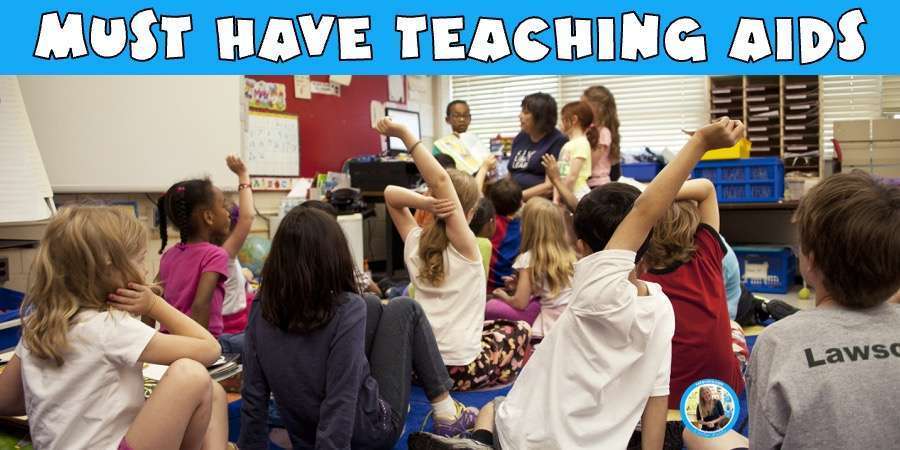
Leverage Differentiated Instruction Methods
Leveraging differentiated instruction methods is one of the most innovative aids of teaching for 🎨 creative learning.
Differentiated instruction is a method of teaching that focuses on the differences between students, taking into account their individual learning styles and needs.
This method encourages educators to use a mix of strategies to meet each student’s unique learning needs, such as providing different activities, instruction, and assessments.
By using differentiated instruction, educators can create an environment that allows students to learn in their own way and at their own level.
This can help to improve engagement and ultimately lead to better academic performance. 🎓
If you aren’t sure where to start with differentiated instruction, I recommend looking at small group time.
You can teach the same topic to 5-6 groups but use different tools and strategies.
Your 🏎️ rate of teaching and processing time is part of this approach.
By introducing new ways of learning, teachers can help students develop important skills like critical thinking, problem solving, and collaboration.
This gives students the opportunity to utilize their creativity and develop a deeper 😉 understanding of the material through the aids of teaching you are providing.


