Paper Airplane STEM Challenge in Special Education
Students need engaging, meaningful and fun activities and paper airplane STEM challenge activities checks all the boxes.
In recent years, the integration of STEM (science, technology, engineering, and math) activities and lessons has proven to be highly beneficial for students with special needs.
STEM provides them with opportunities to develop critical thinking, problem-solving, and fine motor skills.
One particularly fun and accessible STEM activity for special education classrooms is the creation and experimentation of paper airplanes.
Of course, this activity incorporates all four STEM components.
Also, it allows students to tap into their creativity and take ownership of their learning.
Let’s explore the various benefits of incorporating paper airplane STEM fun in special education classrooms.
Along the way I’ll share practical tips and strategies for implementation.
By the end, you will have a deeper understanding of the value of this activity and be equipped to integrate it into your own classroom.
Explore STEM concepts with paper airplanes
When it comes to engaging students in STEM education, sometimes the simplest tools can be the most effective.
That’s where paper airplanes come in!
These humble creations have the power to ignite curiosity and encourage problem-solving.
They introduce fundamental STEM concepts in a fun and interactive way.
Students get to experiment with different designs, adjust their planes, and observing how these changes affect flight performance.
This lets them learn about aerodynamics, lift, drag, and even the scientific method.
The best part is that paper airplanes are accessible and affordable, making them a fantastic addition to any special education program aiming to incorporate STEM activities into their curriculum.
So, grab some paper, get ready to fold, and let the learning take flight with paper airplane STEM fun in special education!
Use picture supported text
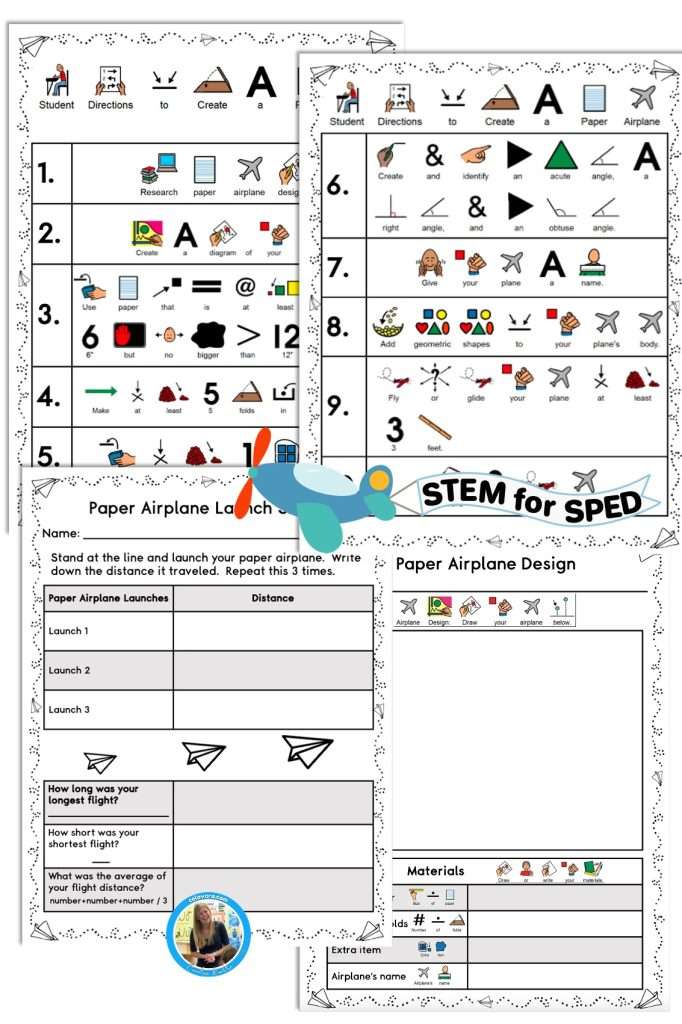
Incorporating picture-supported text can be a game-changer in special education classrooms.
By combining visuals with written information, students with diverse learning needs can better comprehend and retain information.
Having pictures above text makes it easier for students to grasp new ideas.
This includes using pictures to demonstrate the steps of folding a paper airplane or utilizing visual cues to reinforce key vocabulary.
The use of picture-supported text can enhance engagement, promote inclusivity, and foster a deeper understanding of STEM concepts in special education settings.
So, let’s harness the power of visuals and make learning an exciting and accessible journey for all students in our paper airplane STEM adventures!
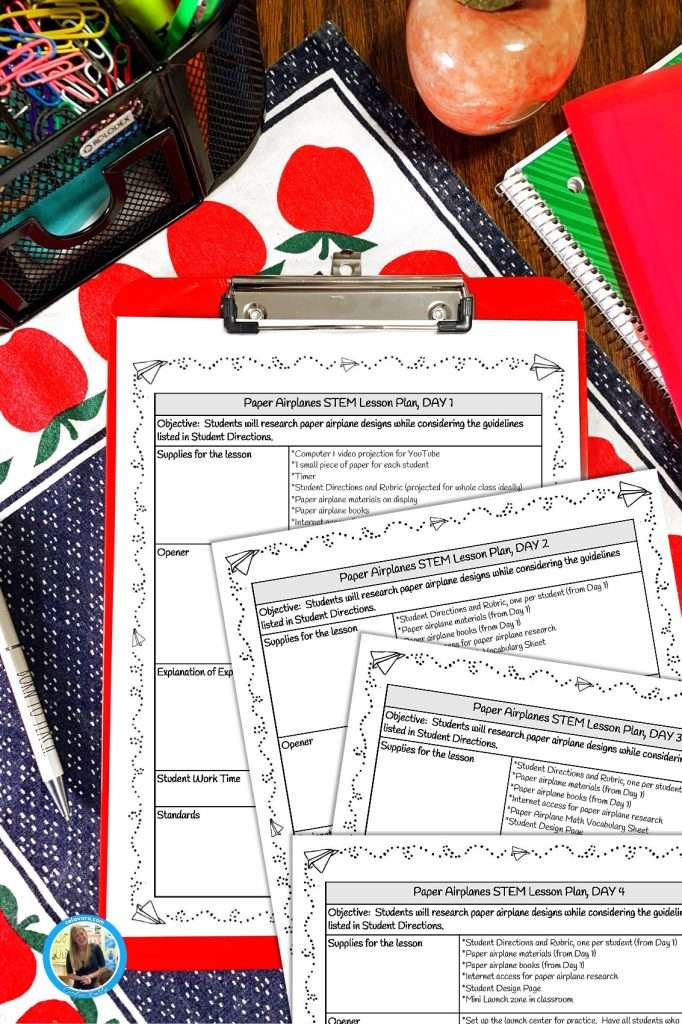
Provide written student directions
When it comes to engaging students in paper airplane STEM fun in special education, providing written student directions is a valuable strategy.
By offering clear and concise instructions in written form, students can refer back to the directions at their own pace and in their preferred learning style.
This not only promotes independence and self-directed learning but also helps to alleviate any potential confusion or frustration.
Written student directions ensure that all students have access to the information they need to participate and succeed in our exciting STEM activities.
Then, base your grading rubric off of these visual directions.
This teaches students that when they follow given directions, they succeed.
So, let’s empower our students with written guidance and watch their creativity and knowledge take flight!
Use simple materials to learn
In our special education classroom, we believe in the power of using simple materials to facilitate learning and growth.
We’ve found that by utilizing everyday items like paper, scissors, and glue, we can create engaging and inclusive learning experiences for all of our students.
Whether it’s creating collages to explore colors and textures or building structures with popsicle sticks to understand basic engineering principles, these hands-on activities with simple materials provide endless opportunities for creativity and exploration.
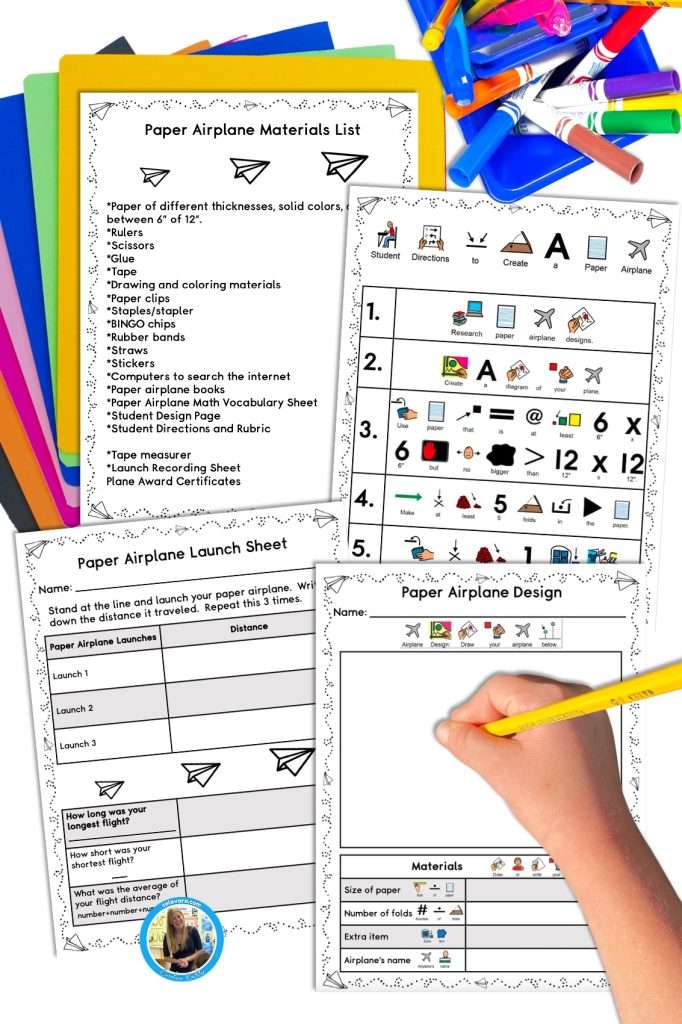
Create a materials list and gather the supplies for your paper airplanes.
Let the students pick and choose what materials they want to use.
This activity is cost-effective and easy to set up.
Also, the flexibility of the materials also allow our students to develop essential skills such as problem-solving, critical thinking, and fine motor skills.
By embracing the simplicity of everyday materials, we can unlock a world of learning possibilities for our special education students.
Utilize design pages
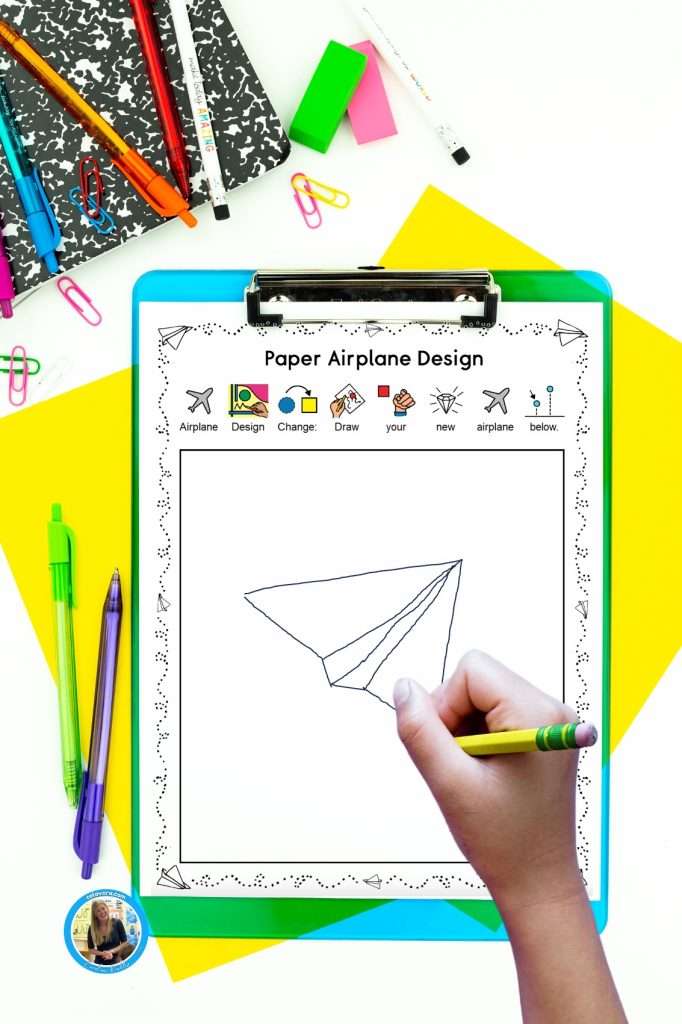
Another exciting way we enhance learning in our special education classroom is by utilizing design pages.
Design pages are a versatile tool that allows our students to express their creativity and engage in hands-on activities.
These pages provide a framework for creating the paper airplane.
By incorporating design pages into our lessons, we encourage our students to think outside the box and explore their artistic talents.
Designing their own paper airplanes before the making phase is a way to teach advanced planning.
Design pages offer a fun and interactive way for our students to learn and express themselves.
The best part is that they can be easily customized to meet the individual needs and abilities of each student, making them a valuable addition to our special education curriculum.

Incorporate math and measurement skills
We also utilize the fun and engaging activity of paper airplane STEM challenges to incorporate math and measurement skills into our special education curriculum.
Through this hands-on activity, our students not only learn the principles of flight and aerodynamics but also develop important mathematical concepts.
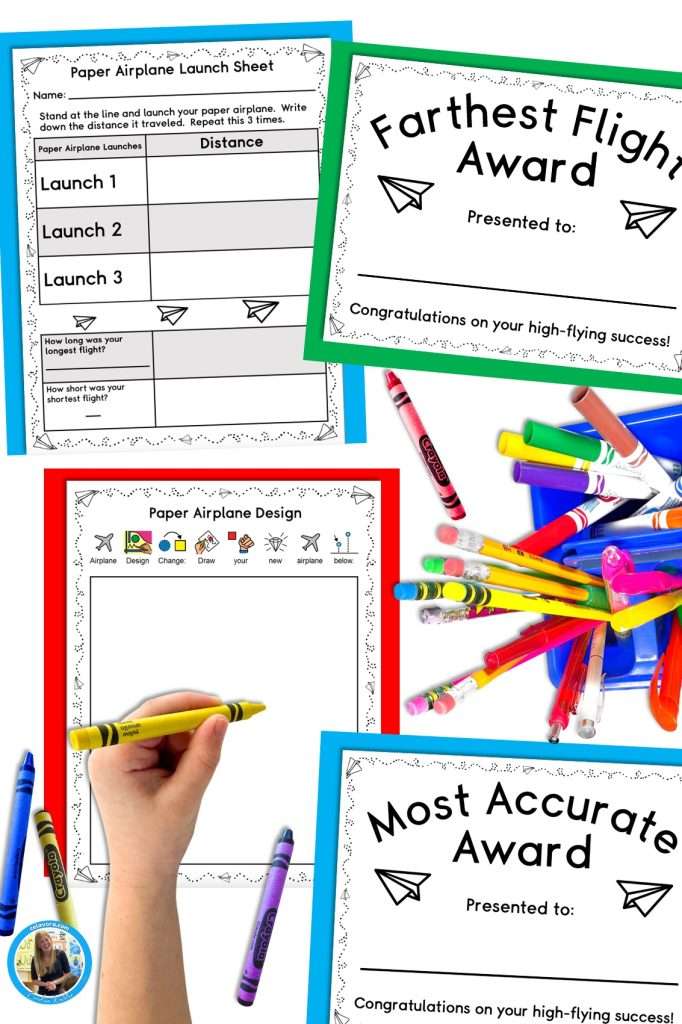
They practice measuring and comparing distances as they launch their paper airplanes and analyze the results.
Additionally, they explore averages and rounding.
By incorporating math and measurement skills into our paper airplane STEM fun, we provide our students with practical and enjoyable ways to apply these concepts.
Ultimately, STEM lessons foster both their academic growth and their enthusiasm for learning.
Teach math vocabulary
In addition to the exciting Paper Airplane STEM Fun in our special education curriculum, we also prioritize teaching math vocabulary to our students.
We believe that building a strong foundation in mathematical language is essential for their overall understanding and success in mathematics.
Through visual aids, and real-life examples, we engage our students in learning and practicing key math terms.
I recommend identifying a group of vocabulary related to paper airplanes.
Then, define your list and teach it during whole group instruction.
Launch and record results
Paper Airplane STEM Fun includes not only the launch activities but also recording the results.
This allows us to monitor the progress and effectiveness of our curriculum, making necessary adjustments along the way.
One of the purposes of STEM is to think and act like a scientist.
Conducting an experiment and recording the results teaches our students this concepts.
They get to see a project come to life and then analyze what worked and what didn’t work.
Through this process, we strive to continuously learning experience.
This sets the basis that our students receive the best possible education in the realm of STEM exploration.

Use a grading rubric
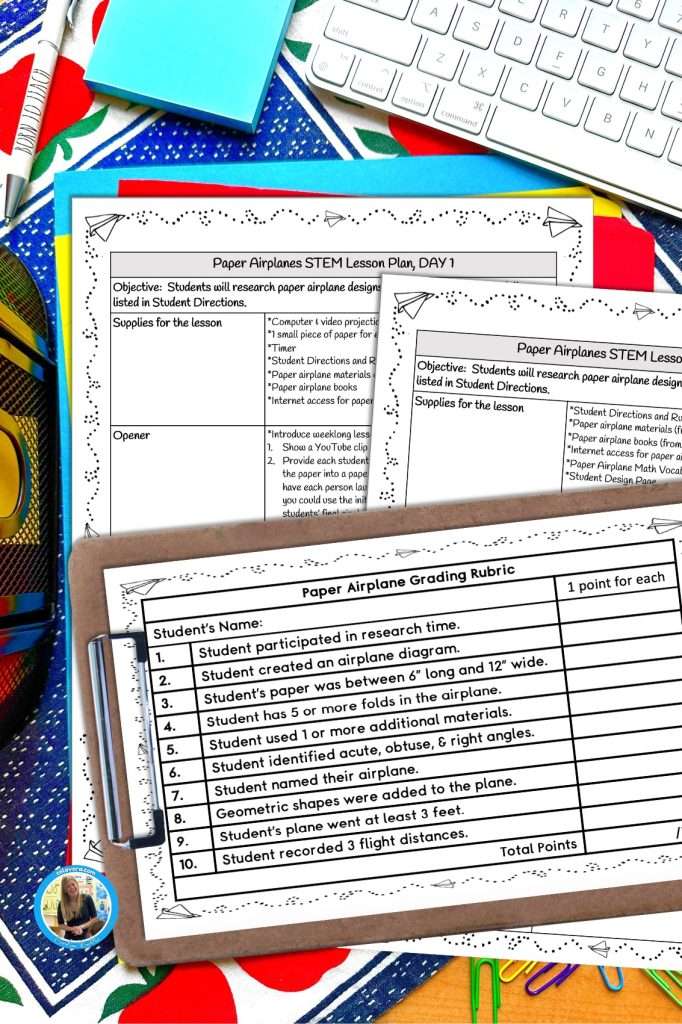
To enhance our assessment practices in the realm of Paper Airplane STEM Fun in Special Education, one valuable tool we can utilize is a grading rubric.
A grading rubric provides a clear and transparent framework for evaluating student performance and progress.
By outlining specific criteria and expectations, it allows both educators and students to have a shared understanding of what constitutes success in our curriculum.
With a grading rubric in place, we can provide constructive feedback that focuses on individual strengths and areas for improvement, fostering a growth mindset and encouraging students to strive for excellence.
Additionally, a rubric helps us maintain consistency and fairness in our grading process, ensuring that all students are evaluated fairly and objectively.
Ultimately, utilizing a grading rubric supports our goal of providing a comprehensive and effective learning experience for our special education students in the exciting world of paper airplane engineering and STEM exploration.
Present student awards
Students need recognition and celebrations of their achievements.
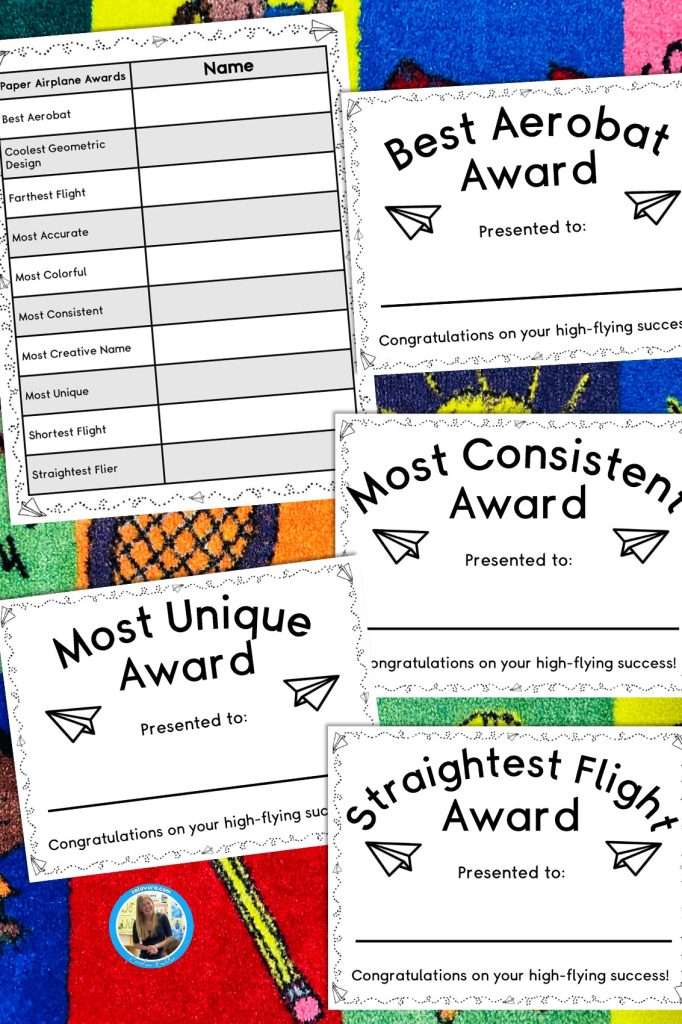
That’s why I love presenting awards to students at the end of this week long lesson.
I created a set of 10 different awards to give to students.
While I may have more than 10 students, I can always double up awards or declare ties.
Presenting student awards not only boosts their self-confidence and motivation but also builds a sense of community and support within our special education program.
We take pride in celebrating the achievements of our students and look forward to continuing this tradition of recognition and encouragement.
So, the next time you find yourself needing a fun and educational activity for your students, consider making paper airplanes!
Not only will they have a blast creating and flying their own designs, but they will also be learning important STEM concepts along the way.
Plus, the joy and excitement on their faces will be worth it all.
Happy flying with paper airplane STEM challenge activities!