Social Story about Friends Set | Autism Stories | Social Skills


The Power of Social Emotional Activities to Build Resilient Hearts and Minds

In today’s fast-paced world 🏎️, where we are constantly preoccupied with achieving our goals, it’s easy to overlook the importance of social emotional activities.
However, with the increasing prevalence of mental health crises, it has become all the more crucial to focus on building resilient hearts and minds through social emotional activities.
Social and emotional activities can prepare kids to handle various life challenges and come out stronger.
Resilience is a vital trait that helps individuals overcome setbacks and obstacles that come their way.
This has become increasingly ⭐️ important ⭐️ in today’s times.
Studies have shown that children who participate in social emotional activities display better behavior, less stress, and enhanced social skills.
SEL activities help children understand their emotions, develop empathy, and build healthy relationships and essential skills.
Whether it’s through role-playing, group discussions, or creative expression, social-emotional activities can offer long-lasting benefits. 🧘♀️

Social Emotional Activities using Behavior Bragging
The power of social-emotional activities is undeniable in building resilient hearts and minds in children.
These activities allow young individuals to develop crucial life skills, such as empathy, self-awareness, and self-regulation, that are essential to their growth and success.
Teachers play a vital role in promoting these skills through various behavior reinforcers, including the use of behavior bragging printables.
These 🖨️ printable tools serve as a tangible way for children to recognize and celebrate their positive behaviors and accomplishments, boosting their confidence and self-esteem.
I love using these to reinforce character traits.
Also, behavior bragging printables can be fun incentives for pro-social behavior.
I recommend using them as bookmarks, badges, bracelets, headbands, and any other creative way you can think it.
Positive spreads positivity so the more I give these out, the more students recognize and promote ❤️ caring behaviors.
By an easy social-emotional activities like behavior bragging, teachers can create a safe and nurturing learning environment.
This helps children thrive, ultimately leading to brighter and more resilient futures.
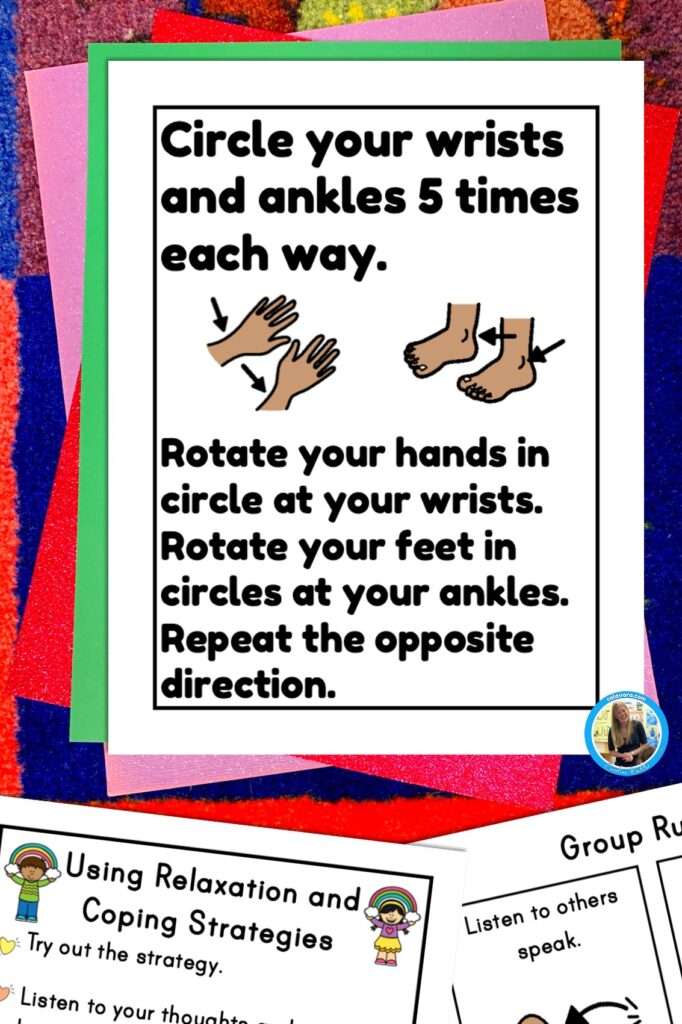
SEL Behavior Coping Tools
As we continue to navigate the challenges of the modern world, it’s becoming increasingly clear that social-emotional learning (SEL) is a vital component in preparing children for success and happiness.
One of the key benefits of SEL activities is their ability to boost self-esteem and foster positive relationships with peers and adults.
Behavior coping strategies for body regulation are the key to this important skill. 🫶
By helping children to learn behavior coping strategies for body regulation, we provide them with the tools they need to develop important skills like self-awareness, self-management, and responsible decision-making.
These skills are essential for building resilience in the face of adversity, and can help our children to overcome the many obstacles that life throws their way.
I recommend finding ⏰ time in your day to teach behavior coping.
This could be a 5 minute who group activity where you are teaching a breathing exercise and when a person might use it.
Also, small group instruction might be necessary for students with IEP behavior goals.
Regardless on how you decide to present it, take time to teach students how to use social emotional activities to help themselves. 😎
By embracing the power of social-emotional activities, teachers can help build confident, capable, and resilient hearts and minds that are ready to take on the world.
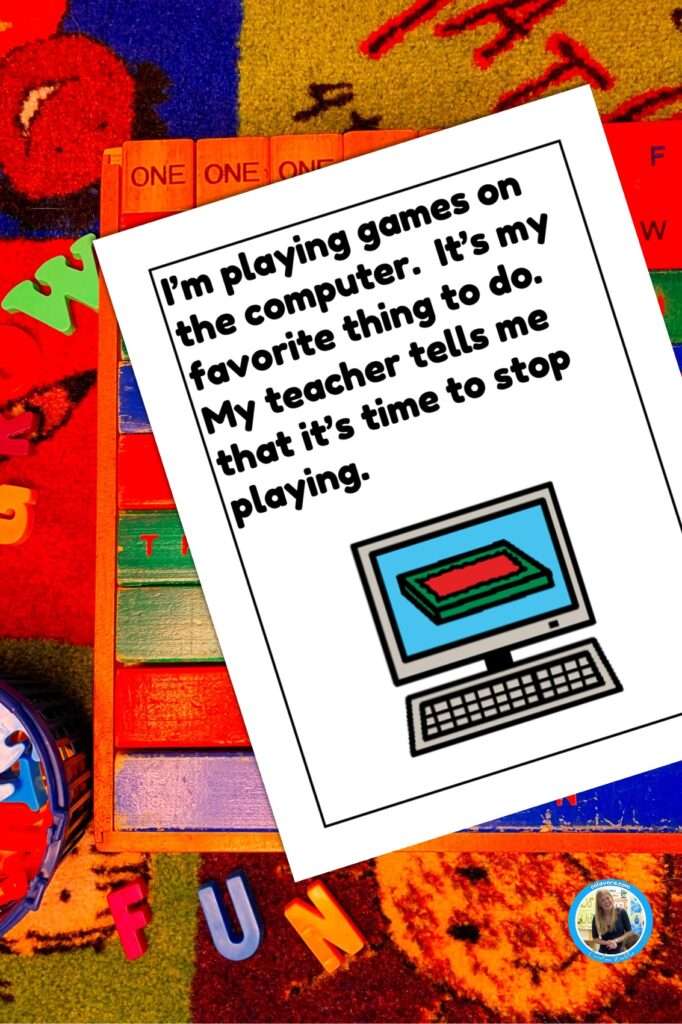
Behavior Interventions
Using behavior interventions in small groups helps those who struggle with behavior regulation learn these skills.
Children who participate in these activities are better equipped to handle 😩 stressful situations and bounce back from adversity.
As educators and caregivers, it’s important to recognize that not every child has the same opportunities to develop these crucial skills.
Using behavior interventions in small groups can 💗 help those who struggle with behavior regulation learn the skills they need to thrive.
Typically, I group students together who have similar IEP behavior goals.
We discuss behavior topics and role play how to handle difficult situations.
Teaching these skills before a meltdown provides students with behavior tools when a situation occurs.
When we invest in social-emotional learning, we’re investing in the 🔮 future success of our students.
By promoting empathy, communication, and coping skills, we can help build a generation of resilient and compassionate individuals who are equipped to navigate life’s challenges with grace and confidence.
Doesn’t that sound so amazing???
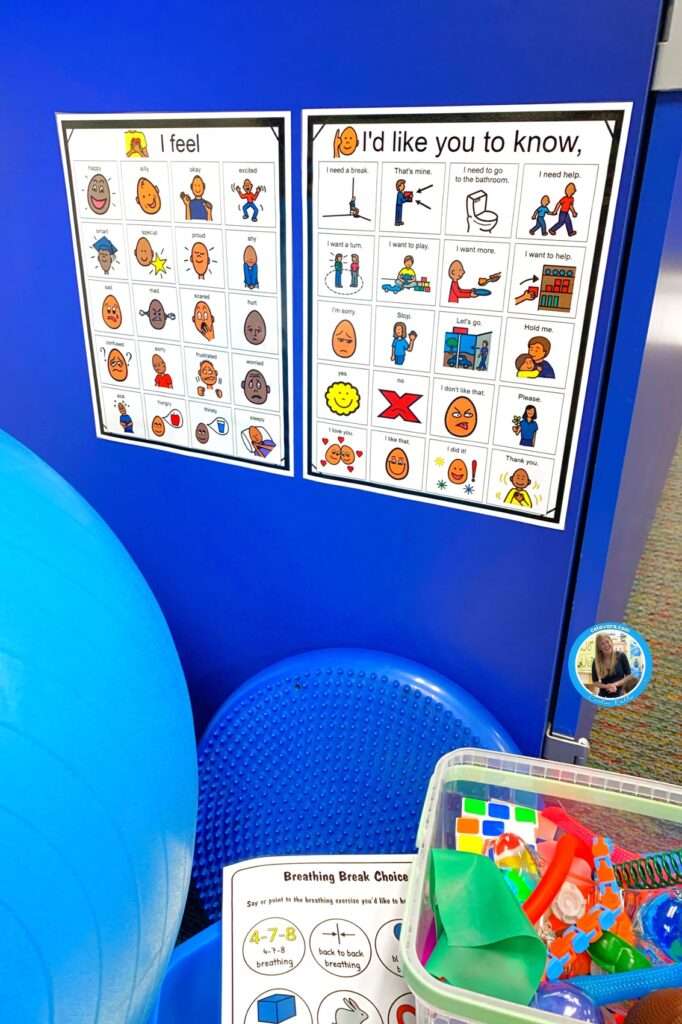
Social Emotional Activities with Communication Boards
Discovering ways to boost the academic performance and overall well-being of students has always been a fundamental challenge for educators.
The good news is that there are simple yet powerful activities that can help students develop a more positive outlook towards life while improving their academic performance.
These social-emotional activities utilize communication boards that provide a reliable visual 🧰 tool to help students express their thoughts, wants, and needs, especially during moments of crisis.
These boards can help build a foundational understanding of emotional intelligence, assisting students in navigating their emotional landscape effectively.
Also, communication boards are not just for students with communication disorders.
Sometimes, something is too painful to say out loud. 🤐
One student I had just exceptional bright but he had intense mental health struggles.
During a meltdown, he wouldn’t communicate with anyone – until I showed up with my communication boards.
Once he saw those, he could 👉 point to the pictures and phrases to express that he was having suicidal thoughts.
He just couldn’t say it out loud because it was too painful for him to hear.
Once I knew what was going on, I got him the help he needed.
Utilizing communication boards gives students a foundational visual to express their wants and needs in a moment of crisis. 🤯
With dedication and support, these activities can help young minds become more resilient and better equipped to handle life’s ups and downs with grace and perseverance.
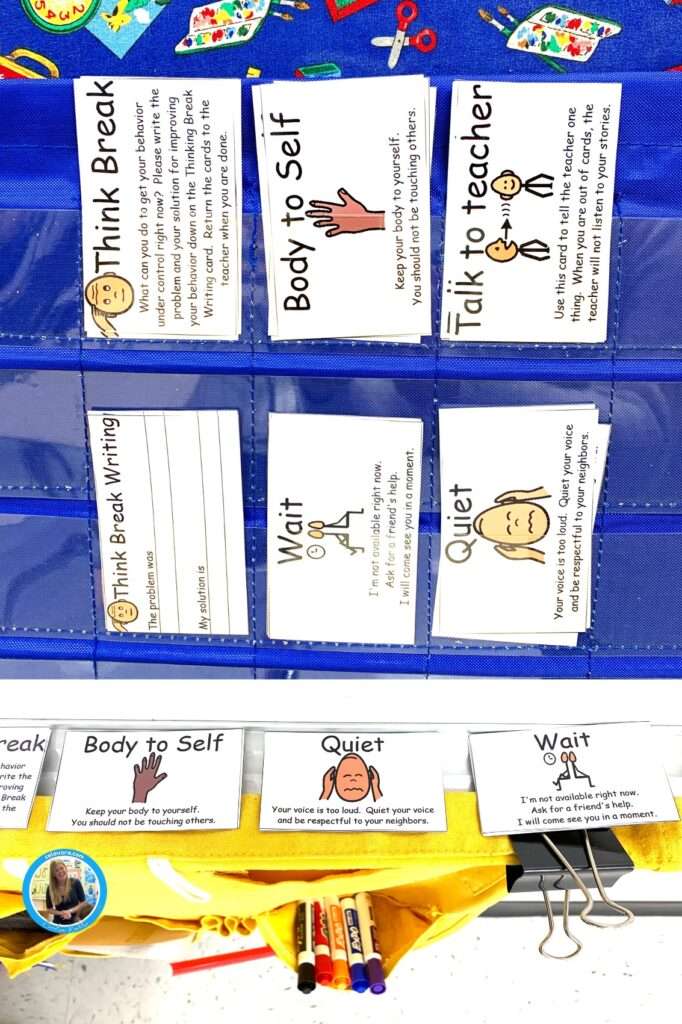
Classroom Control Cards
One of the greatest gifts we can offer children is a safe and supportive environment where they can express their emotions and develop emotional intelligence.
Classroom control 🗃️ cards are an amazing tool to promote cooperative behavior and facilitate the emotional growth of our little ones.
Through these activities, we can cultivate a culture of empathy, understanding, and kindness in our classrooms, paving the way for children to become resilient and mindful individuals.
If a student is struggling with respect by continuing to blurt out while others are talking, I can walk over an lay a “Raise Your Hand” 🙋♀️ card in front of them.
Or maybe a student is having trouble remembering to keep their hands to themselves.
No problem: I can give them a “Hands to Self” card and fix the problem (usually) without saying a word.
By prioritizing social-emotional learning, we equip children with essential skills and tools to navigate the ups and downs of life, build healthy relationships and connections, and thrive in all areas of their lives.
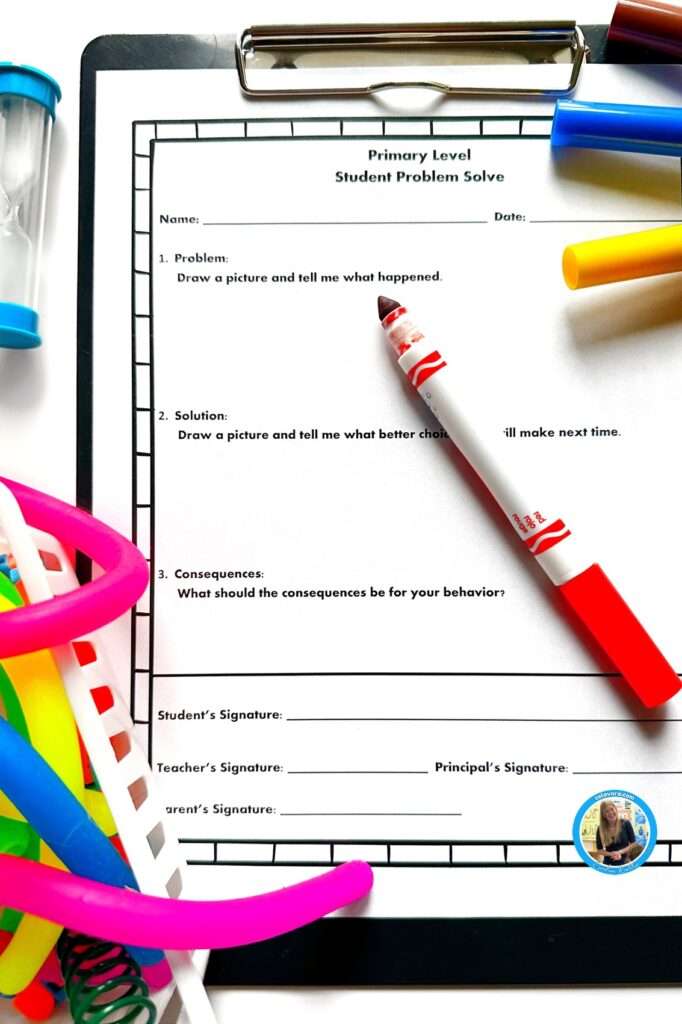
Social Emotional Activity Think Sheets
Social-emotional activities promote mindfulness and help children to be more present.
This is important when problem arise and, unfortunately, they always do.
Problem solve sheets help students take a 🙇♀️ think break to analyze a problem and a solution.
I love these because they establish real world problem solving skills.
Think sheets promote mindfulness and help children be more present in the moment.
This is especially important because when problems happen children can quickly become overwhelmed and lose sight of their ability to problem solve.
But with the help of activities such as “think break” problem-solving sheets, students can be empowered to take a step back and analyze the issue at hand.
This tool is wonderful for reflection and documentation of issues.
I often use problem solving 💬 think sheets to help me figured out what social emotional activities I need to teach to my class.
Think sheets establish real-world problem-solving skills, setting children up for success in all areas of life.
Want more reasons why teachers should use social-emotional learning reflections? Check out StuckOnEDU’s post here for more.
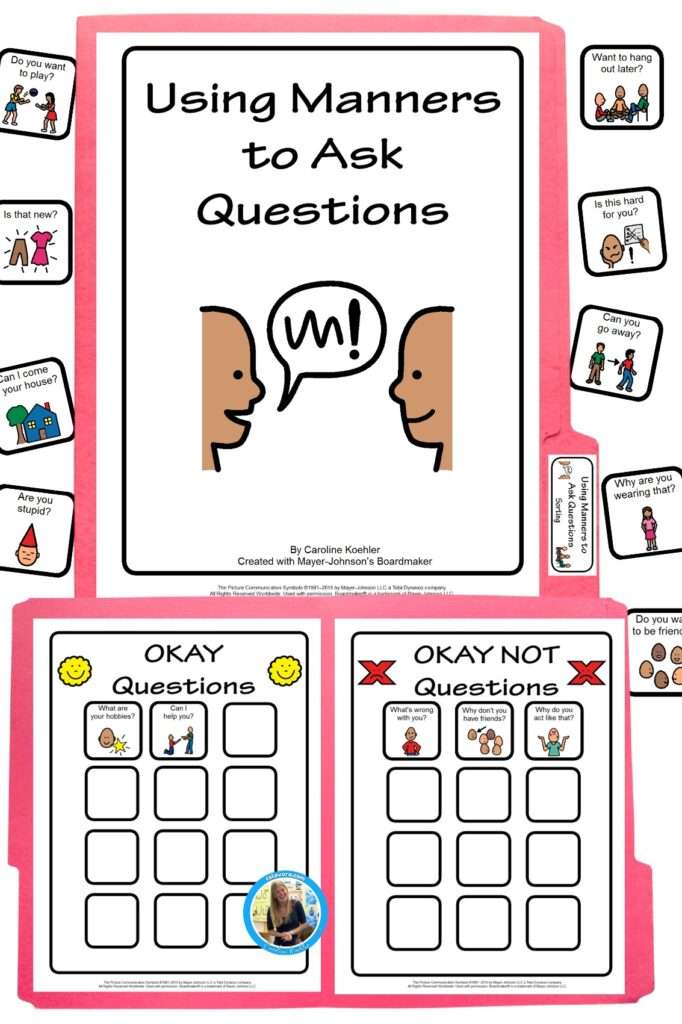
File Folder Social Emotional Activities
In today’s fast-paced world, it’s crucial to prioritize social-emotional learning as an integral part of our education system.
By focusing on social-emotional activities such as file folder games, we can create a 📈 positive learning environment.
This prepares students not only to excel academically but to build resilient hearts and minds.
These activities can be fun and engaging, making learning a positive experience.
With 🗂️ file folder games, we can tailor our teaching to meet individual student needs, whether it’s one-on-one teaching or independent work to reinforce a skill.
This approach creates a healthy learning dynamic that encourages students to try new things and build self-confidence.
So, with the right tools such as file folder games, we can equip our students with the necessary skills to tackle challenges and succeed at school.
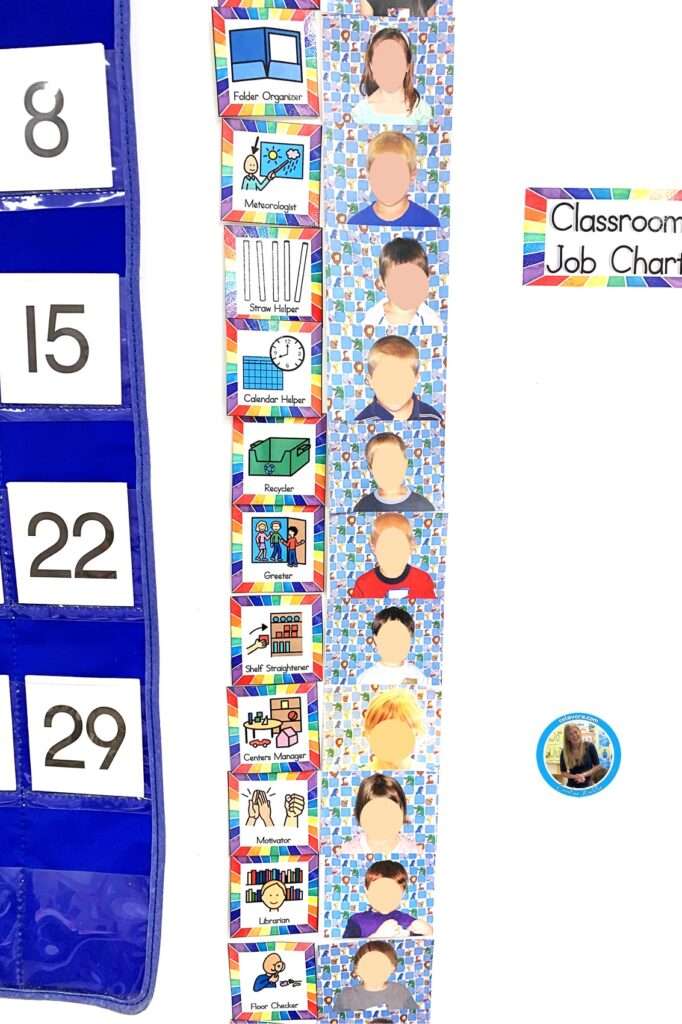
Classroom Helper Job Chart
Social emotional activities foster a sense of community and belonging, which is important for overall mental health.
A great strategy to promote this is to utilize classroom helper jobs. 👷♀️👩🌾👨💼👩🔧👩🏾💻
When it comes to fostering a sense of community and belonging in the classroom, utilizing classroom helper jobs is a simple yet effective strategy.
By assigning students as helpers for various classroom tasks, teacher are delegating responsibilities and beyond!
Also, they are promoting 👏 teamwork, communication, and accountability.
Together, the students work towards a common goal, creating a sense of unity and camaraderie.
And, they can be so fun!
My kindergartners always wanted to sit in my teacher chair. 🪑
Unfortunately, I did not want them in my chair…until I figured out a comprise.
I made “chair warmer” into a helper job.
One student would sit in my chair and 🔥 “warm it up” for me during chore time.
This meant no more asking if they could sit in my chair because it was already assigned to someone else.
And, it was super cute and they all looked like proud 🦚 peacocks in my teacher chair.
This sense of community and belonging is crucial for overall mental health, especially in challenging times.
So, set up classroom helper jobs with your students and strive to build a stronger and more supportive classroom community!

Me and We Rules Board
Social-emotional activities nurture empathy, self-awareness, and resilience in our students.
Following rules is a big part of a successful community. 🗺️
Rules can be change in different settings, including classrooms, homes, and community centers.
That’s where a Me and We rules board can be particularly helpful.
Me and We 📝 rules boards provide students with visual rules showing what the class is doing together and what a student’s individual role is.
It provides students with visual cues and reminders of what the class is doing together and what their individual role is.
Some students with special needs may require more guidance and support to fully benefit from these activities.
This not only helps students with special needs feel ❤️ included and valued, but it also creates a sense of community and belonging for everyone.
Let’s keep adapting and innovating to serve every learner.

Behavior Monitoring Controls
As educators and caregivers, we have a responsibility to help children develop the building 🧱 blocks they need to succeed in life.
By investing in social-emotional activities, we can help prepare for emotional regulation throughout their lives.
Tools like behavior monitoring can be useful in helping students understand levels of control and how to take responsibility for their actions.
Arguing is an important skill to learn and many students need help in this area.
Using a visual to explain how to get what you want versus how to not get in trouble is super important.
Sometimes students are having a good time and get 🤪 silly, like really silly.
I love a good silly time, but it has to be at the right time in the right environment.
To teach this, I pull out my silly monitor and talk about the different levels of silly.
Also, we discuss places that match and don’t match the different levels of silly. 🎚️
Of course, this can be done with so many topics like lying, stealing, effort, responsibility, manners, volume, and beyond.
We must prioritize the inclusion of social-emotional activities in our children’s lives, knowing that the skills they develop will help them overcome life’s obstacles and thrive in every aspect of their lives.

Social Emotional Activities for the Classroom
Social-emotional activities can have a profound impact on building resilience in children and adults alike.
By fostering emotional intelligence, problem-solving skills, empathy, and self-awareness, teachers equip students with the tools they need to navigate life’s challenges and obstacles. 🫶
Whether it’s through coping tools, behavior intervention, or support visuals, there are endless ways to incorporate social emotional learning into our daily lives.
By prioritizing social emotional activities in our classrooms, we can create a more resilient and compassionate 🌎 world.