


A Behavior Plan Example That Makes Sense
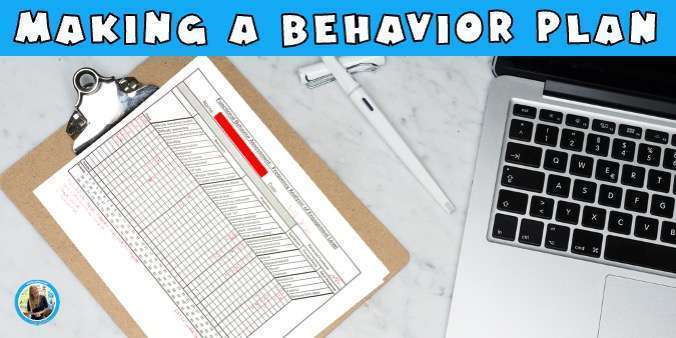
A behavior plan example is a written list that helps students understand what they 👍 should and 👎 shouldn’t do in specific situations.
It also provides a structure for helping students learn how to handle difficult situations without getting into trouble.
Behavior plans are a great way to teach kids 🌟 good behavior.
They provide structure and help them understand why certain behaviors are harmful to themselves and those around them.
Many students with IEP who qualify under emotional disabilities 🤗 require behavior plans.
However, other students with behavior challenges such as autism, intellectual disabilities, or other health impairments (OHI) also often require behavior plans.
For any new behavior improvement plan that I write, I first begin with a functional behavior assessment.
Once I’ve gathered 📊 data from the FBA, then I move on to make the behavior improvement plan which is lovingly referred to as the BIP.
BIPs are included in the IEP under the behavior section but can be uploaded into your system separately.
Here are some tips for creating a behavior plan that will work for your student.

Behavior Plan Example
A behavior plan is written with the student in mind.
It needs to be clear, concise, and easy to 🤓 read.
Plans for behavior improvement also need to be flexible enough to accommodate changes in the student’s needs as progress is made and life changes occur.
Students who struggle with social skills often need a behavior plan to help them manage their 😬 emotions and behaviors.
A behavior plan will help students understand what they can and cannot do or 📣 say in certain situations.
This example shows how a behavior plan might look for a child who has been struggling with appropriate behavior choices at school.

Consider the following when creating a behavior plan:
1. The age of the child
2. The severity of the behaviors
3. The frequency of the behaviors
4. The triggers for the behaviors
5. The child’s understanding of the behaviors
6. The goals for the behaviors
7. The consequences for the behaviors
8. The rewards for good behavior
9. The timeline for the plan
10. How the plan is monitored and reviewed
It is also important to involve the 👦 child in creating the behavior plan example.
This will help the student buy into the plan and be more likely to stick with it.
I always include the student in selecting 🏆 rewards for positive behavior.
Typically I give them a copy of my rewards and ask them to circle at least three things they’d like to work for.
Also, it is important to tell the student that they can propose a new reward.
I consider all rewards and explain why their idea was accepted or rejected.

Behavior Lesson Plan
One year I had a student who said he really wanted to watch his Pixar movies at school as a behavior reward.
Right after he told me what he wanted, he shouted and screamed at me that I would never let that happen.
Confused, I asked him why he said that.
He said that teachers don’t let kids watch 🎥 movies at school.
After listening to what he had to say, I told him to give me a little bit a time to think about it.
So, I went to the principal and told her what was up.
She was a huge supporter of my special needs program. She said, “If he wants to watch movies after good behavior, I’ll buy him a portable DVD player for that.”
Honestly, I was probably just as excited as the student was when she gave me this message.
Next, I went back and told him that the principal and I had agreed that he could earn two opportunities throughout the day for 15 minutes each to watch his movies.

He was 😱 aghast.
Flat out he didn’t believe me that it was going to happen, but the principal was good to her word.
Then, she went out and bought a little DVD player with a screen attached.
My student’s family sent in his first Pixar movie.
And he earned his reward.
He earned his reward almost every day two times a day.
Yes, there were times that he did not made it, but his behavior dramatically improved.
Not only that, but he began to trust me and respect me more than before this deal was made.
To summarize, I’d be lucky if I got 30 minutes of daily work out of this student before this reward was set up.
However, after implementing his movie time, I was losing 30 minutes today for him to watch his movies, but I had gained almost 4 hours of instructional time.
We all won when Disney Pixar came into the classroom.

Behavior Plan IEP
Also, it is important to involve other adults in the child’s life, such as teachers, family members, and caregivers, in order to create a ❤️ support network for success.
All members of the case conference committee for the student’s IEP need to be involved in the behavior plan example.
The names of all of the staff members and family members included in the IEP are responsible for supporting the student academically, emotionally, and behaviorally.
As stated before, this includes the student.
Make sure that everyone contributes to the BIP and 👍 agrees to the plan.
Finally, be sure to set realistic goals and expectations for both yourself and the child. Hold yourself accountable to following through with the plan, and celebrate successes along the way!
Positive Behavior Support (PBS) is an approach that develops comprehensive behavior plans.
This approach focuses on teaching positive behaviors rather than simply punishing negative ones.
PBS includes data-based decision making, active supervision, reinforcement of positive behaviors, clear rules and expectations, and consistent consequences.
For more information on how to use PBS to create comprehensive behavior plans, see this article from on Positive Behavior Support and Intervention.
If you are looking for more specific information on individualized behavior plans or positive behavior supports, check out my 6 Time Saving IEP Teacher Tool Tips by clicking here.
Example of Behavior Plan

Students who struggle with 😡 anger management issues often find themselves in situations where they feel frustrated or upset.
Specifically, they might lash out at others or even hurt themselves.
To avoid these negative outcomes, students can practice using 🧘♂️ relaxation techniques to control their emotions.
When I am feeling sad or angry, I will use my relaxation strategies such as taking deep 😮💨 breaths until my feelings calm down.
When I am having trouble focusing at school, I will use my think sheets to figure out why I am struggling and then find ways to solve the problem.
Think sheets are a helpful tool for helping students identify and overcome obstacles to 📚 learning.
These worksheets provide students with a structured approach to identifying and solving problems.
When I feel like I am being teased by another student, I will tell my teacher about it and we will work together to come up with a solution.
When students are feeling stressed out at school, teach them these tips to help them 🙏 cope.
Finally, work with your students to help them learn how to talk to your parents or teachers about how their feelings.

Making a Behavior Education Plan Work
A good behavior plan example should be tailored specifically to your student’s individual ❤️ needs.
Generally, it should consider their age, severity of their behaviors, frequency of their behaviors, triggers for their behaviors, understanding of their behaviors, goals for their behaviors, consequences for their behaviors, rewards for good behavior, timeline for the plan, and how performance will be monitored and reviewed–among other things!
Involving your student in creating their own individualized behavior plan is crucial to its success.
The same thing goes for involving other adults in their life who can provide support along the 🚗 way!
Finally, set realistic goals and expectations while being held accountable yourself to ensure adherence to following through with said plan.
And most importantly, celebrate 🎉 successes!
To see Caroline’s full set of behavior plan examples and tools, click here.


