IEP Plan Example: A Step-by-Step Guide
As special educators, we know that crafting an Individualized Education Plan means starting with an IEP Plan Example.
Why? Because the IEP is one of the most essential yet complex responsibilities we have.
A well-developed IEP provides the foundation for student success by outlining goals, accommodations, and supports tailored to each child’s needs.
But with so many moving parts, where do you start?
Let’s walk through an IEP plan example step by step and explore resources that can make the process smoother and more effective.

Step 1: Gathering Essential IEP Plan Example Info
Before diving into the actual IEP, it’s crucial to collect comprehensive input from teachers, parents, and the student.
This input shapes the IEP’s goals and ensures that all stakeholders have a voice in the planning process.
Gathering quality input helps ensure that the IEP reflects real-world needs and is not just a compliance document.
Using an IEP Input Form streamlines this step.
The IEP Input Forms for Teacher, Student, and Parent provide structured templates to capture insights from all perspectives.
These forms ensure consistency and thoroughness, reducing the chances of missing key information.
They also make collaboration easier by giving parents and students a clear way to express concerns and share their perspectives.

Step 2: Writing a Strong Present Level of Performance (PLAAFP)
The Present Levels of Academic Achievement and Functional Performance (PLAAFP) statement sets the stage for the IEP.
It explains the student’s current abilities and challenges in both academic and functional areas.
A well-written PLAAFP provides a solid foundation for writing effective goals that truly meet the student’s needs.
If you’ve ever struggled to articulate student needs clearly, the PLAAFP Example & IEP Impact Statement Template can be a lifesaver.
This resource includes structured templates to help you write concise, legally sound PLAAFP statements while ensuring compliance with IEP requirements.
By using this tool, you can confidently describe how the student’s disability impacts their learning and daily school experience, making goal-setting more targeted and meaningful.

Step 3: Setting Measurable Goals IEP Plan Example
Once the student’s present level is established, the next step is defining SMART goals—specific, measurable, achievable, relevant, and time-bound.
Goals should be tailored to the student’s specific academic and behavioral needs while maintaining a focus on achievable progress.
Using a goal bank or structured template can simplify this process.
The Special Education IEP Writing Help Guide Bundle includes a variety of sample goals tailored to different student needs.
This resource helps eliminate the guesswork when writing goals, ensuring they are both meaningful and aligned with the student’s PLAAFP.
Additionally, it provides clear examples of how to phrase goals effectively, making them easier to track and monitor.

Step 4: Selecting Accommodations and Supports
Every IEP includes accommodations and modifications to support student success in the classroom.
These might include extended time on tests, preferential seating, assistive technology, or behavioral supports.
Having clear documentation of these supports is crucial to ensuring they are consistently applied across all settings.
The Blank IEP Template & Planning Guide is an excellent tool for organizing these components.
It provides space to outline accommodations clearly, ensuring that all team members understand the student’s needs and how to implement supports effectively.
By keeping accommodations structured and accessible, educators can ensure that students receive the right support at the right time, minimizing disruptions to their learning experience.

Step 5: Addressing Transition Planning (If Applicable)
For students approaching high school and beyond, transition planning is a vital part of the IEP.
It prepares students for post-secondary education, employment, and independent living.
Transition planning should be a proactive process that equips students with real-world skills and opportunities for independence.
The Transition Planning Checklist helps ensure that nothing is overlooked.
This checklist walks educators through all necessary steps, including student interviews, vocational assessments, and goal-setting for life after high school.
By using a structured approach, educators can ensure that students have a clear, actionable plan that supports their individual goals and prepares them for a successful transition into adulthood.
Step 6: Conducting the IEP Meeting
An IEP meeting brings together the special education team, general educators, parents, and sometimes the student to review and finalize the plan.
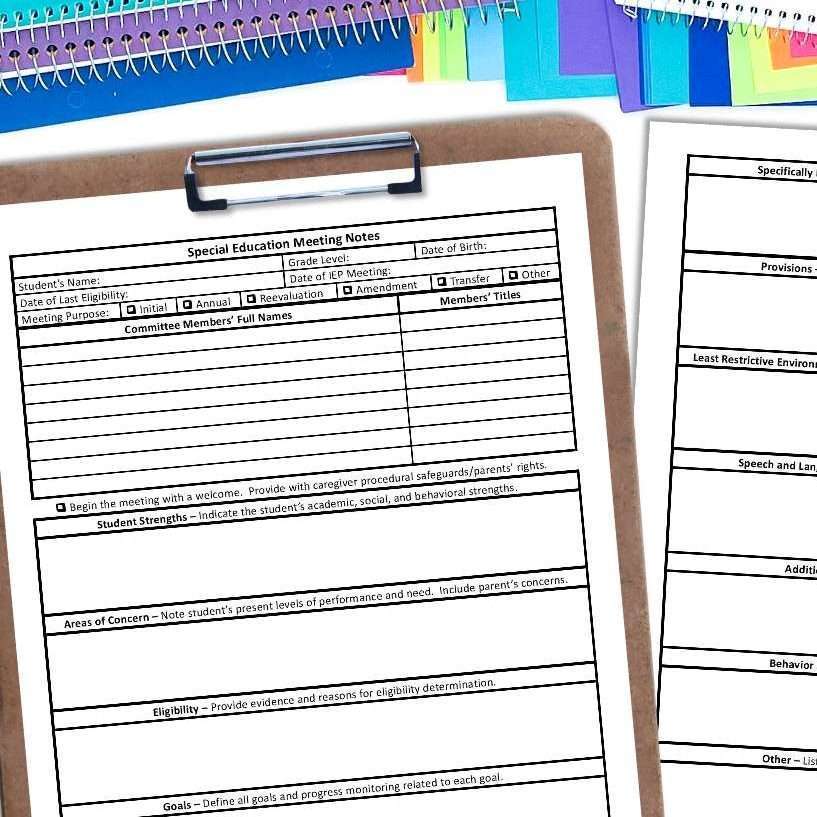
Having a structured agenda and note-taking system helps ensure that meetings stay productive and focused.
Without clear documentation, important decisions and discussions may get lost in the shuffle.
The IEP Meeting Notes Template and Agenda Set provides a ready-to-use structure for tracking discussions, decisions, and action items.
It simplifies documentation and keeps meetings organized and efficient.
Additionally, having a reliable note-taking system ensures accountability and allows for easy reference when revisiting goals or accommodations throughout the school year.

Step 7: Securing Resources and Funding
Sometimes, implementing an IEP requires additional funding for specialized supports, materials, or services.
Knowing how to advocate for these resources can make a big difference.
Many educators struggle with navigating funding requests, which can delay essential services for students.
The Special Education Membership Info Sheet & Funding Request Guide provides guidance on requesting funding.
Specifically tailored to SPED Up Paperwork, this info sheet explains the tools within the membership and how they work.
Six main components of SPED Up Paperwork include
- Behavior contracts
- Behavior crisis plans
- Behavior intervention plans
- Functional behavior assessments
- Student observations
- Transition assessments
Each form includes best practice based templates that guide the educator through the process and then automatically produces an individualized, custom report for the student at hand.
This ensures that students receive the support they need without unnecessary delays because educators can process paperwork quickly and efficiently.
This resource outlines how to justify requests, present documentation, and follow up effectively to secure essential resources that enhance student success.

Bringing IEP Plan Example Together
Creating an IEP doesn’t have to be overwhelming.
With the right tools, you can confidently build a plan that supports student success while staying compliant with legal requirements.
Effective IEPs take collaboration, strategic planning, and well-organized documentation.
If you’re looking for editable, ready-to-use templates to streamline your paperwork, check out the full collection of IEP resources here.
These tools provide practical solutions that save time and improve the quality of documentation.
📌 Ready to simplify your IEP process?
Download IEP Plan Example resources today and take the stress out of special education paperwork!