Reward Choice Board to Unlock Better Behavior
As teachers, we know that positive reinforcement and reward choice is key to motivating students.
But what happens when students lose interest in rewards or struggle with decision-making?
A reward choice board can be a game-changer in your classroom.
This simple yet effective tool helps students stay engaged, make choices, and feel empowered in their learning.
Plus, it’s easy to implement!
If you’re looking for a stress-free way to reinforce positive behavior and increase student motivation, our Autism Choice Board Reward System is designed just for you.

Why Use a Reward Choice Board?
Every student is unique, and what works for one may not work for another.
A reward choice board offers visual and tangible incentives that help students stay focused and engaged.
Instead of a one-size-fits-all reward system, students get to choose a motivating incentive that works best for them.
This fosters independence, reduces behavior challenges, and helps students feel in control of their success.
A reward choice board also encourages students to work toward long-term positive behavior rather than seeking immediate gratification.
By allowing choice, students feel a sense of ownership in their behavioral progress.
This makes rewards more meaningful and reduces resistance to classroom expectations.
Here are seven ways you can use the Autism Choice Board Reward System in your classroom.
Each strategy is designed to make learning more enjoyable while encouraging positive behavior.

First-Then Reward Board with Reward Choice for Clear Expectations
Many students, especially those with autism, thrive on structure.
A First-Then Board helps them understand expectations before receiving a reward.
Without clear expectations, students may feel frustrated, leading to off-task behaviors.
📝 How to Use:
Place a task or behavior expectation in the “First” section, such as “Complete 5 math problems.”
In the “Then” section, add the student’s chosen reward, like “5 minutes of iPad time.”
This makes expectations clear and reinforces positive behavior.
💡 Why It Works:
Students are more likely to follow through when they see a direct connection between their efforts and the reward.
The visual component reduces anxiety and gives students a structured path to success.
It also helps teachers avoid power struggles by clearly outlining what needs to be done.
Token Board System for Longer-Term Goals
Some students need more structure when working toward a reward.
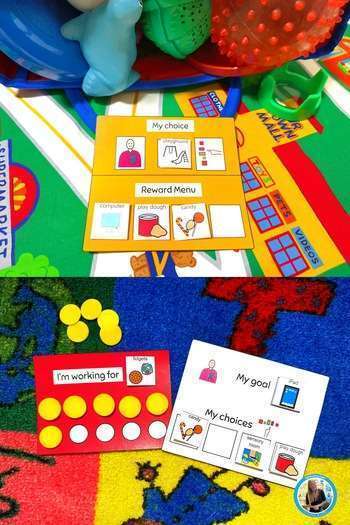
A Token Board helps reinforce sustained positive behavior by allowing students to earn smaller reinforcers over time before receiving their chosen reward.
📝 How to Use:
Give the student a goal, like “Stay on task for 10 minutes.”
Each time they meet the expectation, they earn a token.
Once they collect enough tokens, they get their chosen reward from the choice board.
The key is to ensure the reward is motivating enough to keep the student engaged.
💡 Why It Works:
This system builds patience and delays instant gratification, which is essential for self-regulation skills.
Students develop perseverance and learn that consistent effort leads to positive outcomes.
Token boards also provide a visual representation of progress, which can be very motivating.

Visual Cue Cards to Reinforce Rewards
Some students benefit from visual reminders to help them stay on track.
Pairing a reward choice board with Visual Cue Cards can provide extra support and minimize frustration.
📝 How to Use:
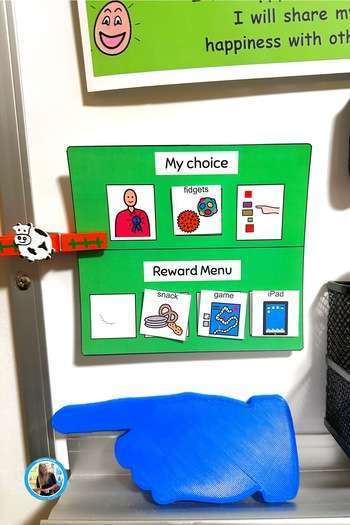
When a student selects their reward, show them a corresponding visual cue card.
For example, if they pick “5 minutes of free draw,” show a picture of drawing materials.
This makes the reward concrete and understandable, particularly for students with communication difficulties.
💡 Why It Works:
Visuals enhance comprehension and communication, especially for students with limited verbal skills.
Providing visual cues reduces confusion and encourages independence by allowing students to recognize and confirm their choices without constant verbal prompts.
Behavior Charts to Track Progress
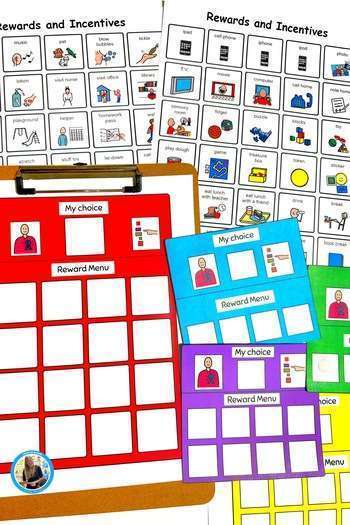
A reward choice board works even better when paired with Printable Behavior Charts that monitor daily or weekly progress.
Tracking progress gives students and teachers insight into behavioral patterns and areas that need improvement.
📝 How to Use:
Let students track their own progress by marking when they demonstrate positive behaviors.
Set a reward goal and celebrate when they reach it!
Encouraging students to participate in tracking gives them a sense of ownership over their behavior.
💡 Why It Works:
Students take ownership of their behavior and see their growth over time.
It also helps teachers and parents identify trends and adjust interventions as needed.
Make Reward Choice Boards Work for Your Classroom
A reward choice board makes positive reinforcement fun, flexible, and effective.
Whether you use it with a First-Then Board, Token System, or Behavior Charts, the key is to personalize rewards to meet students’ needs.
The more engaging and individualized the system, the more effective it will be in motivating students to stay on track.
If you’re ready to simplify behavior management and increase motivation, grab your Autism Choice Board Reward System today!
👉 Get the Reward Choice Board here
Have you used reward choice boards in your classroom? Share your experience in the comments!
Download the set and start seeing the benefits of a reward choice board today!