PLOP in Special Education Tools for Success
In the special ed world, crafting an accurate Present Level of Performance (PLOP in special education) is vital for student success.
PLOP statements form the foundation of Individualized Education Programs (IEPs), offering insight into a student’s current skills and areas of need.
With the right tools, writing a meaningful and effective PLOP becomes manageable and even empowering.
Below, we’ll explore practical resources that can help you streamline this essential process while supporting students and families.

What Makes PLOP Important?
PLOP provides a clear picture of where the student stands academically, socially, and behaviorally.
It ensures that the IEP goals are realistic and measurable.
By using well-structured resources, teachers can confidently develop these statements to reflect the student’s unique abilities and needs.

PLAAFP Example IEP Impact Statement Template
PLAAFP Example IEP Impact Statement Template simplifies the process of crafting impactful PLOP statements.
This downloadable template offers organized sections to capture a student’s strengths, needs, and progress.
Using a structured template makes sure that the teacher includes all necessary parts to stay compliant.
This set is my absolute favorite because it removes guesswork and breaks the PLOP down into bitesized pieces.
How to Use:
Start by gathering data on the student’s performance.
Input observations, assessment results, and feedback directly into the template.
Use a template that ensures consistency while saving time.
Broadly summarize the student’s current performance for academics and functional behavior as a global overview.
Add as much student specific details as possible.
Edit PLOP templates as needed.
Add or remove conflicting information and explain what the assessment data signifies.
Remember to identify 4 main areas:
- Baseline Data
- Strengths
- Impact
- Need
Why It’s Helpful:
By providing a clear format, this tool eliminates guesswork.
Administrators can easily review the PLOP, and parents appreciate its clarity.
Consistent templates also help foster collaboration among team members.
Anything listed within Present Levels should be used to develop goals within the IEP.
Best practices states that a present level should be noted for each IEP goal written.

Student Input IEP Survey & Interview Forms
The Student Input IEP Survey & Interview Forms give students a voice in the IEP process.
Remember that your student is the most important person to consider within an IEP.
Input forms and tools allow educators to capture how students view their own strengths, challenges, and goals.
For older students (and younger if you are typing or using talk to text), use a Google Form to record the student’s answers.
This makes for easy copying and pasting of the student’s PLOP in special education documents.
Keep in mind your students’ needs.
If a student struggles to write, use a checkbox form or record the answers for them.
Of course, use the students’ present accommodations like read aloud when completing the survey.
How to Use:
Administer the surveys during one-on-one sessions.
I love conducting these as informal interviews.
Encourage students to express their preferences and ideas about their learning.
Use a guide like an input form checklist or a reflection form to make the information gathering meaningful.
Why It’s Helpful:
Students feel empowered when their voices are included.
Their input makes PLOP statements more authentic and personal.
Best practice includes using student feedback to set realistic and meaningful goals.

IEP Teacher Input Form
Teachers play a key role in providing detailed observations for PLOP.
The IEP Teacher Input Form ensures educators can efficiently communicate their insights.
But, let’s face it: teachers are busy.
Pinning them down to get them to tell you how the student is doing is rough.
But give them a survey form with a due date written at the top and you’ll start receiving oh so helpful data from the teachers.
Just like with the students, you can also you a Google form for collection.
How to Use:
Use the form to document academic performance, social-emotional skills, and behavioral patterns.
Encourage all team members to contribute for a comprehensive view.
This means you might give the input survey to several teachers in the building for a more comprehensive view
Why It’s Helpful:
Structured teacher input leads to well-rounded PLOP statements.
This resource keeps information organized, ensuring all perspectives are captured without overwhelming the process.
You receive genuinely important information that becomes evidence for a student’s portfolio progress.

Parent Input Form for IEP
The Parent Input Form for IEP supports collaboration by integrating families into the IEP process.
Parents offer valuable insights into their child’s abilities and challenges.
Aside from the students’ needs, the caregivers are the second most important opinions and perspectives.
I always told people that being a student’s teacher makes me an important person in the students’ lives for a very short time.
While I’m there for 9 months or so (way longer for my self-contained teachers! I had one student for 5 years!) the caregivers are typically there for life.
When setting up the day and time for the IEP meeting, I love sharing that I’ll be sending home a survey form.
This gives me a non-school view of the students PLOP in special education.
Also, just like the other forms, this one can be email to parents view a Google Form.
If you have a parent who doesn’t respond to these but will come to the meeting, ask them to complete a survey while waiting for the meeting to start or at the beginning of the meeting.
Then, add those PLOP in special education in after the meeting is over.
How to Use:
Share this form with parents during IEP planning ideally before the meeting.
Ask them to describe their child’s strengths, home routines, and goals for the year.
Use a guided survey to insure valuable responses.
Consider the caregiver’s abilities and time when selecting forms.
Why It’s Helpful:
Parents’ perspectives provide context that educators might not see in the classroom.
Their input ensures PLOP statements are holistic and personalized.
Best practice includes combining parent input with teacher observations and data for a balanced approach.

Special Education IEP Writing Help Guide Bundle
The Special Education IEP Writing Help Guide Bundle offers comprehensive support for writing effective IEPs, including PLOP in special education statements.
If I had one resource to use to help me write IEPs, this is it.
While the one I use has taken me years to compile, you can easily create your own.
Start by saving professional statements from IEP categories.
Then organize it based on your IEP category layout.
The structure of having ready to use phrases helps you complete paperwork quickly.
Also, it makes sure that students have quality written reports.
How to Use:
Refer to the bundle for examples, tips, and strategies tailored to diverse needs.
Use it as a step-by-step guide while drafting IEPs.
Edit as needed for each student to insure individualization.
Why It’s Helpful:
This bundle provides clarity for new and experienced educators.
It offers actionable advice, reducing stress during the writing process.
In the end, teachers create stronger, more thorough IEPs.
Transition Planning Checklist
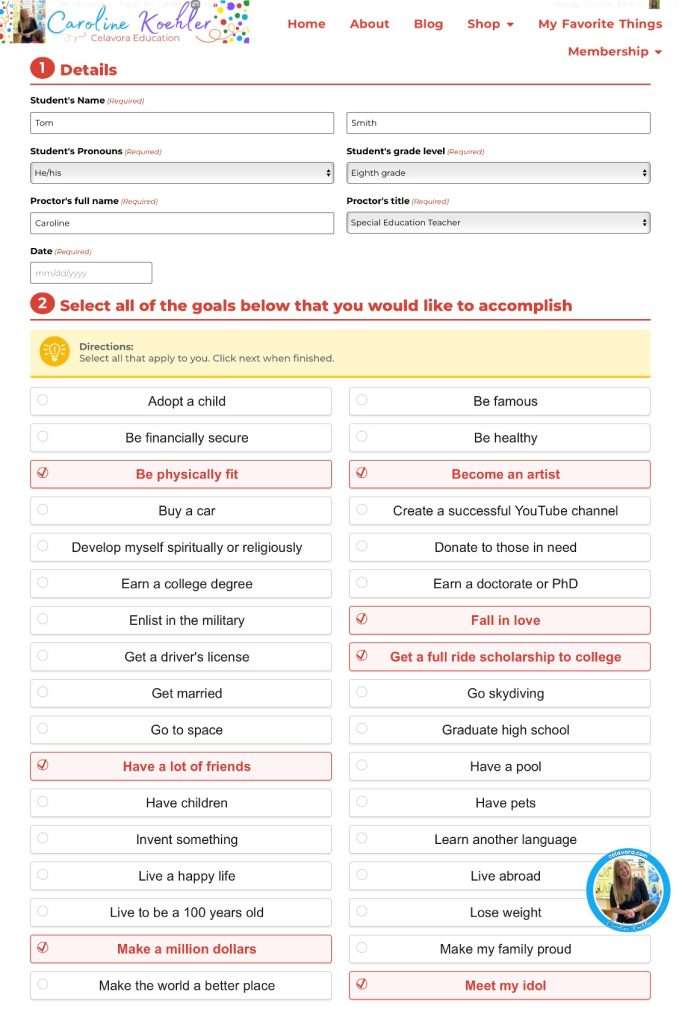
As students prepare for life beyond school, the Transition Planning Checklist becomes an essential tool.
This resource breaks down steps for transition planning, ensuring all areas are addressed.
While many special education students go on to college, due to intense disabilities that’s not possible for all.
When doing individual transition planning, think of this within three categories:
- Minimal support needs
- Mild to moderate support needs
- Significant support needs
Depending on the situation, decide if you would like to fill the checklist out before the IEP meeting or with the legal guardian and/or student.
Use checklists as a tool to drive the student’s goals for transitioning and ensure that their needs are being met within the IEP.
The checklists are guides to help provide supports to address the student’s deficits and support their life goals.
The information obtained can help the case conference committee develop transition goals, present level of academic and functional performance (PLAAFP), and/or a summary of performance (SOP).
Provide the legal guardian with a copy of the completed checklist.
If a release of information is provided, share the document with the designated agency or person.
Place an additional copy in the student’s cumulative file.
If possible, use the transition planning checklist each year to note the progress being made and the areas that continue to require support.
How to Use:
Use the checklist to evaluate skills like self-advocacy, vocational readiness, and daily living abilities. Include this information in the PLOP to align goals with future plans.
Why It’s Helpful:
The checklist simplifies a complex process. It ensures no critical skill areas are overlooked, and it promotes long-term success.
Best practice involves updating the checklist annually to reflect the student’s growth.

IEP Transition Assessments and Planning Pages
Finally, the IEP Transition Assessments and Planning Pages provide tools to assess a student’s readiness for post-secondary life.
These assessments inform the PLOP by highlighting areas of strength and need.
Instead of a guide, utilize assessments for transitioning.
This includes the assessment on employment skills, education/training skills, or independent living skills.
Use an interview style format to conduct the assessment and guide your student through the questions making sure to allow him or her to honestly express their thoughts.
Compile the findings of the transition assessment by summarizing in a narrative form.
You may want to connect the findings to any curricular connections that support the development of transition skills.
Also note where there is evidence that the student possesses sufficient skills for independent living or that there is lacking evidence to support these skills.
Create statements based off of the student’s desires in a format similar to the sentence starters below using words such as live, obtain, utilize, get a job, participate in, enroll, work, go, or receive within the sentence.
- Regarding Independent Living after high school, I will
- Regarding Employment after high school, I will
- Regarding Education and Training after high school, I will
How to Use:
Use these pages to evaluate skills related to employment, independent living, and further education.
Establish a 1-1 interview style with the student.
Incorporate results into transition-focused PLOP statements.
Why It’s Helpful:
By identifying specific needs, these assessments guide meaningful goal-setting.
They prepare students for success beyond school while ensuring compliance with transition planning requirements.
Crafting effective PLOP statements is a cornerstone of special education.
With structured resources, educators can simplify the process and enhance student outcomes.
These tools not only save time but also ensure accuracy and collaboration.
By using the templates, forms, and guides shared here, you’ll create meaningful IEPs that truly support your students’ success.
Take a moment to explore PLOP in special education and empower your IEP process today!