


Functional Behavior Assessments and Analysis of Data Made Easy

Functional behavior assessments (FBA) and analysis of data are crucial components of understanding and addressing challenging behaviors in students.
However, many educators and professionals may feel overwhelmed and uncertain about how to effectively implement these processes.
With the increasing emphasis on data-driven decision making in education, it is essential that FBA and data analysis are not only understood but also executed accurately and efficiently.
Through a professional lens, let’s examine the key elements of FBA including, the different types of data analysis, and how to effectively use data to inform behavior intervention planning.
As special educators, it is imperative that we equip ourselves with the necessary knowledge and skills to support students with challenging behaviors.
By breaking down the complexities of FBA and data analysis, the process is more accessible and manageable.
Ultimately, this helps educators and professionals to confidently address challenging behaviors in students.
So, let us dive into the world of FBA and data analysis, and discover how we can make these essential tools easy to navigate and utilize in our everyday practice.
What is a functional behavior assessment?
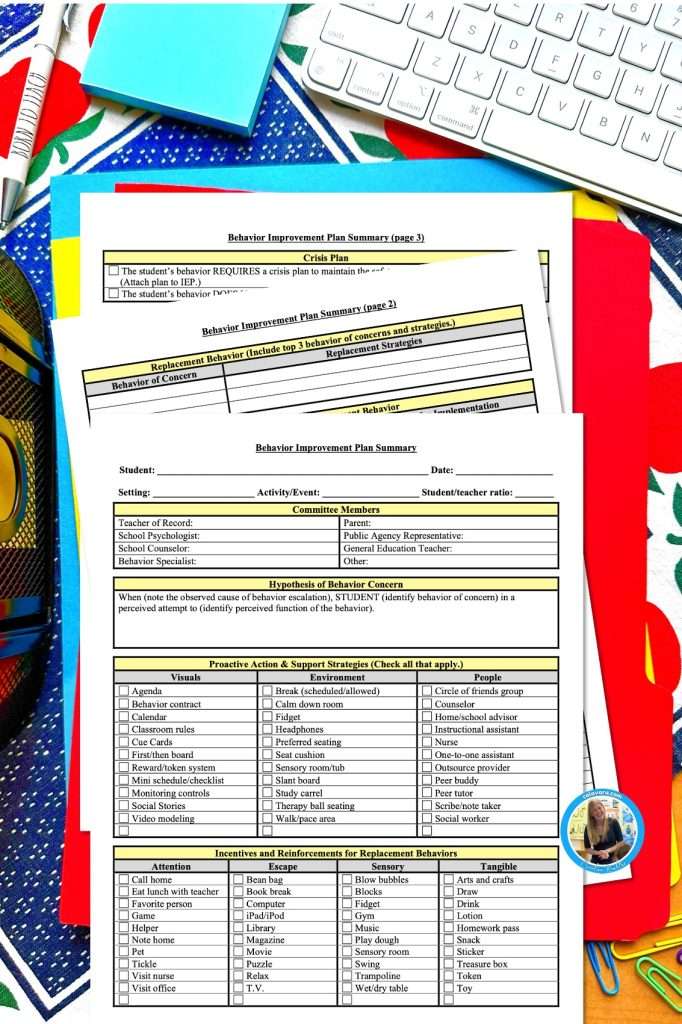
A functional behavior assessment (FBA) is a process used to gather information about a person’s behavior in order to understand the underlying reasons for their actions.
It involves systematic observation and analysis to determine the function or purpose of the behavior.
This assessment helps to identify the triggers and consequences that may be influencing the behavior.
Also, a FBA guides the development of effective interventions.
First, the FBA examines the antecedents (what happens before the behavior occurs) and the consequences (what happens after the behavior).
This gives professionals insights into the individual’s motivations.
Afterwards, teachers create targeted strategies to support positive behavior change.
The goal of an FBA is to provide a comprehensive understanding of the behavior.
Then, educators develop individualized plans that address the underlying needs, promote skill development, and enhance overall well-being.
Through the process of functional behavior assessment, professionals can gain valuable insights on student behavior.

Establish the FBA team
To ensure a smooth and successful implementation of functional behavior assessments (FBA) and analysis of data, it is essential to establish a dedicated FBA team.
This team should consist of professionals with expertise in behavior analysis, psychology, special education, and related fields.
Their collective knowledge and experience will contribute to a comprehensive and effective FBA process.
The team should work collaboratively, sharing insights and observations to gain a holistic understanding of the individual’s behavior.
Members on the FBA team typically include
- Parent/guardian
- School psychologist
- Behaviorist
- Special education teacher
- General education teacher
- Administrator
- Social worker
- OT/PT/Speech Pathologist as needed
By pooling their expertise, they can develop targeted interventions and strategies that address the underlying needs and promote positive behavior change.
Additionally, having a dedicated FBA team allows for ongoing monitoring and analysis of data to track progress and make informed adjustments to intervention plans as needed.
Ultimately, the establishment of a strong FBA team is crucial in making the FBA process easy and effective, leading to enhanced outcomes for the individuals involved.
Who completes the functional behavior assessment?
In the realm of functional behavior assessments (FBA), the responsibility of completing the assessment falls on the shoulders of professionals who possess the necessary expertise in behavior analysis and related fields.
This can include behavior analysts, psychologists, special education teachers, and other qualified professionals who are trained in conducting comprehensive assessments.
By entrusting the FBA process to these knowledgeable individuals, we can ensure that a thorough and accurate evaluation is conducted to identify the underlying factors contributing to challenging behaviors.
These professionals will utilize their skills and understanding to gather data, interview relevant parties, and analyze the information collected to develop a comprehensive behavior support plan.
Their expertise plays a vital role in simplifying the FBA process, making it easy to create effective strategies for behavior management and intervention.
Ultimately, the more individuals gathering data, the truer the data is.
Also having multiple people source the information leads to less pressure on any one individual.
Oftentimes, the information from a FBA is unflattering and can feel very negative.
If only one person as gathered all the data, the parent/guardian may feel the information was negatively skewed.
However, in many districts due to limitations on staffing the data collection falls solely on the shoulders of the teacher of record.
In this situation, and all data collection, be sure to be as objective as possible.
What data is being gathered?
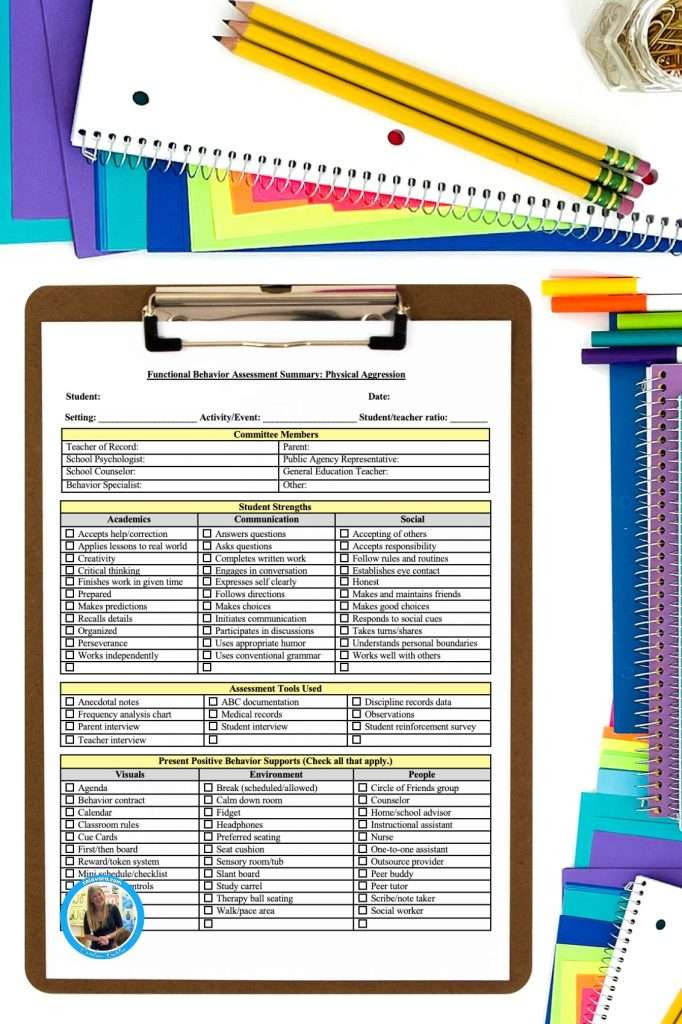
Throughout the process of conducting functional behavior assessments (FBA), a variety of data is gathered to provide a comprehensive understanding of the behaviors being assessed.
This data can include many different scenarios.
- direct observations of the individual’s behavior in different settings and situations
- interviews with the individual, family members, teachers, and other relevant parties
- review of existing documentation such as behavior logs or incident reports
Additionally, data may be gathered through the use of assessment tools and surveys to assess the individual’s skills, preferences, and any potential underlying factors contributing to the behaviors.
By collecting and analyzing this diverse range of data, professionals are able to gain valuable insights into the functions and triggers of the behaviors.
Ultimately this leads teachers to the development of effective behavior support plans.
Identify triggers, change behavior patterns
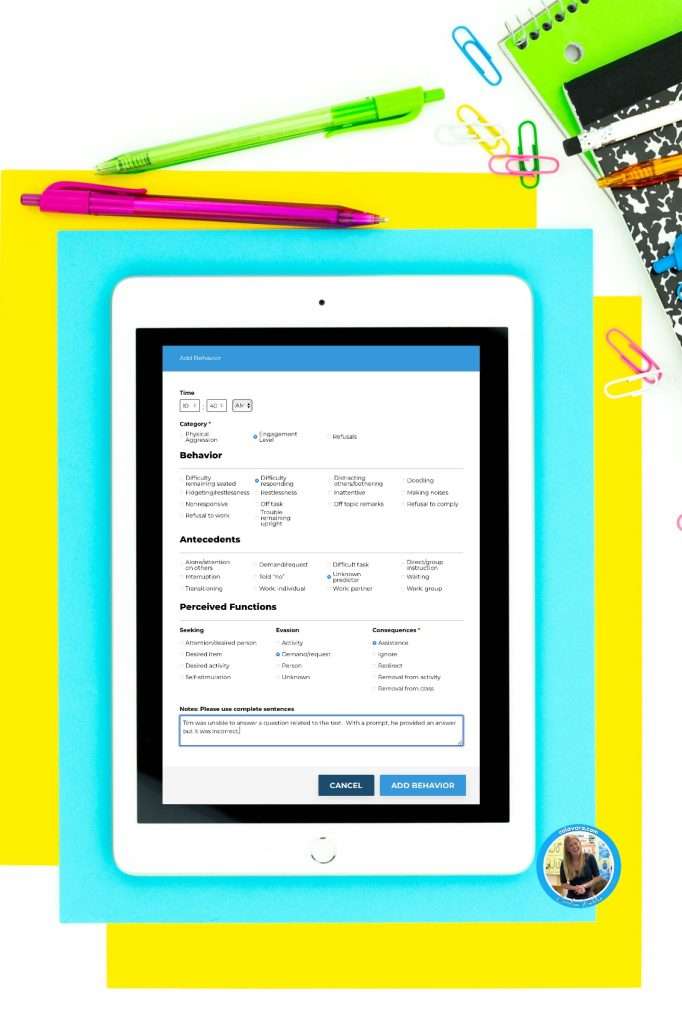
One crucial aspect of conducting functional behavior assessments and analyzing data is the identification of triggers and the need to change behavior patterns.
Triggers are the events or circumstances that lead to the occurrence of a specific behavior.
By identifying these triggers, we gain a deeper understanding of the underlying factors that contribute to the behavior.
Then, we make informed decisions on how to address them.
A school psychologist once asked me what I could do to trigger a certain student’s negative behavior.
With a look of horror on my face I quickly responded with, “Nothing. I would do nothing to trigger his behavior.”
She smiled back and reassured me that, of course, I was supporting him but what could I do if I were so inclined.
Then, I saw it.
I could tell him no.
Or I could expect him to work next to his least favorite peer.
Maybe I could end an activity for specials time.
And so on, and so on.
Those are the important pieces of figuring out a solid behavior plan.
Changing behavior patterns involves implementing strategies and interventions that promote positive behavior and reduce the likelihood of negative behaviors occurring.
This may include providing alternative coping mechanisms, teaching new skills, or modifying the environment to create a more supportive setting.
By focusing on identifying triggers and changing behavior patterns, we can support individuals in managing their behaviors and creating positive outcomes.

Simple steps for effective Functional Behavior Assessment
When it comes to conducting functional behavior assessments and analyzing data, there are some simple steps that can make the process much easier and more effective.
First and foremost, it’s important to establish clear and measurable goals.
By having specific objectives in mind, you can track progress and determine if the interventions implemented are achieving the desired results.
I recommend having a goal bank for these situations.
Just like state standards, IEP goals should never have to be imagined from thin air.
Teachers need a basis of a good goal to build from.
If you are using SPED Up Paperwork’s membership to go FBAs and write behavior plans, just select which goal best suits your student.
Then edit and adjust as needed to be a supportive goal for your student.
Additionally, ensuring accurate and consistent data collection is essential.
This involves using reliable tools and methods to record and analyze behavior data in a systematic manner.
Regularly reviewing and analyzing the data collected is another crucial step.
By examining patterns and trends, you can gain valuable insights into the effectiveness of interventions and make informed decisions on adjustments or modifications if necessary.
Finally, open and effective communication with all stakeholders involved, including parents, educators, and support professionals, is key to ensuring a collaborative and comprehensive approach to functional behavior assessments.

Data tracking made hassle-free
Keeping track of data doesn’t have to be a hassle anymore.
With the advancement of technology, there are now user-friendly tools available that make data tracking a breeze.
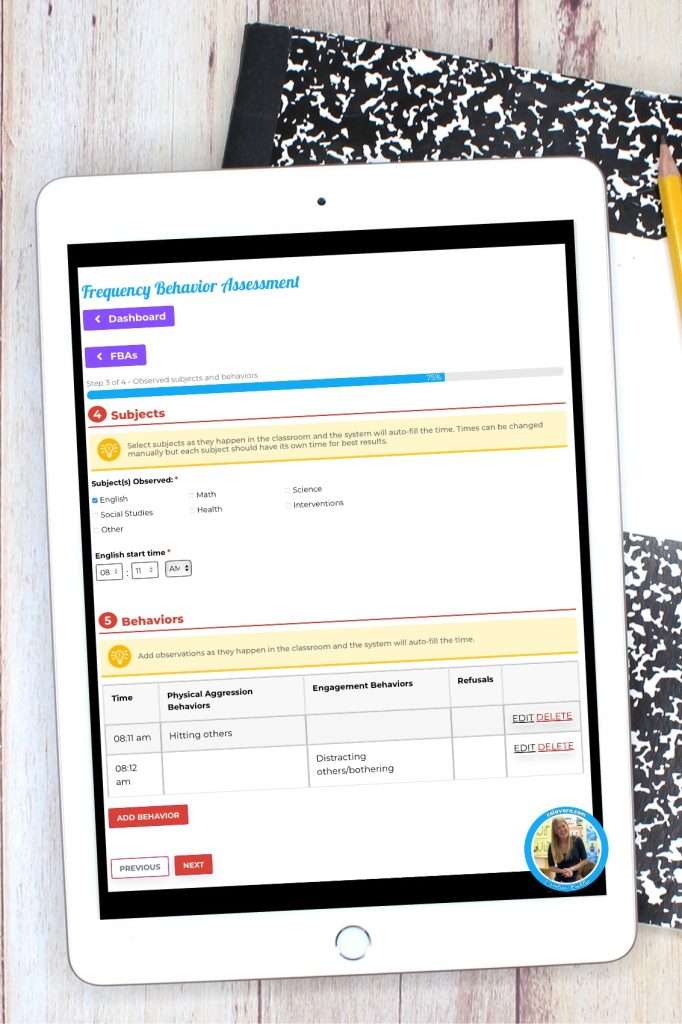
The best tool for this situation is SPED Up Paperwork’s teacher membership.
These tools not only streamline the process but also allow teachers to analyze the data collected.
No more sifting through piles of paper or manually entering data into spreadsheets.
With just a few clicks, you can input and organize data effortlessly.
The best part is that these tools are designed with ease of use in mind, so you don’t need to be a tech expert to navigate them.
Say goodbye to the days of complicated data tracking and embrace the simplicity and efficiency of modern digital solutions.
Say hello, to SPED Up Paperwork.

Tips for accurate data collection
When it comes to accurate data collection, there are a few tips that can greatly enhance the quality and reliability of your data.
First and foremost, ensure that you have clear and specific guidelines for collecting the data.
Using SPED Up Paperwork is essential for this step.
The membership tool includes vital steps
- defining the variables you want to measure
- establishing consistent measurement procedures
- providing clear instructions to those responsible for data collection
Additionally, it is crucial to train and educate your data collectors on the importance of accuracy and the proper techniques for collecting data.
If you have assistants or para professionals helping with this, make sure to teach them how to use the data collection tool.
Regular supervision and feedback can also help identify any issues or errors early on and address them promptly.
Lastly, consider utilizing multiple sources of data to validate your findings.
This reduces the chances of inaccuracies or biases.
I like to observe students in variety of settings including
- different subjects
- different days
- alternating times
- unusual days (fire drills, late starts, etc)
- with different adults
Implementing these tips will not only make your data collection process more accurate but also increase the reliability and validity of your overall analysis.

After the Functional Behavior Assessment: BIP
After the completion of a Functional Behavior Assessment (FBA), it is time to move forward and develop a Behavior Intervention Plan (BIP) to address the targeted behaviors.
The BIP is a crucial step in creating an effective strategy to support individuals who exhibit challenging behaviors.
It involves identifying appropriate interventions and strategies based on the data collected during the FBA process.
By analyzing the behavior patterns and factors contributing to the behaviors, the BIP aims to provide structured and individualized approaches to promote positive behavior change.
This comprehensive plan takes into account the unique needs and strengths of each individual.
The goal is to ensure that teachers tailor interventions so they are effective in promoting desired outcomes.
With the guidance of professionals and the utilization of evidence-based practices, the process of developing a BIP can become more manageable and successful.
This leads to more pro-social behavior and enhanced quality of life.
Writing a behavior plan is made quick, easy, and effective with SPED Up Paperwork’s membership.

Improve student behavior
Creating a positive and supportive learning environment is essential for improving student behavior.
By implementing effective strategies and interventions, educators can foster a classroom atmosphere that promotes engagement, respect, and cooperation.
Encouraging open communication, setting clear expectations, and providing consistent feedback are key aspects of nurturing positive behavior.
Additionally, incorporating mindfulness and social-emotional learning activities can help students develop self-regulation skills and improve their emotional well-being.
By focusing on creating a safe and inclusive space where students feel valued and supported, educators can empower them to thrive academically and behaviorally.
Functional behavior assessments and analysis of data may seem daunting at first, but with the right tools and approach, it can be made easy.
Follow the tips above and utilize resources through SPED Up Paperwork.
With the right tools, you can effectively identify and address behaviors and create positive changes for those in your care.
Remember, it’s all about being patient, consistent, and open to learning and adapting.
Now, grab your laptop and go start your functional behavior assessments!


